For World Bread Day on October 16
Living more sustainably with German Bread Culture
On International Bread Day, the world celebrates one of the most important and oldest foods, drawing attention to the importance of bread for global nutrition. The Central Association of the German Baking Trade shows how bread can contribute to a more sustainable diet and why no table should be without it.
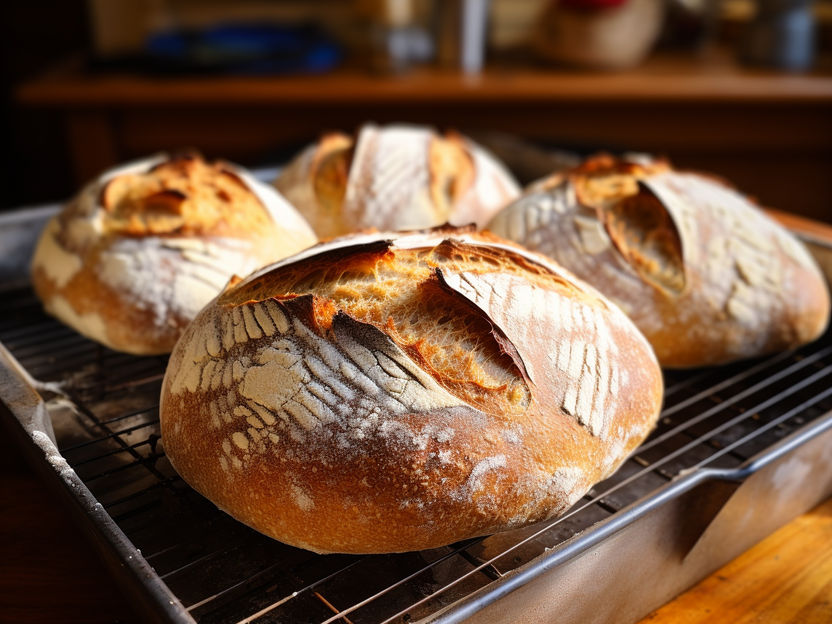
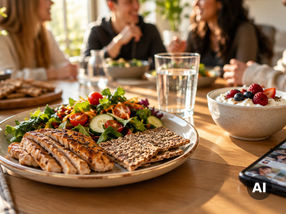
Symbol image
Computergeneriertes Bild
On World Bread Day on October 16, the Central Association of the German Baking Trade is once again drawing attention to the importance of bread for global nutrition. The background to the commemorative day is the founding of the Food and Agriculture Organization of the United Nations on October 16, 1945, whose motto and logo is "Fiat panis" - "Let there be bread" - and thus underscores the special importance of bread for world nutrition.
Today, more than 9,600 artisan bakers bake fresh bread every day in Germany alone, thus ensuring the supply of one of the most important staple foods.

Sustainable nutrition: lived by the baking trade
The German Bread Institute has now proven, with scientific support, that cereals and bread can make a significant contribution to a more sustainable diet. Sustainable nutrition means contributing to food and nutrition security, healthy living and climate protection for present and future generations with a low environmental impact. Bernd Kütscher, executive director of the Bread Institute, explains, "A sustainable diet protects and respects biodiversity and ecosystems. It should be resource efficient, culturally accepted, and economically fair to produce and affordable."
Accordingly, a sustainable food culture is compatible with health, the environment, the economy and society. Bread and baked goods from artisan bakers have always met these requirements: the grain and flour are purchased regionally by many artisan bakers and processed regionally. Without long transport routes, bread is produced in the region for the region. Bread from artisan bakers also comes as loose goods without plastic packaging. Energy-saving technology is already used in production and high return rates are avoided.
Whole-grain bread as a sustainable superfood
At the same time, bread as a sustainable superfood is also healthy: Whole-grain breads in particular contain valuable nutrients, minerals and vitamins that make bread and cereals an important part of the diet. The Ökotrophologe Professor Dr. Claus Leitzmann stresses thereby in a publication of the bread institute the enormous nourish-physiological characteristics of regional whole grain bread: There is no other food, which can secure as only food a survival so long as bread. The health potential of whole grain bread is unfortunately far too little exploited."
As a local superfood, bread contributes to a more sustainable lifestyle, while other foods considered superfoods such as avocado, chia seeds or quinoa have a poor eco-balance due to long transport distances, among other reasons.
Tips for a sustainable food culture
To help everyone participate in a sustainable food culture, the Bread Institute offers the following easy-to-implement tips:
- Eat more regionally: shop regularly at local artisan bakers and weekly markets.
- Eat more plant-based: make artisan bread and grains the focus of your diet
- Eat in a more resource-efficient way: divide large loaves of bread or freeze them in slices to avoid leftovers
- Eat more enjoyably: take more time to enjoy and shop and eat in community to value food more
- Avoid highly processed foods: buy fresh baked goods from artisan bakers rather than industrially produced and packaged products
Note: This article has been translated using a computer system without human intervention. LUMITOS offers these automatic translations to present a wider range of current news. Since this article has been translated with automatic translation, it is possible that it contains errors in vocabulary, syntax or grammar. The original article in German can be found here.
Other news from the department business & finance













Most read news





More news from our other portals






















© 1997-2026 LUMITOS AG, All rights reserved