Germans eat almost three kilos more cheese on average than the Swiss
Gouda remains in 1st place
Advertisement


Would you have known? Germans eat almost three kilos more cheese on average than the Swiss. In 2025, per capita cheese consumption in Germany increased by 900 grams compared to 2024. According to official statistics, per capita consumption rose to 26.4 kg - that's a new record!
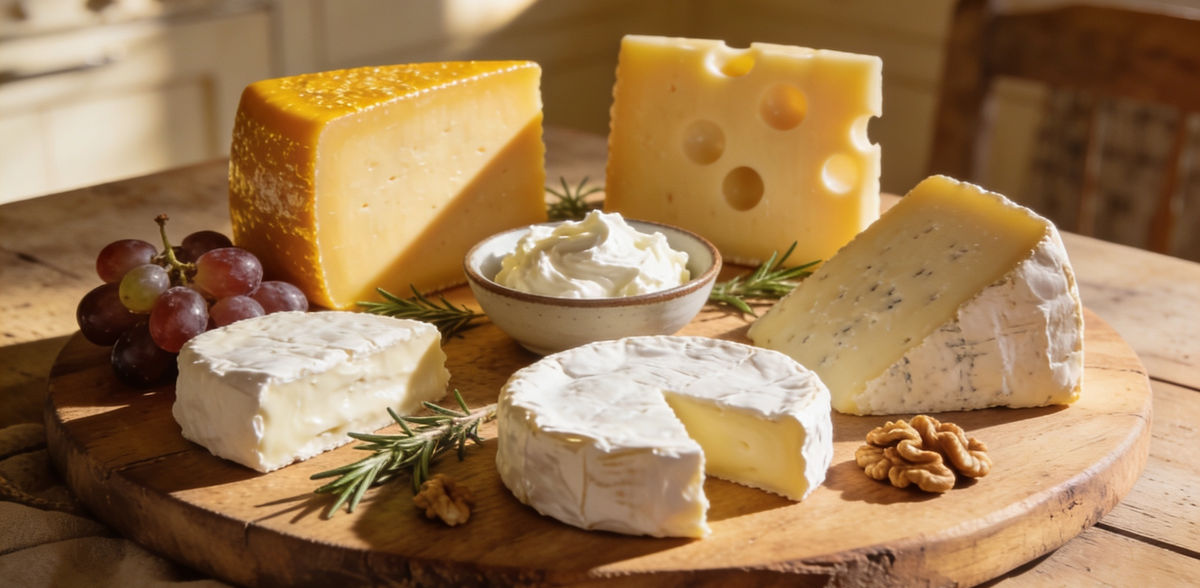
In terms of popularity, Gouda has been in first place for years, followed by Camembert and Emmental, with cream cheese, mozzarella and Edam taking the other places. This is shown by the results of a representative survey conducted by ZMB and Milchindustrie-Verband e. V. on various issues relating to dairy products and based on a survey last conducted in 2019.
While only 5.8% of the 1,017 respondents stated that they do not eat cheese at all, 45.5% emphasized that they would not give up cheese under any circumstances!
There were also gender-specific differences, with women mentioning cream cheese almost twice as often (20%) as men, who opted for this type of cheese (9%). The opposite was true for Tilsiter, with men preferring this variety twice as often (8%) as women (4%).
In total, dairies in Germany produced 2.76 million tons of cheese last year, around 20,000 tons more than in 2024. This means that cheese production in Germany has been rising continuously for three years.
Cheese is by far the most popular dairy product, followed by natural yogurt and drinking milk. Other dairy products are also very popular and have increased in per capita consumption. In the case of mixed milk drinks, there was an increase from 31.3 to 32.0 kg per capita among German citizens last year. Natural yoghurt increased by 0.3 kg, butter by 0.2 kg and cream by 0.1 kg.
This clearly shows that cheese in particular is well received by consumers. As part of a balanced diet, many people enjoy it every day in numerous variations - in the morning, at lunchtime, in the evening and in between meals. And the different varieties of other dairy products round off the overall picture of a healthy, varied and balanced diet.
Note: This article has been translated using a computer system without human intervention. LUMITOS offers these automatic translations to present a wider range of current news. Since this article has been translated with automatic translation, it is possible that it contains errors in vocabulary, syntax or grammar. The original article in German can be found here.



Other news from the department business & finance