Reduce, remove and modify: Research team "cuts" wheat chromosomes to size
Study paves the way for faster breeding
Advertisement


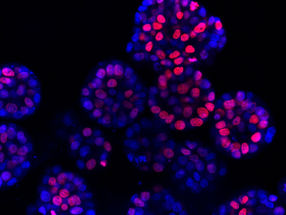
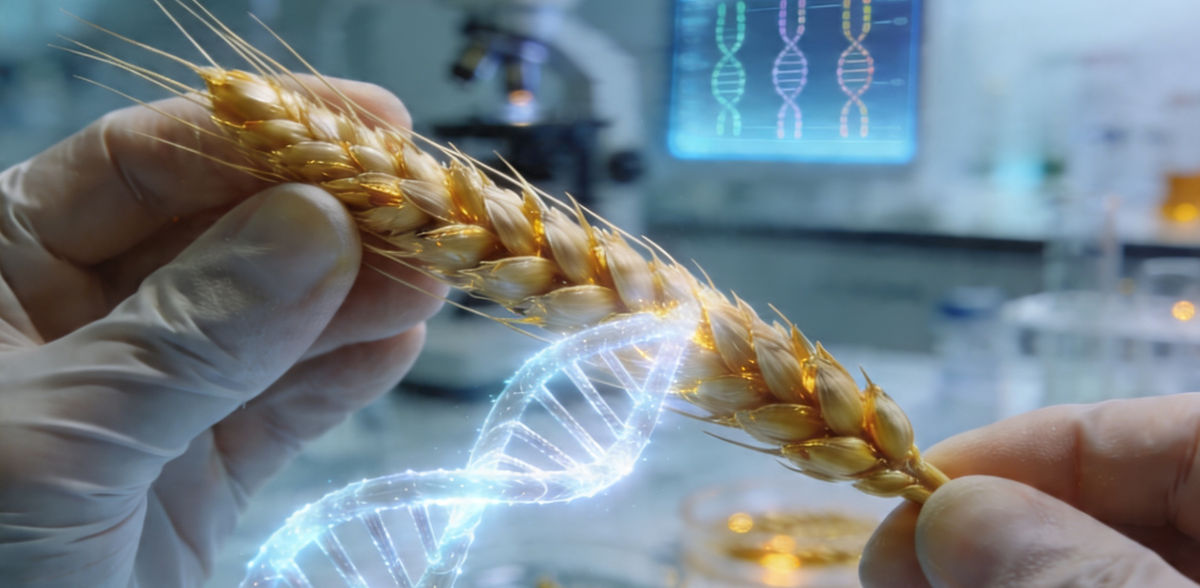
A research team from the Leibniz Institute of Plant Genetics and Crop Plant Research (IPK) has succeeded for the first time in specifically reducing or even completely removing chromosomes in plants with large genomes such as wheat. To do this, the researchers used CRISPR/Cas gene scissors to target repetitive sections of DNA. The results of the study, which were published today in the journal "Plant Communications", can significantly accelerate breeding processes.
While the targeted manipulation of entire chromosomes is already established in model organisms such as Arabidopsis thaliana, this has so far posed an enormous challenge in crops with large genomes, such as wheat. The IPK research team wanted to find out whether frequently repeated DNA segments, so-called satellite DNA, are suitable as starting points for the CRISPR gene scissors. The idea behind this was that cutting many of these identical sequences at the same time could affect the entire chromosome. The team used a virus-based system to transfer CRISPR components into the plants. With this approach, the research team bypassed lengthy, traditional transformation processes and enabled highly efficient chromosomal changes.
Dr. Jianyong Chen, the first author of the study, explains: "Our research shows for the first time that chromosomes can be efficiently reduced in size by targeted editing of satellite DNA." This is a significant advance, as such changes have previously only occurred randomly. You can think of it like a rope: If you cut into it in several places at once, it becomes unstable and breaks. This is exactly what happens to chromosomes when many cuts are made at the same time.
In some cases, the method has even led to the loss of entire chromosomes. "If too many breaks occur, the cell can no longer repair the chromosome and it is completely lost," explains Prof. Dr. Andreas Houben, head of the IPK working group "Chromosome Structure and Chromosome Function".
Conversely, faulty repair processes can also lead to the formation of new chromosome forms, so-called isochromosomes. "Many cuts cause chromosomes to be reassembled. This can result in completely new structures." The method therefore not only has the potential to destroy, but can also create new genetic variants. These new variants can form the basis for breeding new wheat varieties with new, desired characteristics.
The study shows that the genetic material of plants can be altered in a much more targeted way than previously thought. What is particularly exciting is that satellite DNA - long regarded only as "genetic ballast" - plays a key role and that these areas are excellent "docking points" for modern breeding tools. This makes it possible to efficiently edit the structure and number of chromosomes of crops with huge genomes. This is the key method for transferring desired traits from wild relatives into our modern wheat in the future," say the IPK scientists.
Note: This article has been translated using a computer system without human intervention. LUMITOS offers these automatic translations to present a wider range of current news. Since this article has been translated with automatic translation, it is possible that it contains errors in vocabulary, syntax or grammar. The original article in German can be found here.
Original publication


Other news from the department science