Regional herbs and vegetables from former pigsties
DBU supports startup Stallgrün with 125,000 euros
Advertisement


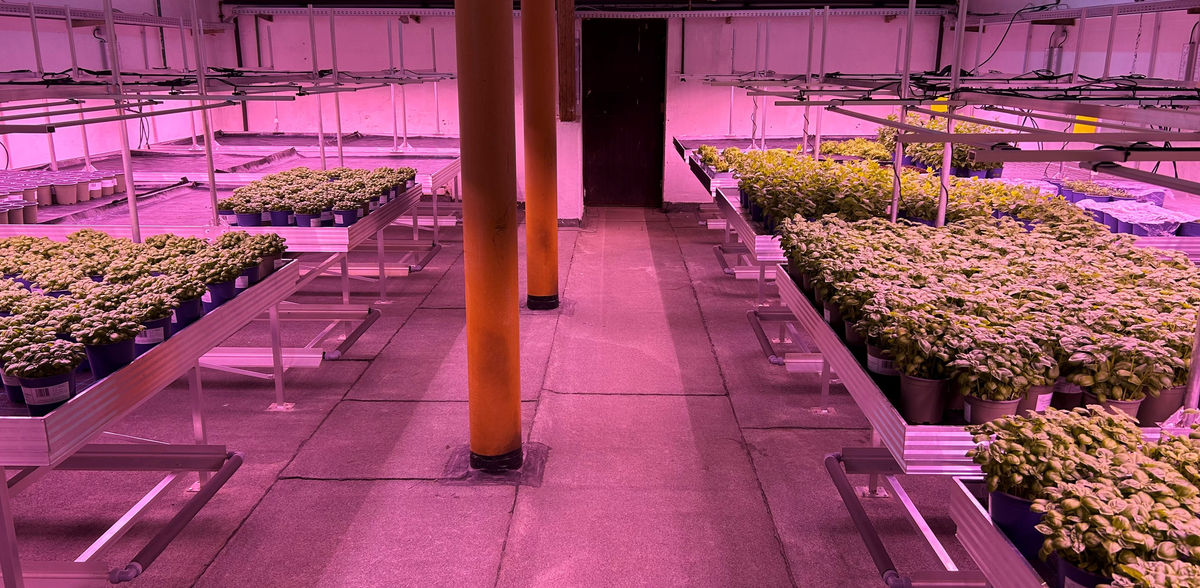
According to the statistics portal Statista, more than five million tons of vegetables are imported across Germany every year, partly because not all of the crops in demand can be grown all year round due to seasonal conditions. The Münster-based start-up Stallgrün has developed a concept for growing herbs and vegetables in former animal stables. Regional production ensures freshness while saving greenhouse space, transportation costs and emissions. The process also offers farmers a new financial perspective. The German Federal Environmental Foundation (DBU) is supporting the start-up with 125,000 euros.
Year-round cultivation of regional herbs and vegetables
According to the Federal Ministry of Agriculture, Food and Home Affairs (BMLEH), the number of German pig farms fell by 44% between 2013 and 2023 - a structural change in agriculture that is set to continue. DBU Secretary-General Alexander Bonde sees this as an opportunity for innovative, sustainable ideas: "New and at the same time environmentally friendly use of freed-up infrastructure offers sustainable financial prospects for farms and also prevents additional sealing of land elsewhere." According to startup Stallgrün, former pigsties offer ideal growing conditions for regional herbs and vegetables. The two founders Judith Ryll and Thorsten Lansmann-Niehaus: "The stables are usually solidly built and well insulated - and ideal for reuse." The start-up has therefore developed a system that allows plants to be grown regionally all year round - even if it is not possible to grow food outdoors in winter, for example.
Cultivation protocols for herbs and vegetables for the optimal use of seeds, fertilizer and light
According to Ryll, the Stallgrün concept was developed in two stages: "As a core product, we first developed a system during the DBU funding period that automatically controls irrigation, fertilization, lighting and air conditioning." This has been successfully achieved on a pilot farm over the past two years. According to Ryll, the conclusion: "Indoor farming in a former pigsty is an economically attractive business area for agricultural businesses." In addition, the founders have created cultivation protocols for many types of herbs and vegetables for the participating farms. Ryll: "We have defined the optimal use of seeds, soil, fertilizer, light, irrigation cycles and other parameters for suitable crops. This makes it easy for farmers to convert or expand their operations with indoor farming."
Supporting farmers with marketing and administration
According to Lansmann-Niehaus, farms are to be addressed throughout Germany. "Farmers use our system to grow herbs and vegetables in their former barns. We also support them with our experience in developing their marketing," says the co-founder. In the meantime, the start-up has also developed other services to make it easier to get started with indoor farming. "We have also set up a one-stop shop for the right growing materials and put together legal assistance with administration," says Lansmann-Niehaus.
Complementing established arable farming
According to Lansmann-Niehaus, Stallgrün does not want to replace other cultivation methods. "We don't see indoor farming as a replacement for open-air or greenhouse cultivation, but as a supplement. Thanks to control over conditions such as temperature, humidity and light, production is independent of the weather, seasons and climate." This means that products that would otherwise be grown seasonally can be available regionally all year round. "This does not mean that open-air production is no longer necessary, as it is still very effective," says Lansmann-Niehaus. Instead, using the existing infrastructure such as buildings and photovoltaics would open up a new business area for farmers and thus a new financial perspective, as this was no longer available in pig farming. The increased use of regional food instead of imports would also reduce transportation costs and the resulting emissions.
Note: This article has been translated using a computer system without human intervention. LUMITOS offers these automatic translations to present a wider range of current news. Since this article has been translated with automatic translation, it is possible that it contains errors in vocabulary, syntax or grammar. The original article in German can be found here.


Other news from the department business & finance















Most read news







More news from our other portals






















Something is happening in the food & beverage industry ...
This is what true pioneering spirit looks like: Plenty of innovative start-ups are bringing fresh ideas, lifeblood and entrepreneurial spirit to change tomorrow's world for the better. Immerse yourself in the world of these young companies and take the opportunity to get in touch with the founders.