Food fraud: Why criminals counterfeit oregano more often than beef
Food fraud causes up to 12 billion euros in damage every year: TÜV SÜD explains which products are particularly affected
Advertisement


Poor harvests and rising food prices make counterfeiting some products lucrative for criminals. Figures from the EU Commission show: Fraud exists, but remains limited thanks to tight controls. TÜV SÜD explains what "food fraud" means in the European Union.
Mixing high-quality foods with inferior substances or even replacing them entirely - this is the basic principle of food fraud. In this way, profit margins can be increased in a targeted manner. The European Commission estimates that food fraud causes economic damage of between 8 and 12 billion euros every year - and the trend is rising. Not least in order to keep the number of fraud cases low in relation to the entire food market, ongoing routine monitoring and concerted transnational control campaigns take place in the EU.
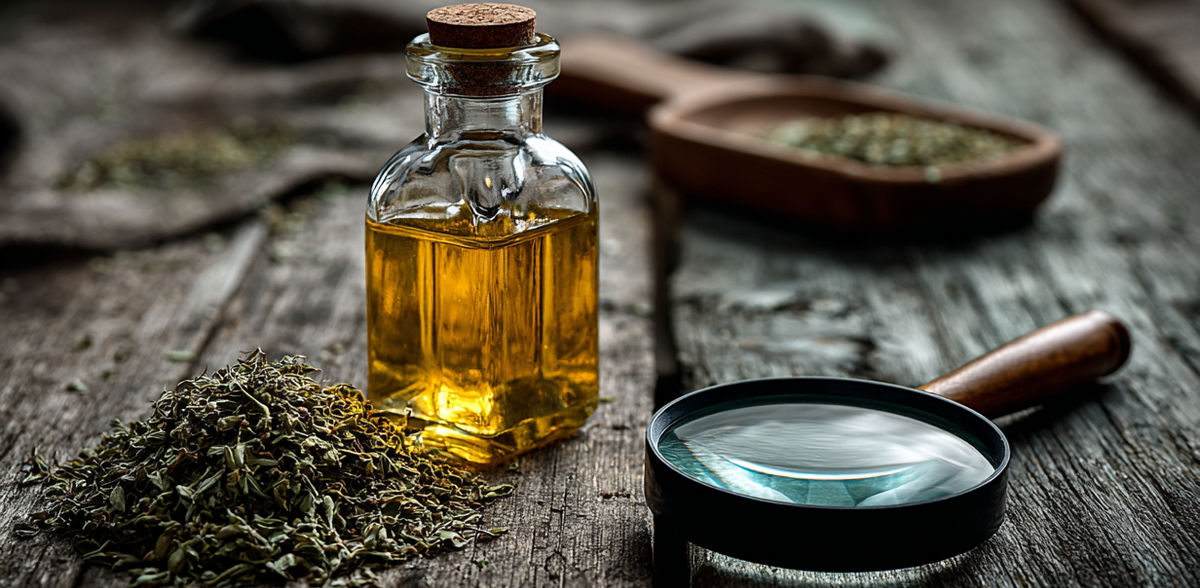
Olive oil is one of the most counterfeited foods in the EU. Criminals sell inferior lampante oil or sunflower oil as extra virgin olive oil or mix it with hazelnut oil. At the end of 2023 and beginning of 2024, authorities seized around 260,000 liters of adulterated olive oil in Spain and Italy alone. Total annual consumption in Europe is around 1.6 billion liters. Imported honey also has a high potential for fraud. In the European Commission's "From the Hives" control campaign (2021/2022), 46% of 320 imported samples were found to be suspected of being laced with sugar syrup. And then oregano. Oregano? Yes, the dried herb had the highest rate of suspected adulteration in an EU inspection campaign on herbs and spices. 48 percent of the samples were conspicuous and often mixed with olive leaves. Other favorites of the counterfeiters: black pepper (17 percent) and cumin (14 percent).

How and why is counterfeiting done?
Food fraud serves to maximize profits, which is why criminals have an interest in keeping their actions secret in the long term. Counterfeit food in the sense of food fraud is therefore usually not harmful to health. This distinguishes it from food defense, which includes sabotage, extortion and terrorism - for example, rat poison in baby food. As a rule, food fraud involves falsification of documents, false declarations or indications of origin as well as the dilution or dilution with material of less valuable origin. Olive oil adulterated with hazelnut oil is not necessarily less valuable in terms of nutritional physiology and is even milder in taste. Shrimps that have been sprayed with water simply weigh more. Although horse meat is as high quality as beef, it remains fraud if it is incorrectly declared. On the other hand, it becomes dangerous for consumers when artificial colorings are added to food, for example in spices such as saffron or paprika.
Criminals choose products according to two criteria: high margins with low volumes (oregano, saffron, bourbon vanilla, olive oil, honey) or large quantities with low margins (meat, cereals). In the end, consumers are always affected, but companies can also be among the victims: A delicatessen producer selling pickled Italian tomatoes in extra virgin olive oil could receive adulterated oil or tomatoes from another country from its upstream producer - despite having the correct documents.
Who uncovers fraud?
A close-meshed system of official monitoring, private sector controls and certifications curbs food fraud. Europol coordinates regular global OPSON operations to detect counterfeit and substandard food. It is up to the participating countries themselves to decide which foodstuffs a national operation should focus on. Tax offices and auditors become alert when expensive products are bought or sold at conspicuously low prices. The EU Commission carries out targeted control campaigns, for example on honey or spices, and publishes monthly reports on suspicious cases. The EU also operates the Alert and Cooperation Network (ACN), which includes the Rapid Alert System for Food and Feed (RASFF), a rapid alert system for health-related risks, the Administrative Assistance and Cooperation System (AAC) for violations without an immediate health risk and the Agri-Food Fraud Network (FFN) specifically for suspected cases of fraud.
Food standards counteract food fraud
Globally recognized food certification standards such as IFS Food, FSSC 22000 or BRCGS Food make systematic fraud more difficult. Companies draw up control plans, carry out laboratory analyses and evaluate their suppliers. Auditors scrutinize claims, regional information and value-adding declarations, for example with regard to ingredients, and check documentation, supply chains and production environments. They examine the company's precautionary system, interview employees, record whether raw materials and end products match in terms of quantity and take a look at delivery documents and even invoices. It is almost impossible to prove false declarations of origin by chemical analysis, but it is possible via the supply chain. However, systematic fraud remains difficult to detect. More often, auditors come across poor hygiene, errors in the avoidance of foreign bodies or gaps in the verification process - and thus ensure safe food.
What can consumers do?
In the event of suspicion, consumers should contact the food inspection authority in their district. They are obliged to consistently follow up on information. The EU Rapid Alert System for Food and Feed network enables authorities, auditors, consumers and the media to find out about current food fraud findings.
"The degree of processing of a product and the availability of goods play a central role when it comes to food fraud. In Europe, for example, there is plenty of cheap milk. Manipulation is hardly worthwhile here. It's a different story in Asia," explains Dr. Andreas Daxenberger, food expert at TÜV SÜD. "To prevent companies from becoming victims of food fraud themselves, for example in relation to olive oil, they should generally demand written proof and receipts from suppliers: What was ordered and delivered and in what condition? Legislation, official monitoring, targeted campaigns, private sector controls, consistent exchange of information and growing consumer awareness - this overall system is an effective tool for keeping food fraud to a minimum. In addition, certifications create valuable transparency about the quality capability of suppliers."
Note: This article has been translated using a computer system without human intervention. LUMITOS offers these automatic translations to present a wider range of current news. Since this article has been translated with automatic translation, it is possible that it contains errors in vocabulary, syntax or grammar. The original article in German can be found here.


Other news from the department business & finance

















Most read news








More news from our other portals
























See the theme worlds for related content
Topic world Food safety
Food safety is at the heart of the food and beverage industry. It ensures that the food we eat every day is not only nutritious, but also free of harmful contaminants. From field to plate, the industry monitors and regulates every step of the process with strict quality controls, advanced testing methods and continuous research.

Topic world Food safety
Food safety is at the heart of the food and beverage industry. It ensures that the food we eat every day is not only nutritious, but also free of harmful contaminants. From field to plate, the industry monitors and regulates every step of the process with strict quality controls, advanced testing methods and continuous research.