Beer Culture in Upper Bavaria: Tradition Meets Modernity
How Upper Bavaria is reinventing its beer culture, blending monastic traditions, craft brewers, and hop gardens
Amid hop gardens, monastery breweries, and historic beer cellars, Upper Bavaria’s beer culture reveals itself in many facets. Here, centuries-old brewing craftsmanship and living tradition meet modern brewing concepts and new ideas for enjoying beer. From the “Green Gold” of the Hallertau to small family-run breweries in the Alpine regions, a broad spectrum of regional identity, craftsmanship, and enjoyment unfolds. Sometimes deeply rooted, sometimes interpreted in a contemporary way—always closely tied to the people and places that shape this beer landscape.
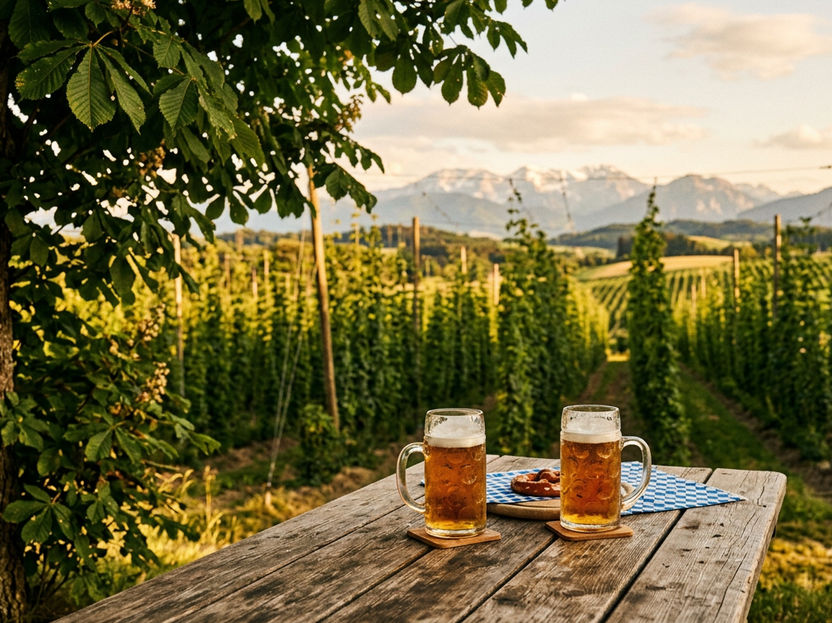
Illustrative image
AI-generated image
Truly Deeply Rooted: Where Beer History Lies Underground
In the Chiemsee-Alpenland region, beer culture delves deep into the region’s history. In the historic Wasserburg beer catacombs, brewers kept their beer cool underground more than 200 years ago—back when brewing was only permitted in winter. Today, guided tours wind through the intricate cellar system beneath Wasserburg am Inn, recounting stories of summer beer cellars, the art of storage, and the early craft of brewing.

Back above ground, Upper Bavaria offers a world of contrasts: beer gardens on the lakeshore, village squares shaded by chestnut trees, and views of the Alps. About ten breweries continue to shape the region to this day. Those who want to not only drink beer but also understand it can follow the beer educational trail on the Samerberg along the Fluderbach stream—passing 13 stations covering the art of brewing, raw materials, and beer knowledge right in the middle of the forest.
Truly spectacular: When hops shape entire landscapes
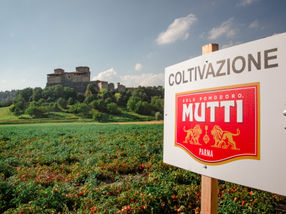
In the Hallertau region of the Pfaffenhofen an der Ilm district, it’s not just hops that grow. This is where the heart of Bavarian beer culture thrives. Hop fields stretching for meters across the landscape, bike paths leading from brewery to brewery—and as soon as you gaze out over the green fields, you’ll understand why the region thrives on “green gold.”
Hiking and biking tours such as the “Hallertau Hop Tour,” the “Hop Loop,” or “Discover Hops” combine nature experiences with beer culture, small breweries with historic sites, and cozy beer gardens with a surprising wealth of knowledge about brewing. Those who prefer to explore on foot will find themselves on the Hallertau Hop Trail near Wolnzach, surrounded by hop vines, informational signs, and sweeping views of the Wolnzach Valley.
In 2026, the region will gain even greater significance: The Society for Hop Research will celebrate its 100th anniversary on June 20 and 21 at the Hop Research Center in Hüll. There, new hop varieties, sustainable cultivation methods, and ideas for the future of beer brewing are being developed. The fact that craft beer brewing has been part of Germany’s intangible cultural heritage since 2020 suddenly feels very tangible here—after all, the hops for many beers grow right on the doorstep. Those who want to delve deeper will find themselves at the German Hop Museum in Wolnzach, where beer culture isn’t tucked away behind glass, but smells of harvest, earth, and craftsmanship.
In the Freising district, too, much revolves around the interplay of hops, landscape, and brewing tradition. The historic Bockerl Bike Trail follows the former railway line of the “Hallertauer Bockerl” right into the heart of hop country. The “To the Origins of Beer” bike tour connects Freising, Ingolstadt, and the Hallertau region—including beer gardens, castle breweries, and regional cuisine.
Truly Handcrafted: The New Faces of Beer Culture
Beer in Upper Bavaria is a living tradition—rooted in centuries-old brewing craftsmanship, regional ingredients, and the accumulated knowledge of many generations. Today, a multitude of young brewers—both men and women—are carrying on this legacy with fresh ideas and bold concepts, enriching the extensive range of traditional and modern breweries.
Take Barbara Lohmeier, for example, who works as a master brewer at Bräu z’Loh in the Erding district. She belongs to a generation that combines classical training in the brewing craft with current developments. In her work, non-alcoholic beers play just as important a role as modern interpretations of various beer styles. Her goal is to further develop beer as a cultural asset without straying from its artisanal foundations.
In Graming near Altötting, sisters Birgit and Sabine run a wheat beer brewery. They use exclusively Bavarian ingredients in their beers and have combined the brewery with their own beer garden. The two go hand in hand: the beer is brewed on-site and served right there. A visit to the two of them is definitely worthwhile. In addition to delicious beer, they offer typical regional specialties that make the beer garden a popular gathering spot in the summer.
The “Schlierseer Kindl” on Lake Schliersee enjoys great popularity among guests from near and far thanks to its new concept. It grew out of small-scale brewing experiments, which evolved into a unique offering. Today, in addition to various beers, it also offers brewing courses. Part of the production takes place directly in Schliersee, supplemented by collaborations with regional breweries.
Fee Huber has made a name for herself with the Bieraterie bar in Garmisch-Partenkirchen and is also drawing attention with a podcast about the beer scene. Through conversations at her bar and informative episodes of her podcast, she shares her passion for brewing beer with her community.
Truly outstanding: beer culture with a seal of quality in Upper Bavaria
The “Outstanding Bavarian Beer Culture” seal of quality highlights places in Upper Bavaria where beer is not just served, but cherished as a true cultural treasure. The award-winning taverns stand for regional brewing artistry, authentic hospitality, and cuisine that pairs perfectly with beer. The label was developed by Tourismus Oberbayern München in collaboration with Bayern Tourismus Marketing GmbH; today, it is supported by the Bavarian State Ministry of Food, Agriculture, Forestry, and Tourism as well as DEHOGA. For guests, it offers a reliable guide to discovering beer culture at a particularly high level—from traditional taverns to modern gourmet destinations. www.genusskueche.bayern/restaurants
Truly steeped in tradition: When Munich puts the spotlight on brewers
On Saturday, June 20, 2026, Munich will show that beer culture here is more than just Oktoberfest. During the traditional Brewers’ Day, the history of the brewing craft winds its way right through the Old Town. The date, around the summer solstice, recalls an old brewers’ rule: In the past, the brewing season ended in the summer because, without refrigeration, the risk of spoiled beer was too great. Brewing wasn’t allowed to resume until fall. Brewer’s Day continues this guild tradition to this day.
As early as the morning, young brewers and instructors gather at Marienplatz. Historical guild artifacts are displayed before the church procession makes its way to St. Peter’s Church. Afterward, magnificently decorated brewery carriages rumble across the Viktualienmarkt and Rindermarkt toward Marienplatz, accompanied by Schäffler dancers, Goaßlschnoizer, brass bands, folk costume groups, and Schuhplattler dancers. When the mayor traditionally “initiates” the young brewers and the free beer starts flowing shortly afterward, Munich suddenly feels like one big open-air brewers’ guild.
Truly monastic, creative, and sometimes quite laid-back
Upper Bavaria also demonstrates elsewhere just how diverse beer culture can be today. At Andechs Abbey in the Starnberg district, centuries-old brewing traditions blend with modern ideas. New for summer 2026: a non-alcoholic Andechser Apfelweisse as a fruity sundowner on the Holy Mountain, complemented by new brewery tours featuring VR technology.
In Schliersee, the art of brewing becomes almost tangible at the Markus Wasmeier Open-Air Museum. At the historic Schöpf Brewery, master brewers demonstrate traditional techniques; visitors can brew their own beer the old-fashioned way during classes; and alongside this, the “Schlierseer Kindl” has emerged as a young, experimental beer brand from the region.
The Pfaffenwinkel region, on the other hand, focuses on authentic beer garden culture. At the Schongau Brewery or Dachsbräu in Weilheim, the beer often ends up directly in your glass just a few meters after brewing—simple, local, and without any fuss.
And in Freising, the history of beer goes way back. As early as the early Middle Ages, the Cozroh Codex reported on hop gardens and beer deliveries to the bishop’s court. Today, research, brewing technology, and a vibrant beer culture come together on Weihenstephan Hill. City walks lead from the Cathedral Hill to historic beer cellars and show why Freising remains one of Germany’s most important beer cities to this day.
Note: This article has been translated using a computer system without human intervention. LUMITOS offers these automatic translations to present a wider range of current news. Since this article has been translated with automatic translation, it is possible that it contains errors in vocabulary, syntax or grammar. The original article in German can be found here.

Other news from the department business & finance