Rain Will Be Crucial for the 2026 Orchard Harvest: 450,000 metric tons Expected
The prognosis is clear, but there remains a risk of premature fruit drop
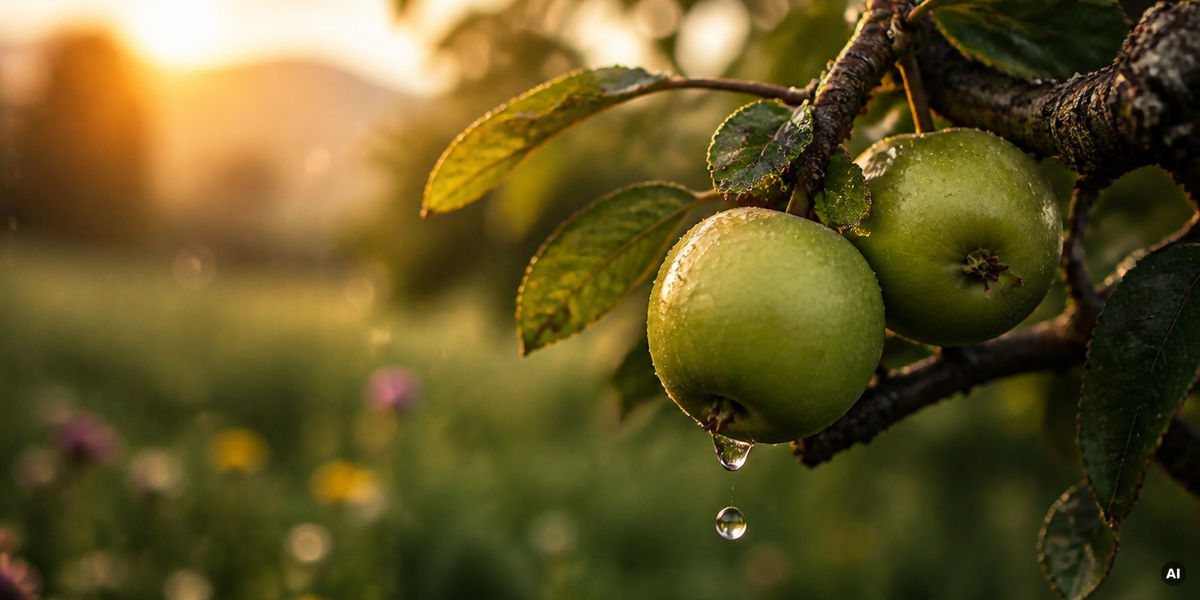
The Association of the German fruit juice industry (VdF) expects a wild orchard harvest of around 450,000 metric tons in 2026. Whether this amount will actually be reached, however, depends largely on rainfall in the coming weeks.
“There are enough apples on the trees, but the fruit is still very small at this point,” explains VdF Managing Director Klaus Heitlinger. “Even just one centimeter more in diameter can significantly increase the harvest yield. That’s why rain is so important right now. If there is no rainfall, the apples will stop growing and may be shed from the trees prematurely.”
According to the association’s assessment, the next two weeks will be crucial for the harvest’s further development. Experience shows that good harvests can improve as the season progresses, while weaker harvests often have to be revised downward further.
Significant regional variations possible
Harvests from orchards with scattered trees are subject to significant annual fluctuations. One reason for this is “alternation,” or the cycle between years of higher and lower yields. This phenomenon, well known in fruit growing, was further exacerbated by the late frost in 2017.
Harvest volumes can also vary significantly from region to region. Local rainfall in the coming weeks could cause actual local yields to differ considerably from the national forecast.
Yield Potential of Orchards Is Declining
Regardless of annual fluctuations, the yield potential of many orchards in Germany has declined in recent years. While a harvest of more than one million metric tons was still forecast for 2018, the dry summers from 2019 to 2023, in particular, have taken a toll on the trees.
Many orchard trees suffer from insufficient water supply. Added to this is the advanced age of numerous orchards. A large proportion of the trees are older than 80 years and are increasingly reaching the end of their natural lifespan.
Orchard meadows are valuable ecosystems
Klaus Heitlinger emphasizes the importance of orchard meadows beyond their economic function: “More than 5,000 animal and plant species find a habitat in orchard meadows. At the same time, the diversity of fruit varieties grown there results in unique flavor profiles that are appreciated by many consumers. Products such as apple juice from orchard meadows, as well as quince and pear juices, are therefore very popular.”
In light of the consequences of climate change and the aging of many orchards, German fruit juice producers are committed to preserving and promoting mixed-fruit orchard cultivation. Measures include, among other things, planting campaigns and premium pricing models that enable higher producer prices for mixed-fruit orchard produce.
Harvest Estimation with a Sense of Proportion
For 32 years, the VdF has been conducting what is known as the “cider apple crop density estimate.” The method was developed at the Lake Constance Fruit Growing Competence Center.
Using a special telescope—known as the “Gucki”—volunteer estimators focus on ten sections of a tree at a time and count the apple crop. Based on a standardized calculation method, this data is used to derive a nationwide harvest forecast.
This year, 45 volunteer estimators are participating in the survey. Through their work, they are also making an important contribution to highlighting the economic and ecological significance of orchard groves.
Note: This article has been translated using a computer system without human intervention. LUMITOS offers these automatic translations to present a wider range of current news. Since this article has been translated with automatic translation, it is possible that it contains errors in vocabulary, syntax or grammar. The original article in German can be found here.
Other news from the department business & finance