Sugar Trap Soft Drink
A market survey by the North Rhine-Westphalia Consumer Advice Center shows that there is still too much sugar in drink cartons, cans, and other products.
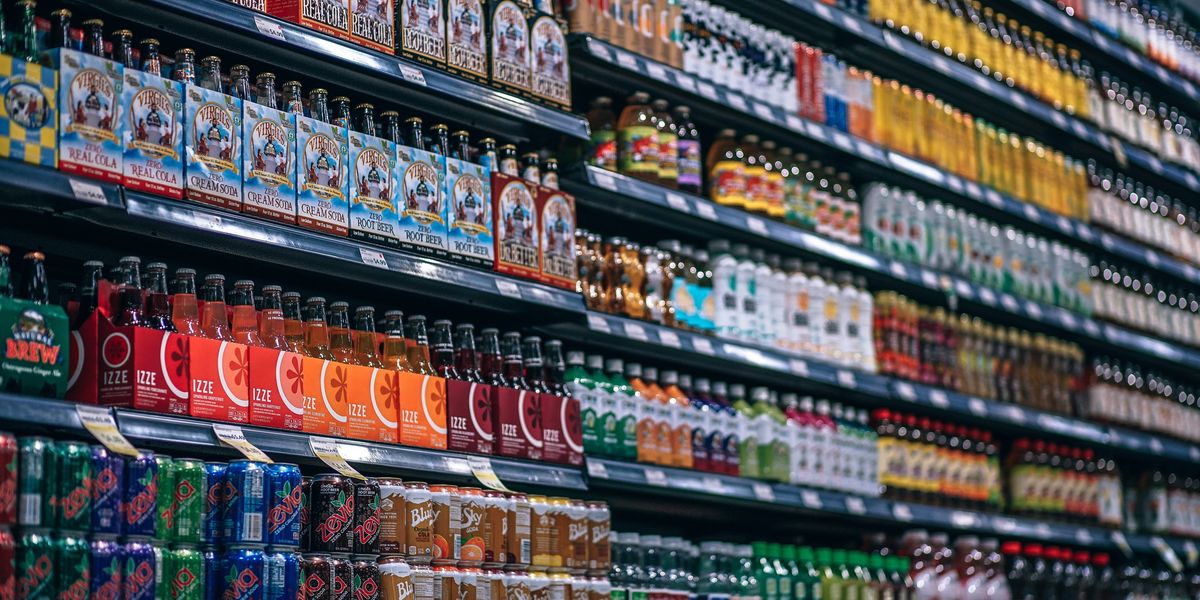
Colorful packaging, sweet taste, and quick refreshment—especially in the summer, many people reach for lemonades, iced teas, or other soft drinks. However, a recent survey by the North Rhine-Westphalia Consumer Advice Center shows that many soft drinks in non-resealable packaging, such as drink cartons or cans, contain more than 30 grams of sugar. That amounts to a large portion of the maximum daily sugar intake recommended for both children and adults.
Almost everyone loves sweets. For thousands of years, we’ve been wired to associate sweetness with energy—it’s usually non-toxic and not spoiled. But today, we have an oversupply of sugar. The sugar content is particularly high in soft drinks, as a survey by the North Rhine-Westphalia Consumer Advice Center (Verbraucherzentrale NRW) in 2022 already showed. Now the federal government is discussing a sugar tax on particularly sweet beverages, similar to the one already in place in the United Kingdom. Against this backdrop, the Consumer Advice Center of North Rhine-Westphalia (Verbraucherzentrale NRW) has once again taken a close look specifically at various non-resealable soft drinks, as these are usually consumed in their entirety immediately and can quickly drive up sugar intake. The conclusion: For the most part, the recipes still contain too much sugar.
Portion size makes all the difference
“Many soft drinks provide a large portion of the daily sugar limit—which should ideally not be exceeded—in just a single can or bottle. At the same time, they are hardly filling and are often consumed as a side,” explains Katrin Böttner, a nutrition expert at the Consumer Advice Center of North Rhine-Westphalia, which conducted the survey. The results of the market survey show that the sugar content of the beverages examined ranges from 14 to 44 grams per beverage. Since non-resealable containers are usually consumed quickly, it’s not just the sugar content per 100 milliliters that matters, but also the serving size. The sample included beverages with volumes of 200, 330, and 500 milliliters. Soft drinks are often accompanied by other sweets and high-sugar foods throughout the day, meaning that—especially in the case of children—the maximum recommended amount of sugar is quickly exceeded many times over.
Make Conscious Choices and Cut Back on Sugar
The World Health Organization (WHO) and the German Nutrition Society (DGE) recommend that less than 10 percent of daily energy intake come from sugar—ideally, as little as 5 percent. For adults, that amounts to about 50 grams of sugar per day; for children aged four to six, about 35 grams. There are significant differences in sugar content among the various beverages. Two products in the sample contain comparatively little sugar—4.3 and five grams per 100 milliliters—while five products contain ten grams of sugar or more. “It’s worth taking a quick look at the nutrition facts,” says Katrin Böttner, “which are usually found on the back of the package.”
What alternatives are there?
If you want to reduce your sugar intake, it’s best to drink water. For more variety, you can also make your own juice spritzers using a ratio of three parts water to one part juice, or try combinations with fruit and herbal teas. This way, you can gradually get used to the taste of less sweet beverages. The issue is also gaining importance in terms of health policy: The German federal government has announced plans to introduce a tiered tax on sugar-sweetened beverages modeled after the British system—a measure the Consumer Advice Center of North Rhine-Westphalia (Verbraucherzentrale NRW) has long been calling for. The goal is to encourage manufacturers to reduce sugar content and to fund preventive measures. In the United Kingdom, beverages containing eight grams of sugar or more per 100 milliliters are subject to the highest tax. Products containing five to less than eight grams of sugar per 100 milliliters are subject to a lower tax, while only beverages with less than five grams of sugar per 100 milliliters remain tax-free. Under this model, 15 of the 23 beverages examined would fall into the highest tax bracket.
Background
In June and July 2026, the Consumer Advice Center of North Rhine-Westphalia (Verbraucherzentrale NRW) examined a total of 23 sugar-sweetened soft drinks in non-resealable packaging. The study included beverages in cans, bottles with crown caps, and drink cartons from supermarkets, discount stores, beverage stores, and organic grocery stores. These included sodas, iced tea, and mixed drinks. Beverages containing sweeteners, as well as products in resealable packaging, were not included in the sample.
Note: This article has been translated using a computer system without human intervention. LUMITOS offers these automatic translations to present a wider range of current news. Since this article has been translated with automatic translation, it is possible that it contains errors in vocabulary, syntax or grammar. The original article in German can be found here.
Other news from the department business & finance