Sustainable Organic Production from Brewer's Grains
The iGEM team "Cozyme" uses optogenetics to convert brewing waste into jasmonate using light control
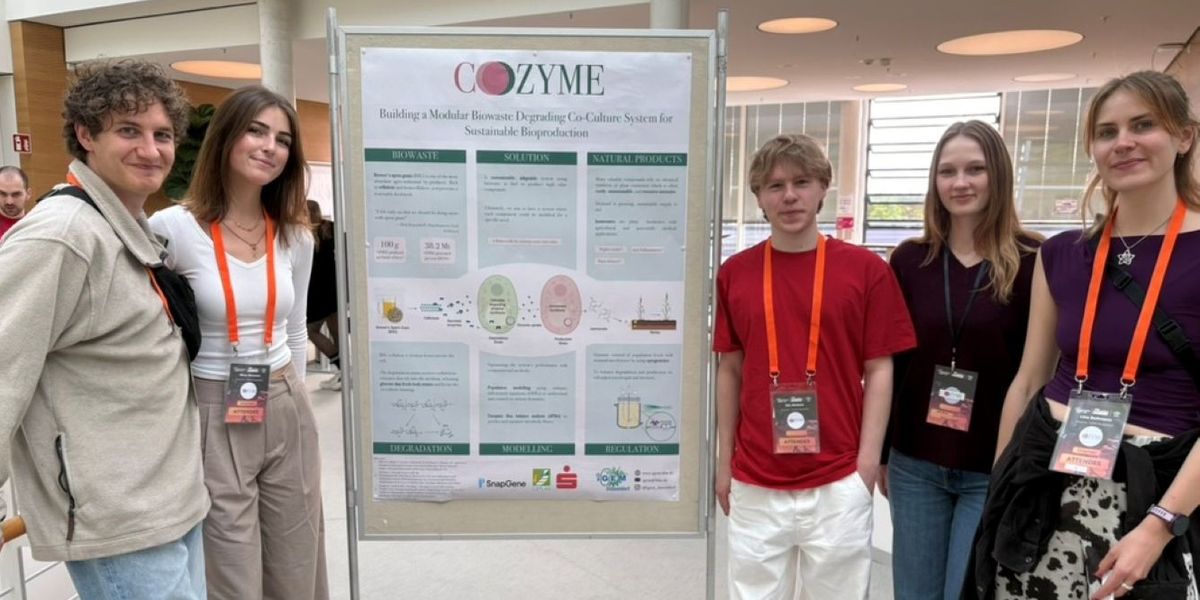
synthetic biology is considered key to solving global challenges. A team of students from Heinrich Heine University Düsseldorf (HHU) is taking on this challenge and participating once again in the iGEM competition; this marks the eleventh time a team from HHU has competed. iGEM (International Genetically Engineered Machine) is recognized worldwide as the most important platform for young researchers to develop innovative biological systems and redefine the limits of what is possible. This year, the team is competing with “Cozyme”: this biomanufacturing project aims to address local challenges and make these solutions globally scalable.
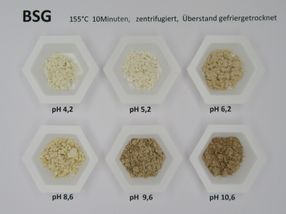
Altbier is more than just a beer—it’s a piece of Düsseldorf. But every time a beer is brewed, an often-overlooked byproduct is created: what’s known as “brewer’s spent grain.” This is exactly where this year’s HHU iGEM team comes in with its “Cozyme” project.
The goal is to produce high-quality bio-based products from previously underutilized brewing waste—in a sustainable, modular, and resource-efficient manner. Among other things, the HHU iGEM team is focusing on what are known as jasmonates. These are phytohormones—plant signaling molecules—that are used in agriculture as organic fertilizers and as plant-strengthening agents. With their help, for example, more and healthier grains, including barley, can be grown more efficiently.
“Ultimately, this secures the raw material base for beer, which in turn allows us to use more spent grain as a starting material for the production of new jasmonates—a perfect biological cycle,” explains Ole Nielsen, one of the student team leaders from HHU’s iGEM team.
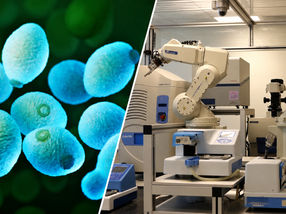
The iGEM team is focusing on continuous bioproduction, in which microorganisms produce substances continuously rather than in individual batches. It is developing a modular system that can be flexibly adapted using a building-block principle to break down various biological waste materials and transform them into new products. The innovative core of the project lies in what is known as optogenetics: various biological processes can be controlled by light.
“This technology represents a groundbreaking alternative to the already established auxotrophic co-cultures,” explains Lina Bollmann. Microorganisms that rely on the supply of certain nutrients from their environment—since they cannot synthesize them themselves—are referred to as “auxotrophs.” However, a drawback is that, in practice, classical auxotrophic cultures often exhibit a low growth rate and a low product yield. Furthermore, such co-cultures are difficult to maintain in equilibrium.
In optogenetics, the population ratio is precisely controlled using light wavelengths. With the help of two light sources, the team can intervene in a targeted manner: Specific wavelengths allow them to regulate or inhibit the growth of individual strains in order to perfectly balance the population dynamics. Furthermore, light control enables the processes to be separated in time—first, cellulose is broken down from the spent grain, and then, in a second phase, production of the target compound is ramped up to its maximum based on the breakdown products.
“What makes our system unique is that it will not only be applicable to jasmonates, but its modular design will also allow for the production of other substances. We chose to focus on the production of jasmonates in the first step because they have a direct connection to the beer industry, are well-researched, and at the same time give us the opportunity to demonstrate the modular nature of our system,” explains team member Aniela Jakimowicz.
Team Cozyme: This year’s team consists of 15 dedicated members from various degree programs and semesters: seven students in the Bachelor’s program in Quantitative Biology, one biochemistry student, and seven Master’s students in biology. The team is supported by various advisors—experienced members of previous HHU iGEM teams. Furthermore, the team receives guidance on technical matters from the Principal Investigators (PIs), Prof. Dr. Guido Grossmann from the Institute of Cell and Interaction Biology and Dr. Stefan Robertz.
Note: This article has been translated using a computer system without human intervention. LUMITOS offers these automatic translations to present a wider range of current news. Since this article has been translated with automatic translation, it is possible that it contains errors in vocabulary, syntax or grammar. The original article in German can be found here.
Other news from the department science