Gen Z drinks significantly more mocktails and fruit juice
Non-alcoholic drinks are becoming a habit for young people
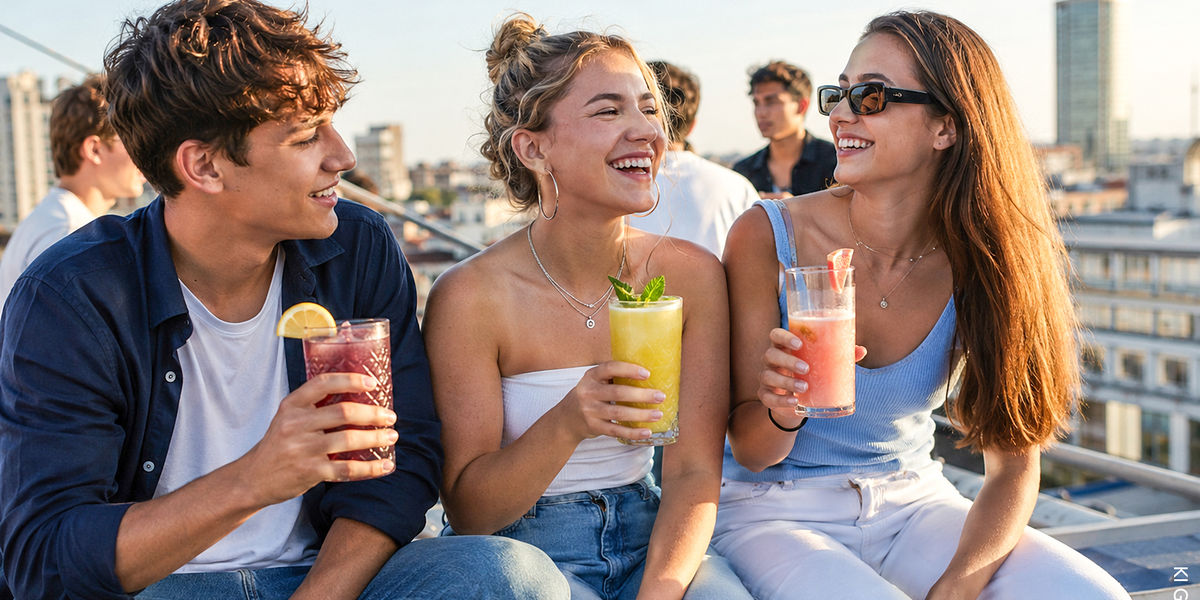
The mocktail trend among teenagers and young adults continues unabated. At the same time, fruit juice is being consumed significantly more often among this demographic. This is shown by the latest results of a YouGov survey commissioned by the Association of the German Fruit Juice Industry (VdF).
One in four respondents aged 16 to 26 now reports drinking mocktails regularly. In the summer of 2025, that figure stood at just 11 percent. Overall, 78 percent of Gen Z respondents have already tried non-alcoholic cocktails, an increase of seven percentage points from the previous year.
At the same time, regular fruit juice consumption has risen significantly. Eighteen percent of respondents report drinking fruit juice daily; in 2025, that figure was just 6 percent. Another 24 percent drink fruit juice several times a week, up from 19 percent the previous year. This means that the proportion of those who drink fruit juice daily or several times a week has risen significantly within a year, from 25 to 42 percent.
“The results show two notable trends: mocktails are increasingly becoming a regular beverage among young people, and at the same time, fruit juice is gaining significantly in importance in their daily lives,” says VdF Managing Director Klaus Heitlinger. “For many teenagers and young adults, non-alcoholic beverages are apparently becoming an increasingly natural part of modern, social drinking occasions.”
Mocktails Are Being Consumed More Regularly
The rise in mocktail consumption is not solely due to more young people trying non-alcoholic cocktails. Above all, the frequency of consumption has increased.
While the share of regular mocktail consumers rose from 11 to 25 percent, the share of occasional consumers fell from 60 to 53 percent. At the same time, the percentage of respondents who have never had a mocktail but would like to try one fell from 13 to 8 percent. Eleven percent still have no interest in mocktails, down from 14 percent the previous year.
“For many young people, mocktails are clearly no longer just a one-time alternative or a short-lived fad,” says Heitlinger. “They are becoming an integral part of beverage culture.”
Fruit Juice Is Gaining Relevance in Everyday Life
The survey also shows a clear shift toward more frequent consumption of fruit juice. While 20 percent of respondents in 2025 said they drank fruit juice less than once a month, that figure dropped to just 11 percent in 2026. The proportion of those who never drink fruit juice remained virtually unchanged at around 4 percent.
The respondents’ personal assessments also confirm this trend. Thirty-two percent say they drink more fruit juice today than they did two years ago. In the 2025 survey, this figure stood at 19 percent. At the same time, the proportion of those who, by their own assessment, drink less fruit juice fell from 34 to 24 percent.
More than one in three respondents now agree with the statement that fruit juice plays a major role in their lives. This proportion rose from 22 percent in 2025 to 35 percent in 2026.
“Young people are apparently consuming fruit juice more and more outside of the traditional breakfast setting,” says Heitlinger. “It fits in with different times of day and drinking occasions, and is also an important ingredient in modern non-alcoholic drinks.”
Fruit Juice Remains an Important Mocktail Ingredient
When asked what ingredients belong in a mocktail, fruit juice remains one of the most frequently mentioned ingredients. 46 percent of respondents cited fruit juice. A closer look at the age groups reveals an interesting difference. Among 16- to 21-year-olds, the figure remained virtually unchanged. In this age group, around 47 percent cited fruit juice as an important component of a mocktail in 2025; in 2026, that share rose to 48 percent. Among 22- to 26-year-olds, 43 percent cited fruit juice as an important mocktail ingredient. In this group of young adults, the importance of non-alcoholic alternatives to gin, rum, or vodka has increased. Their share rose from 23 to 30 percent.
“Mocktails are increasingly modeled after classic cocktails and are becoming more sophisticated in flavor,” says Heitlinger. “Fruit juice adds fruitiness, acidity, sweetness, color, and balance to the drink and combines very well with non-alcoholic spirits.”
About the Survey
The data is based on two online surveys conducted by YouGov Deutschland GmbH on behalf of the Association of the German Fruit Juice Industry. The July 2025 survey included 751 participants aged 16 to 25. In July 2026, 757 people aged 16 to 26 were surveyed. The survey was quota-weighted by age and gender, and the results were subsequently weighted accordingly.
The results are representative of Generation Z.
Note: This article has been translated using a computer system without human intervention. LUMITOS offers these automatic translations to present a wider range of current news. Since this article has been translated with automatic translation, it is possible that it contains errors in vocabulary, syntax or grammar. The original article in German can be found here.
Other news from the department business & finance