Creating incentives to buy for sustainable and healthy products
University of Bonn opens its own supermarket: Researchers are investigating the purchasing behavior of test subjects
The University of Bonn has opened its own supermarket, in which pineapples, canned tomatoes, and toast are neatly lined up on black shelves. The space measuring 55 square meters (approx. 600 square feet) has pretty much everything you’d need in everyday life. The ‘clientele’, however, is very special: they are subjects participating in scientific studies. Here, researchers from the fields of food and resource economics, psychology, economics, and behavioral science are investigating how health- and sustainability-oriented purchases can be encouraged, for example, through product placement and other incentives. Robots are also demonstrating their capabilities here.
No billboards in sight, no bicycle racks with a company logo: anyone standing in front of the white building complex on Am Probsthof would have no idea that it contains a replica of a small supermarket. There is no need for advertising, as the ‘laboratory supermarket’ is purely for scientific purposes. Anyone who comes here has been chosen as a test subject and is allowed to browse among the shelves. What they select should be recorded with scientific precision.
The head of the laboratory supermarket, junior professor Dr. Dominic Lemken, stands at the checkout and points to the ‘impulse-buy items’ displayed there. “Chocolate bars or chewing gum are normally positioned here because children, in particular, tend to look around while waiting in line and are likely to grab something here,” he says. “What if there wasn’t candy here but instead healthy fruits?” We already find ourselves in the middle of one of the research questions that can be investigated here – on a live test subject, so to speak.
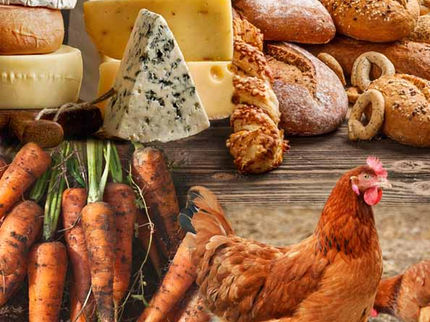
Creating incentives to buy for sustainable and healthy products
If you place bananas near the checkout, they are purchased around a third more often than in other corners of the supermarket. This has long been known by marketing strategists. However, what other incentives can still be created in self-service stores of this kind so that the clientele is more likely to opt for healthier products with less fat, sugar or salt? How must the packaging be positioned and designed so that sustainably produced goods, in particular, also have a chance? Everyone talks about animal welfare – how do these products achieve good sales despite higher prices?
All of this – and more – is set to be investigated here with scientific rigor. It is not difficult for the participants to get involved, as they feel as though they are customers in a ‘normal’ supermarket. Cameras record their decision to buy – with special software that makes it impossible to identify people. Only silhouettes can be seen. “We can only identify how many test subjects choose packaging version A or B,” explains Lemken.
The University of Bonn has already experimented with virtual supermarkets before. The subjects sit at a screen, seemingly steer a shopping cart between the shelves using a keyboard, and can select certain products in this pixelated world. Experience shows that this provides more reliable results than surveys alone. “However, the laboratory supermarket is even more realistic,” says Lemken. “People can fall even better into their usual shopping habits here, which we then evaluate.” After all, when people go shopping for real, the things they buy are not necessarily on their shopping list. Completely different products often become appealing. That’s when things get interesting for science.
When robots stack the shelves
Researchers from the Humanoid Robots Lab at the University of Bonn also conduct experiments here. “We test, for example, how robots can stack shelves efficiently and in a customer-oriented manner, and learn human-preferred robot behavior,” says Prof. Dr. Maren Bennewitz. “We then use the findings to optimize our systems for the supermarket, but also for applications in domestic environments such as home help or care services,” adds doctoral researcher Nils Dengler.
The University of Bonn is not using its own self-service store to supplement its budget. “We do not generate any income from the studies,” clarifies the head of the laboratory supermarket. Interested parties can apply to take part in studies and then receive a voucher for a certain amount. They are usually allowed to take the goods they have selected home with them to use. After all, the extensive product range should not be allowed to go to waste. If there is anything left over that is getting close to its use-by date, it is donated to food banks or other charitable initiatives. Sustainability also takes priority here.
Other news from the department science









More news from our other portals




















See the theme worlds for related content
Artificial intelligence (AI) for food and beverages
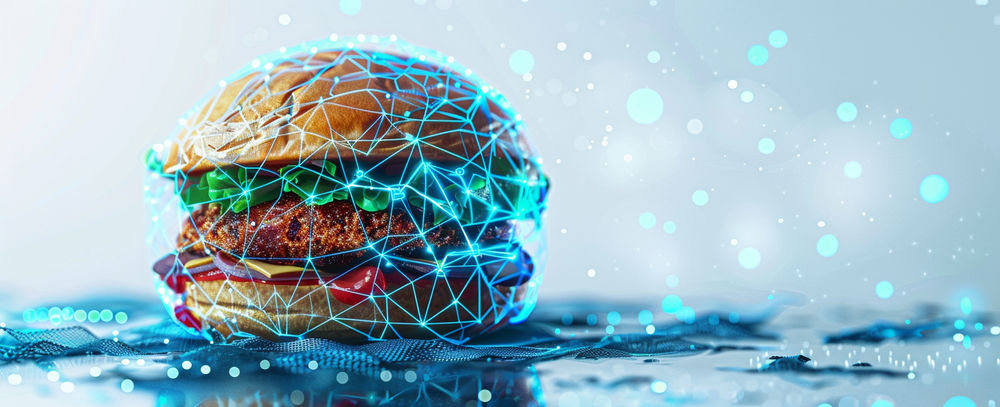
Artificial intelligence (AI) is optimizing the food and beverage industry through automated quality control and more accurate demand forecasting. AI plays a particularly important role in product development by analyzing taste preferences and market trends. This allows new products to be developed that are better tailored to consumer needs, increasing efficiency and customer satisfaction.
Artificial intelligence (AI) for food and beverages
Artificial intelligence (AI) is optimizing the food and beverage industry through automated quality control and more accurate demand forecasting. AI plays a particularly important role in product development by analyzing taste preferences and market trends. This allows new products to be developed that are better tailored to consumer needs, increasing efficiency and customer satisfaction.
