Why does oat milk sometimes foam perfectly and sometimes not at all?
New project makes the functionality of plant proteins measurable - for more reliable production of vegan products

oat milk sometimes foams perfectly and sometimes not at all. The vegan yoghurt is creamy one time and then crunchy the next. It is often not the recipe that is behind such fluctuations, but the raw material: plant proteins behave differently depending on their origin, processing and batch. This is precisely where a new research project at the Technical University of Berlin comes in: Together with the University of Hohenheim, the team led by Prof. Dr. Stephan Drusch, Head of the Department of food technology and Food Materials Science, is developing standardized methods to make the technofunctional potential of plant proteins measurable and comparable - i.e. properties such as solubility, emulsifiability, gel formation and foaming.
Why a "fingerprint" for plant proteins?
In safety-relevant areas of food analysis - such as salmonella or pesticide residues - measurement methods have long been standardized. When it comes to technological functionality, however, it is often the case that everyone measures differently. "How well something foams, how well it gels - there are no generally established standards for this," explains Drusch. This not only makes research and comparability more difficult, but also cooperation along the food value chain: manufacturers, suppliers and laboratories often do not speak the same "measurement language".
Plant proteins are particularly challenging because they vary greatly due to their nature: Varietal differences, climate, soil, harvest year and storage influence the properties - even if companies purchase "the same" raw material from the same supplier. This so-called batch-to-batch variation can lead to faulty production or necessitate complex input tests.

What the project is developing in concrete terms
The project is developing a method set that maps the functional properties of plant protein preparations under typical food conditions, i.e. under the influence of pH value, ionic strength and thermal treatment. The aim is to ensure that the process not only works in the special laboratory, but also in practice - ideally up to methods that can be used in quality control with manageable effort.
Different processing stages of protein raw materials are being investigated:
- Flours (low processing),
- protein concentrates,
- protein isolates (highly purified).
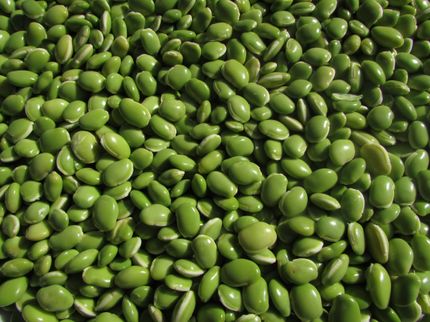
The team is also deliberately focusing on a wide range of raw materials, including legumes such as peas, field beans and soybeans, as well as proteins from oilseed residues such as rapeseed protein. The aim is to develop methods that are not just suitable for one special case, but for many applications.
How companies benefit
If the methods can ultimately be established as an industry standard - for example in DIN/ISO method collections - companies will be able to select and compare raw materials in a more targeted manner: Which batch of protein is suitable for foam in cappuccino? Which preparation stabilizes a vegan milk alternative? Which protein forms a resilient gel for desserts or spreads?
The expected benefits range from targeted supplier selection and better quality assurance to faster development projects and greater innovative capacity. Small and medium-sized enterprises (SMEs) in particular benefit because they often do not have specialized departments.
Cooperation with industry and connection to databases
The project is scheduled to run for three years and will be implemented in close cooperation with a project committee of industry partners. An important final step is the practical suitability test in companies: Does the measurement method work reproducibly outside the research laboratory?
In the long term, it is also about improving the usability of research data: standardized methods are a prerequisite for combining data from different laboratories and comparing them in databases in a meaningful way.
Research into plant-based foods at the TU Berlin
Plant-based foods are coming into focus not only due to new products, but also due to requirements for quality, reliability and industrial scaling. The Institute of Food Technology and Food Chemistry at TU Berlin is working on various issues in this field:
- In food chemistry, Prof. Dr. Sascha Rohn's team is investigating why pulses are considered healthy - for example with regard to fat and sugar metabolism as well as the role of intestinal flora and how processing and preparation can change these effects. At the same time, the "CiceRegio" project is establishing new value chains for regionally grown chickpeas in Berlin/Brandenburg and examining quality and potential uses along the cultivation and processing chain.
- In food biotechnology/process technology, Prof. Dr.-Ing. Cornelia Rauh is also researching which properties of plant proteins - for example from peas - determine whether foods form stable foams, for example in desserts or ice cream.
Note: This article has been translated using a computer system without human intervention. LUMITOS offers these automatic translations to present a wider range of current news. Since this article has been translated with automatic translation, it is possible that it contains errors in vocabulary, syntax or grammar. The original article in German can be found here.
Other news from the department science









Most read news










More news from our other portals
























See the theme worlds for related content
Topic world Quality assurance
In the food industry, quality assurance is about much more than safety. It's about ensuring consistent standards that meet consumers' taste, nutritional and aesthetic expectations. Using state-of-the-art analytical methods and strict protocols, Quality Assurance ensures that every product delivers on the brand's promise. From appearance and taste to texture and shelf life, Quality Assurance ensures consumers get exactly what they expect.

Topic world Quality assurance
In the food industry, quality assurance is about much more than safety. It's about ensuring consistent standards that meet consumers' taste, nutritional and aesthetic expectations. Using state-of-the-art analytical methods and strict protocols, Quality Assurance ensures that every product delivers on the brand's promise. From appearance and taste to texture and shelf life, Quality Assurance ensures consumers get exactly what they expect.