Mars and REWE Are Working Together to Electrify the Supply Chain
With 47 electric trucks and 2.4 million kilometers driven on electric power, the partners are demonstrating that sustainable heavy-duty trucking makes environmental sense—and is economically viable.
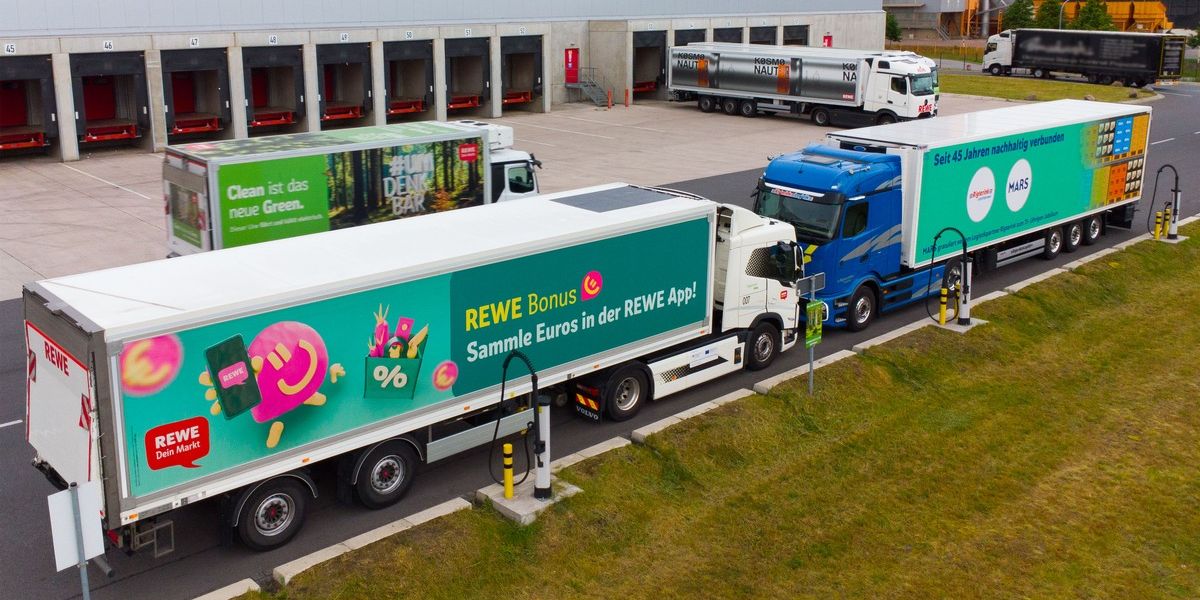
- Brand manufacturer Mars and retail company REWE are electrifying a cross-border, end-to-end pilot corridor for the first time.
- The partnership’s cumulative results total: 47 electric trucks in operation, 2.4 million kilometers driven electrically, and nearly 2,600 metric tons of CO2e savings
- E-mobility: environmentally sound and economically viable
The family-owned company Mars and the food retailer REWE are taking a decisive step together toward more climate-friendly transport logistics. Together, the partners are fully electrifying an end-to-end pilot corridor for the first time. On defined routes, products from Mars’ Snacks, Pet Nutrition, and Food divisions are transported entirely by electric power—from production or storage through the REWE logistics center all the way to REWE stores. Until now, both companies had only electrified their own regional segments of the supply chain.
Specifically, Mars products are transported from the chocolate factories in Veghel (Netherlands) and Viersen (North Rhine-Westphalia) and the Pet Nutrition factory in Verden via the Mars logistics center in Minden to the REWE central warehouse in Oranienburg. From there, electric trucks enable the sustainable delivery of products to the shelves of more than 300 REWE stores as well as to the REWE delivery service warehouse, where electric vehicles are also used. The project demonstrates the operational feasibility of a complete end-to-end route under real-world conditions, while also highlighting existing challenges and providing reliable insights for future scaling.
Investments in transport logistics: environmentally sound and operationally integrable
Building on the initial pilot route, the joint network currently has 23 battery-electric trucks from Mars and 24 vehicles from REWE in operation. In total, over 2.4 million electric kilometers are being covered, saving approximately 750,000 liters of diesel and avoiding nearly 2,600 metric tons of CO2e (well-to-wheel).

Additional benefits underscore the added value of this collaboration: Electric transport reduces perceived noise levels by about half compared to diesel trucks. In addition to CO2 reductions, the electric trucks offer quiet operation. This advantage is particularly evident when delivering to REWE stores in urban areas, such as Berlin. Drivers also benefit from the quieter and more dynamic driving characteristics of the electric trucks in use.
For Mars and REWE, the pilot confirms that electric heavy-duty transport along the entire supply chain is environmentally sound, easily integrated into operations, and economically viable. The ongoing dialogue between the partners helps address challenges and successfully overcome initial setbacks.
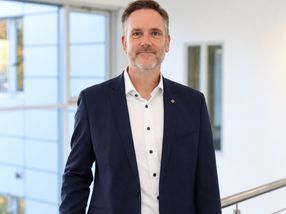
Lars Siebel, Executive Director of Logistics/SCM at the REWE Group: “Our message to all freight forwarders and truck fleet operators is to carefully calculate the business case for transitioning to e-mobility. Given the geopolitical uncertainties, diesel prices will remain highly volatile. In comparison, the price of electricity is stable and is expected to become cheaper over time. Already today, more than half of the routes in our network are cheaper to operate and maintain with electric trucks than with internal combustion engine trucks. With optimized route planning, the cost advantage can be increased even further, allowing the higher upfront costs of electric trucks to pay for themselves more quickly.”
Björn Schlenker, Supply Chain Integration Director at Mars in Europe, adds: “This best-case scenario can be applied to other end-to-end routes that can be electrified, including those that cross borders. Building a resilient network reduces emissions across the board in transport logistics and thus has an immediate positive impact on cost structure, delivery capability, and service quality."
Note: This article has been translated using a computer system without human intervention. LUMITOS offers these automatic translations to present a wider range of current news. Since this article has been translated with automatic translation, it is possible that it contains errors in vocabulary, syntax or grammar. The original article in German can be found here.

Other news from the department business & finance