German Feed Industry Sheds Light on Soy Supply Chains
DVT Publishes First Status Report on Soy
Advertisement


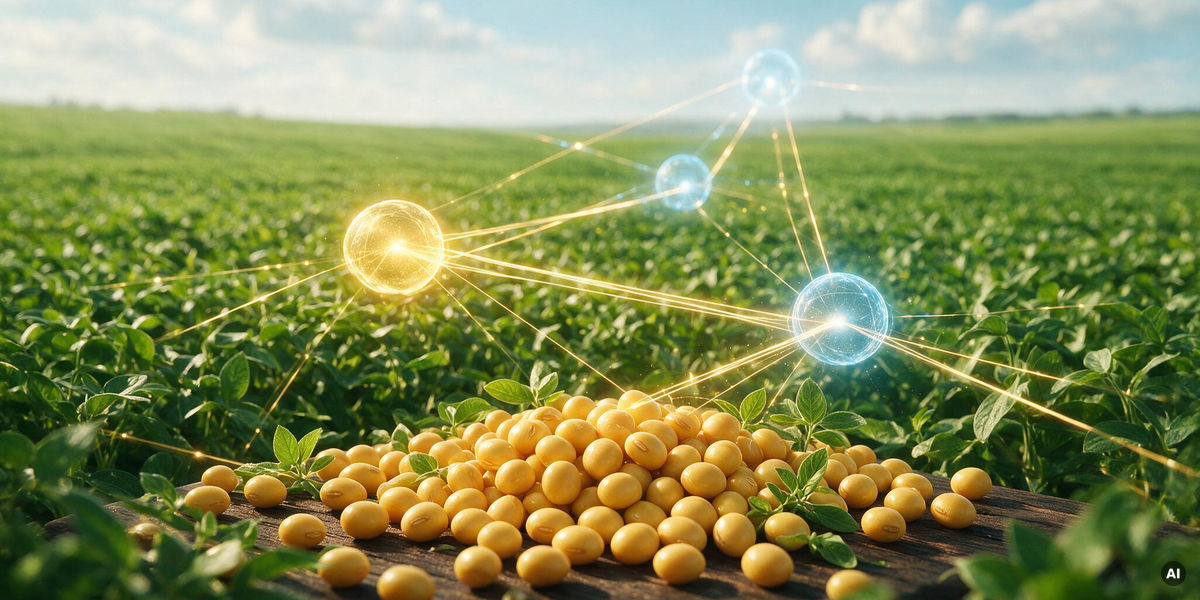
In recent years, the German animal feed industry has made significant progress in the sustainable sourcing of soy as a raw material. The German Pet Food Association (DVT) summarizes this development for the first time in its soy progress report. The report documents how the German animal feed industry is integrating environmental responsibility, economic performance, and societal expectations as principles of sustainability in an ongoing process. Dr. Hermann-Josef Baaken, spokesperson for the DVT’s executive board, explains: “Due to its properties, soy is a key component in the diets of pigs, poultry, and cattle. One example is the verifiable sourcing of soy from deforestation-free regions.”
The report makes it clear that soy’s environmental footprint depends less on its country of origin than on the specific production conditions, supply chains, and land-use histories. Modern, spatially differentiated approaches now allow for a more precise assessment than blanket average values. In addition to explaining general supply chain models for tracing supply flows, the DVT also provides an outlook on possible future developments to reconcile requirements with the realities of global commodity markets.
From Certification Logic to Product Traceability
Sustainable, deforestation-free soy products are now firmly established in the supply chains of German compound feed manufacturers. According to the 2025 survey, supply chain models that enable transparency and traceability have gained importance among DVT members in recent years.
The introduction of the mandatory QS SojaPlus add-on module has helped market participants become more aware of where soy comes from and which supply chain models ensure this. Baaken: “The requirements for documented proof of origin, sustainability criteria, and transparent commodity flows have noticeably intensified practical engagement with various chain-of-custody models. While in 2023—before the introduction of the supplementary module—only 35 percent of all participants could provide information on the models used, this figure had already risen to 88 percent by 2024 and 2025.”
The use of supply chain models varies depending on origin and product segment. This is particularly related to the availability of corresponding product flows, the infrastructure along the supply chain, and the respective market requirements. “Fundamentally, there are always conflicting goals between market impact, costs, traceability, and actual sustainability impact. Focusing exclusively on one of the supply chain models falls short,” said Baaken. “Further analyses in the feed industry have shown that today, approximately 90 percent of the soy meal used in Germany—regardless of which region of the world it comes from—already originates from deforestation-free areas in accordance with the deadline set forth in the EUDR Regulation.”
Looking Ahead
The demands for sustainable animal feed and transparent supply chains will continue to rise in the coming years. National and European regulations, rising expectations from the retail sector, and growing public awareness of climate and resource protection are driving the further development of sustainable raw material strategies.
Dr. Hermann-Josef Baaken sums it up: “In the long term, the industry has laid an important foundation for raw material procurement through its own guidelines and collaboration with stakeholders in the value chain, with the aim of continuously expanding the use of sustainably produced protein feed. These efforts help establish uniform and widely accepted requirements, strengthen transparency in supply chains, and implement practical solutions for the feed industry; they also serve as a crucial foundation for the further development of sustainable livestock feeding and sustainability reporting.”
Facts and Figures
According to current data from the Federal Office for Agriculture and Food (BLE), domestic feedstuffs cover approximately 88 percent of the crude protein requirements for animal nutrition; the remaining 12 percent come primarily from protein-rich raw materials such as soybeans. Due to its oil content (about 20 percent) and the high protein content of the meal, the soybean is equally valuable for both human and animal nutrition. Depending on its origin, soybean meal has a protein content of 43 to 49 percent. According to the Agrarmarkt Informations-Gesellschaft (AMI), in the 2024/25 marketing year, of the total 2.4 million metric tons of soybeans imported into Germany, 1.7 million metric tons came from the United States and 0.2 million metric tons from Ukraine. In addition, a total of 1.6 million metric tons of soybean meal was imported into Germany, of which 1.2 million metric tons came from South America and 0.3 million metric tons from India.
Note: This article has been translated using a computer system without human intervention. LUMITOS offers these automatic translations to present a wider range of current news. Since this article has been translated with automatic translation, it is possible that it contains errors in vocabulary, syntax or grammar. The original article in German can be found here.



Other news from the department business & finance