Sorting Potatoes with AI
TUM spin-off Karevo automates screening
Advertisement


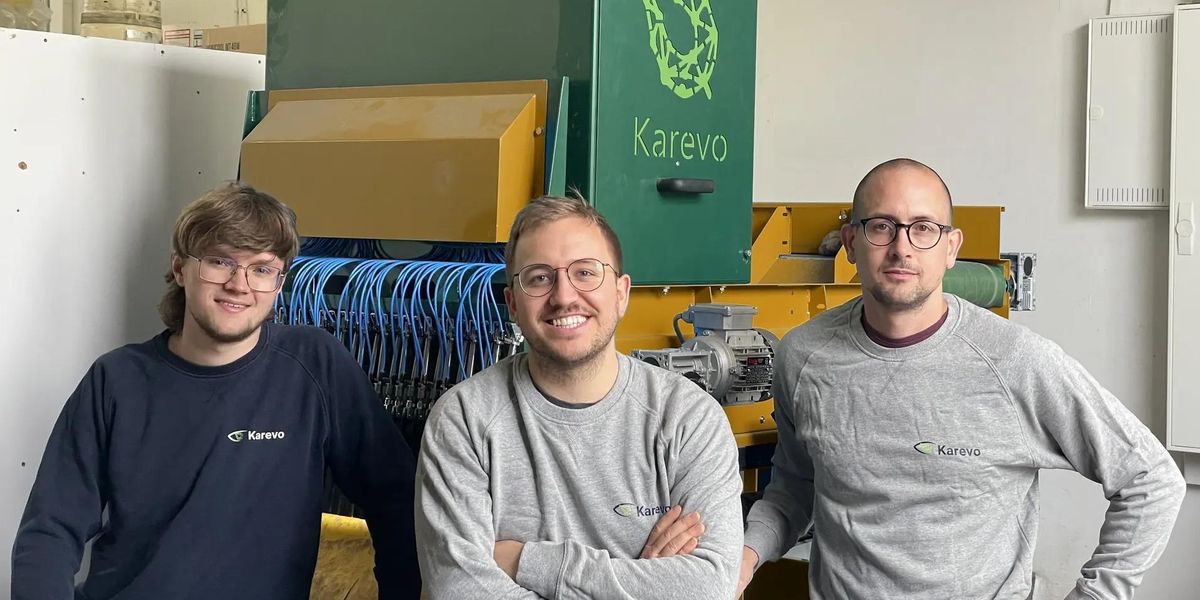
Karevo’s machines can sort up to ten metric tons of potatoes per hour. The AI-powered optical recognition system achieves an accuracy rate of 95 percent. The founder’s journey took him from a potato farm to the Technical University of Munich (TUM) and ultimately to his own startup.
“Sorting potatoes is backbreaking work—you stand at the sorting table for hours, checking every single potato while surrounded by noise and dust,” says Benedikt Keßler, co-founder of the startup Karevo. He grew up on a potato farm and knows the challenges firsthand. While studying mechanical engineering at TUM, he therefore developed the idea for an automated sorting machine that uses a specially trained AI model.
AI Trained on Over 100,000 Images
The model was trained using over 100,000 images and can identify damage to potatoes with 95 percent accuracy. The machine can detect foreign objects and seven types of defects, such as rot, cracks, and wireworms. A particular advantage: It works even with unwashed potatoes.
“Other detection methods often reach their limits with unwashed potatoes because they can look very different depending on the region, soil type, or storage conditions,” explains Benedikt Keßler. Thanks to the AI model, Karevo can quickly adapt the sorting process to the specific potatoes on the farm.
Designed for Small and Family Farms
“Potato sorting machines are often too expensive, too large, or too complicated to maintain for small farms,” says Benedikt Keßler, speaking from experience. That’s why Karevo’s machines are smaller and more affordable. They also feature a modular design, which makes maintenance easier and allows them to be integrated into existing systems. “I developed the machine that would have taken the back-breaking work off my hands at my parents’ potato farm.”
Prototypes Built at TUM
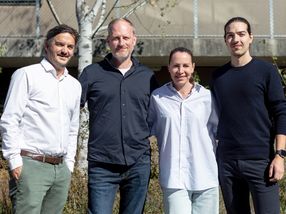
Benedikt Keßler began working on the technology during his master’s thesis at TUM. Together with his friend Johannes von Wittke, an engineering student at the East Bavarian University of Applied Sciences in Regensburg, he searched for additional co-founders. Through UnternehmerTUM, the Center for Innovation and Entrepreneurship at TUM, they found Felix Beck, who had completed his Executive MBA at TUM.
During the startup phase, they participated in the UnternehmerTUM Incubator and founded Karevo in 2024. In the beginning, they tinkered with the prototypes in the Makerspace, UnternehmerTUM’s high-tech workshop. They have been successfully on the market since the fall of 2025.
Note: This article has been translated using a computer system without human intervention. LUMITOS offers these automatic translations to present a wider range of current news. Since this article has been translated with automatic translation, it is possible that it contains errors in vocabulary, syntax or grammar. The original article in German can be found here.


Other news from the department business & finance















Most read news







More news from our other portals

















Something is happening in the food & beverage industry ...
This is what true pioneering spirit looks like: Plenty of innovative start-ups are bringing fresh ideas, lifeblood and entrepreneurial spirit to change tomorrow's world for the better. Immerse yourself in the world of these young companies and take the opportunity to get in touch with the founders.
See the theme worlds for related content
Artificial intelligence (AI) for food and beverages
Artificial intelligence (AI) is optimizing the food and beverage industry through automated quality control and more accurate demand forecasting. AI plays a particularly important role in product development by analyzing taste preferences and market trends. This allows new products to be developed that are better tailored to consumer needs, increasing efficiency and customer satisfaction.

Artificial intelligence (AI) for food and beverages
Artificial intelligence (AI) is optimizing the food and beverage industry through automated quality control and more accurate demand forecasting. AI plays a particularly important role in product development by analyzing taste preferences and market trends. This allows new products to be developed that are better tailored to consumer needs, increasing efficiency and customer satisfaction.