Can AI replace conventional bacterial testing in the food industry?
Deep learning model analyzes digital images of microcolonies and reliably distinguishes between pathogens and microscopic food residues
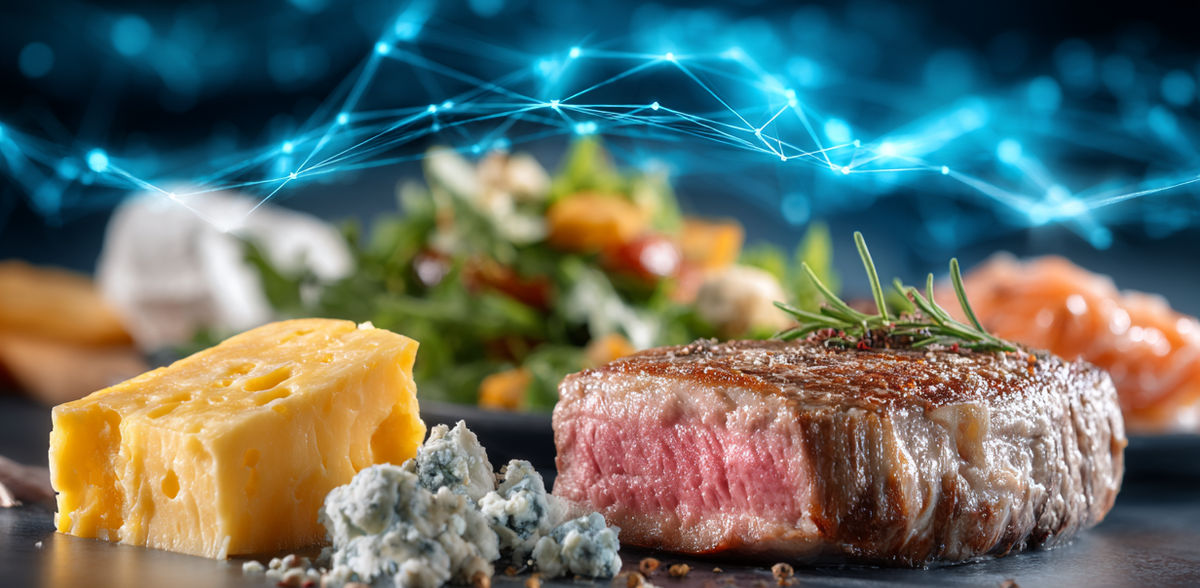
Researchers have significantly enhanced an artificial intelligence tool used to rapidly detect bacterial contamination in food by eliminating misclassifications of food debris that looks like bacteria.
Current methods to detect contamination of foods such as leafy greens, meat and cheese, which typically involve cultivating bacteria, often require specialized expertise and are time consuming — taking several days to a week.
Luyao Ma, an assistant professor at Oregon State University, and her collaborators from the University of California, Davis, Korea University and Florida State University, have developed a deep learning-based model for rapid detection and classification of live bacteria using digital images of bacteria microcolonies. The method enables reliable detection within three hours.
Their latest breakthrough involves training the model to distinguish bacteria from microscopic food debris to improve its accuracy. A model trained only on bacteria misclassified debris as bacteria more than 24% of the time. The enhanced model, trained on both bacteria and debris, eliminated misclassifications.
Bacterial contamination can arise throughout food production from farms to processing facilities and occur via sources such as animals, irrigation water, soil and air. The U.S. Food & Drug Administration estimates 48 million cases of foodborne illness annually, leading to 128,000 hospitalizations and 3,000 deaths.
“Early detection of foodborne pathogens before products reach the market is essential to prevent outbreaks, protect consumer health and reduce costly recalls,” Ma said.
The study, published in npj Science of Food, tested the deep learning model on three bacterial strains — E. coli, listeria and Bacillus subtilis — and food debris from chicken, spinach and Cotija cheese. Researchers are now working to optimize the AI system for industry adoption.
Original publication

Other news from the department science









Most read news









More news from our other portals




















See the theme worlds for related content
Topic world Food safety
Food safety is at the heart of the food and beverage industry. It ensures that the food we eat every day is not only nutritious, but also free of harmful contaminants. From field to plate, the industry monitors and regulates every step of the process with strict quality controls, advanced testing methods and continuous research.
Topic world Food safety
Food safety is at the heart of the food and beverage industry. It ensures that the food we eat every day is not only nutritious, but also free of harmful contaminants. From field to plate, the industry monitors and regulates every step of the process with strict quality controls, advanced testing methods and continuous research.
Artificial intelligence (AI) for food and beverages
Artificial intelligence (AI) is optimizing the food and beverage industry through automated quality control and more accurate demand forecasting. AI plays a particularly important role in product development by analyzing taste preferences and market trends. This allows new products to be developed that are better tailored to consumer needs, increasing efficiency and customer satisfaction.

Artificial intelligence (AI) for food and beverages
Artificial intelligence (AI) is optimizing the food and beverage industry through automated quality control and more accurate demand forecasting. AI plays a particularly important role in product development by analyzing taste preferences and market trends. This allows new products to be developed that are better tailored to consumer needs, increasing efficiency and customer satisfaction.