Men have eaten more meat than women for 10,000 years in Europe
Gender gap in meat consumption persisted across all eras of pre-industrial Europe
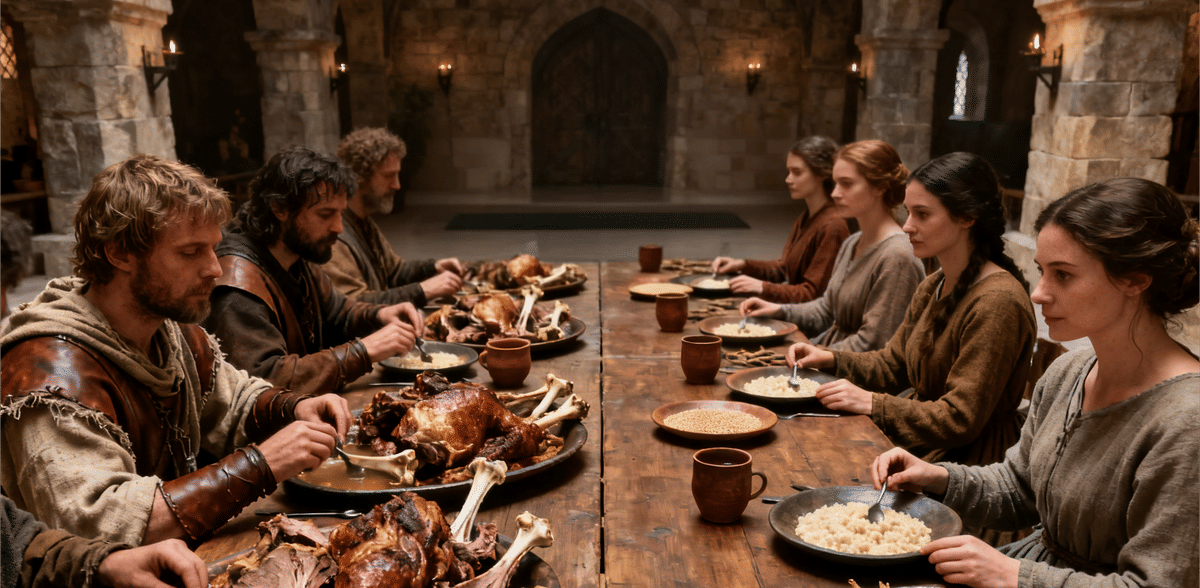
Access to nutritious food is a fundamental pillar of human success, but such access has been unequal throughout history. In pre-industrial European societies, meat was a highly sought-after food, and access to it was often related to a higher social status.
The ratios of carbon and nitrogen isotopes in human bone collagen can provide data about what a person ate. Nitrogen isotope ratios reflect the amount of meat a person ate, while carbon isotope ratios reveal what proportion of plants a person ate used the C4 carbon fixation photosynthesis pathway, from which one can infer how much low-status millet and variable-status marine foods a person may have consumed. However, comparing isotope ratios across sites is difficult; the use of manure fertilizer, varying climate conditions, and undernourishment can change the context in which raw values are interpreted.
Rozenn Colleter, Michael P. Richards, and colleagues work around this constraint by using the interdecile ratio. The interdecile ratio compares the threshold above which the top 10% of values lie to the threshold below which the bottom 10% fall. The result is a measurement of how extreme inequality is—not local isotopic ratios themselves. Using this tool, the authors examined the proportion of male and female individuals in different deciles of consumption of meat and millet and/or marine foods for 12,281 adults from 673 European sites over a 10,000-year period.
The authors find a persistent male bias in the highest meat consumption deciles in all eras. The first agricultural societies (Neolithic) were the most egalitarian, though they did exhibit significant gender disparities in access to animal proteins. According to the authors, the results underscore the persistent inequality of access to animal protein in Europe over the last 10,000 years. These inequalities may be rooted in food taboos, cosmological beliefs, misperceptions of women’s protein needs, or social norms that place men’s needs above those of women.
Original publication
Other news from the department science