The olive as a laboratory
A new analytical approach predicts the quality of olive oil before it is extracted
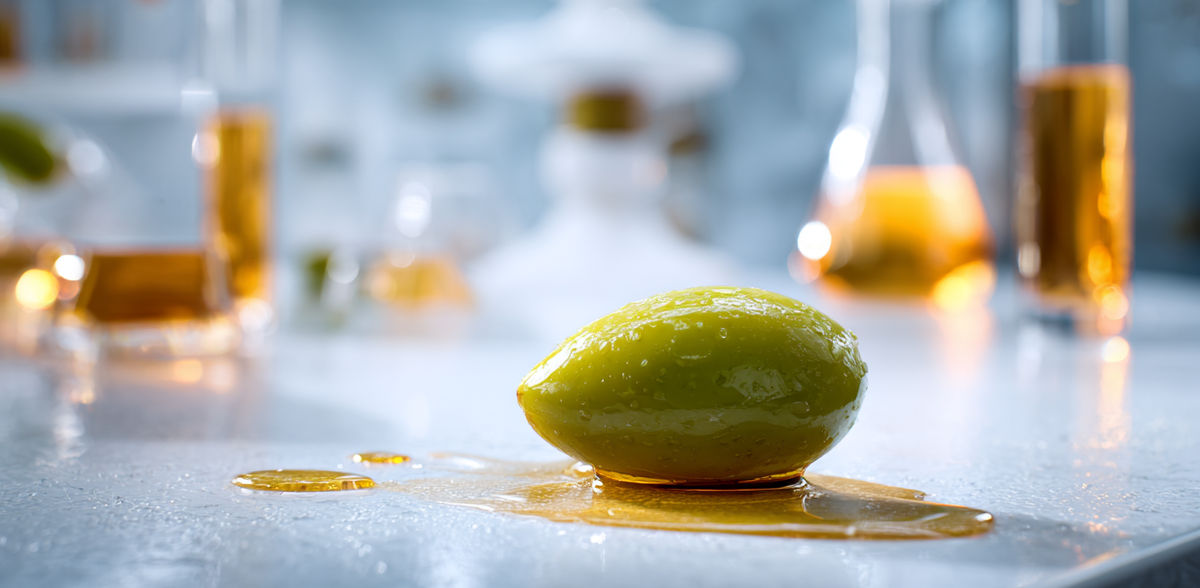
A method developed by the UCO predicts the fatty acid, phenol, and volatile compound profile of extra virgin olive oil (EVOO) quickly, easily, and accurately by using the olives directly.
Virgin olive oil is one of the cornerstones of the Mediterranean diet and, according to scientific evidence, a source of health benefits. Three chemical families ensure the quality of olive oil: fatty acids, phenols, and volatile compounds responsible for the oil's health benefits, organoleptic properties (such as its fruity aroma), and its oxidative stability, which refers to how long the oil remains in optimal condition without becoming rancid.
To determine the presence of these compounds in a given EVOO, it must first be extracted, and then laboratory analyses must be conducted. But what if it weren't necessary to press the olives to determine the composition of their oil? With this idea in mind, researchers Feliciano Priego, Enrique Cabanas, Carlos Ledesma, and Mónica Calderón at the UCO's Department of Analytical Chemistry have developed a pioneering method that makes it possible to predict the chemical profile of olive oil before its extraction, using only the olives.
"We wanted to get out ahead, trying to assess in the fruit itself what we might find later in the oil. Without having to press kilos of olives, we can predict the composition of the oil," explained Priego, head of the FQM-227 group.
According to Ledesma, a Ramón y Cajal researcher at the UCO, "the idea was to use a simple and quick sampling method to assess the three main chemical families in olive oil, and we tried the simplest approach: we removed the olive pit and placed a solid-phase microextraction fiber inside, which absorbs the volatile compounds and gives us the sensory profile. Then, using the material extracted in the syringe we use for pitting, we determine the phenolic profile and fatty acids."
This extraction method is, without any doubt, simple and fast, but it is also 100% accurate. The results showed that the most abundant compounds could be identified based on a single olive. A total of 79 metabolites were identified (13 fatty acids, 21 phenols, and 45 volatile compounds). "For fatty acids, we have profiles of 17/18 and were able to detect 13 of them, including the most abundant ones," Ledesma added.
Calderón was responsible for modeling the predictive panels used to classify the oils, a tool that combines different compounds and different cut-off points to determine the classification of the oils based on 2 or 3 compounds. "It was surprising because we achieved 100% accuracy," the researcher reported. The method's robustness was also validated by performing the same tests on olives and on oil and correlating the results.
For this study, we used eight olive varieties, with four samples of each variety, obtained from the UCO's World Olive Germplasm Bank. Prior knowledge of the chemical profiles of each variety and the metabolic pathways studied by the research group also laid the foundation for developing and validating this analysis method.
At the industrial level, this method not only offers speed and simplicity, but also makes it possible to determine optimal harvest times. By monitoring how the chemical profile of the olives evolves, producers can choose the ideal harvest time to produce the sensory properties desired and the phenolic compounds with the highest demand on the market. According to Priego, this can help augment the product's value or make it possible to use given criteria to differentiate it: "Some producers are looking for specific antioxidants, such as oleocanthal, or for a high phenol content, which allows them to make certain health claims on the label. Using this method, producers can determine at which point in the ripening process their oil features the composition desired."
This invention paves the way to exploring other varieties and could even be applied to other fruits. For the team, the next challenges could be to conduct a long-term ripening study to see how the compounds change, or to take the method into fields so that olives can be extracted and analyzed there directly.
Original publication

Other news from the department science











More news from our other portals




























See the theme worlds for related content
Topic World Food Analytics
Food analysis methods enable us to investigate the quality, safety and composition of our food. Whether in the traceability of food, the detection of contaminants or the verification of nutritional information - food analytics plays a crucial role in our health and nutrition. Welcome to the exciting world of food analytics!

Topic World Food Analytics
Food analysis methods enable us to investigate the quality, safety and composition of our food. Whether in the traceability of food, the detection of contaminants or the verification of nutritional information - food analytics plays a crucial role in our health and nutrition. Welcome to the exciting world of food analytics!