Food processing and packaging machinery industry in good shape

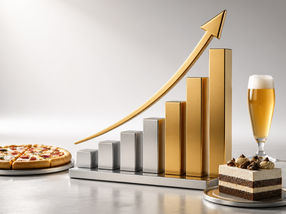
The year 2025 was a positive one for manufacturers of food processing and packaging machinery despite the difficult underlying conditions. According to data from the Federal Statistical Office, companies recorded growth of 4.9% in Germany in 2025, achieving a new record production figure of almost 17 billion euros. However, the growth in the third-strongest mechanical engineering sector is primarily due to the high order backlog with which the industry companies started 2025.
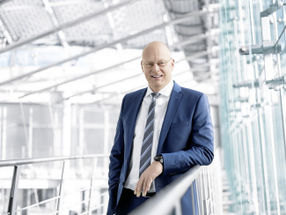
"Our industry has seen sustained positive development in recent years, with food processing and packaging machinery in high demand worldwide. Packaging machinery manufacturers in particular can look back on a strong year in 2025 and achieve growth of 8 percent to 9 billion euros," said Christian Traumann, Chairman of the VDMA Food Processing and Packaging Machinery Association, at the VDMA press conference on the occasion of interpack, which will take place in Düsseldorf until May 13, 2026.
By contrast, incoming orders in 2025 closed just below the previous year's level. In the first quarter of 2026, incoming orders for food processing and packaging machinery have unfortunately not yet met expectations. "Geopolitical crises, economic weaknesses in many important sales markets, US customs policy, the ongoing war in Ukraine and the latest developments in Iran are causing uncertainty and delaying investment decisions," explained Traumann. However, he points to the fundamentally positive growth prospects for the sector in view of the strong global developments in the food, beverage and pharmaceutical industries.
German exports up again - USA most important market
In 2025, foreign deliveries in the entire food and packaging machinery sector rose by 2% to around EUR 11 billion, with packaging machinery including beverage filling machines accounting for almost 70% of exports.
Europe remains the largest regional market for food processing and packaging machinery. Exports to the EU-27 countries rose by 4.2%, while they fell by 3.3% to the rest of Europe. Overall, 48% of German deliveries went to European countries, of which 35% were to the EU-27.
After Europe, North America is the most important sales region for German manufacturers of food processing and packaging machinery - with the USA as the most important market. In 2025, machines worth almost 1.8 billion euros were exported to the USA, which corresponds to a 16% share of total exports. Despite the customs policy there, exports only fell by 1% compared to the previous year. Germany is the most important supplier of food processing and packaging machinery to the USA, ahead of Italy, Canada and China.
Asia remains one of the most important sales regions with a share of 14 percent. Here, China, formerly the second most important market for the industry, has slipped to fifth place. Exports to the People's Republic of China have been falling continuously since 2022 and also dropped by 8% to EUR 409 million in 2025. "China is and remains an important market. However, the growth rates of the Chinese economy have become significantly weaker. The Chinese government's "Made in China" policy also ensures a preference for locally manufactured machines and systems, which increases the pressure on European manufacturers to localize," commented Christian Traumann.
Demand from abroad remained high overall in 2025, with strong momentum and double-digit growth figures from individual markets, including Mexico, Egypt, Algeria, South Africa, Japan and Brazil. With an average export turnover of 80%, machine manufacturers have a very broad international base. This ensures that regional differences in demand can often be balanced out. In the latest VDMA economic survey from April 2026, the regional business outlook in the sales regions of Africa, South and Central America and Asia was assessed as positive for the next six months.
Not only have German exports increased, but the global foreign trade volume of food processing and packaging machinery has also been growing continuously for many years and, according to available data from 2024, reached a provisional high of almost 55 billion euros. Two thirds of all food processing and packaging machinery exported worldwide comes from the EU-27 countries (as of 2024). "This makes the food processing and packaging machinery industry the most successful export sector in European mechanical engineering due to its high level of specialization, performance and innovative strength," Traumann stated. Germany and Italy are joint leaders, each accounting for around 20% of global foreign trade in machinery. According to the available data for EU exports for 2025, European exports have risen by 4%.
Prospects and challenges
The global packaging and processing industry is one of the most dynamic growth sectors. Manufacturers of food processing and packaging machinery benefit from the increase in global sales of packaged food and the machines make a decisive contribution to the safe supply of food, beverages and pharmaceutical products to a growing world population. The market research institute Euromonitor International forecasts an increase in global sales of packaged food from 872 million tons in 2024 to 968 million tons in 2029. Almost a third of total consumption in 2024 will be in the Asian region. Demand is also expected to grow at an above-average rate in the Asia and Middle East/Africa regions.
Within the mechanical engineering sector as a whole, manufacturers of food processing and packaging machinery continue to be more positive in their assessment of the economic situation, sales expectations and capacity utilization. Nevertheless, uncertainty is also evident here. In particular with regard to the US tariffs and the Iran war, as well as clear displeasure over excessive bureaucracy, the challenging location conditions and the protracted reforms in Germany.
In many foreign markets, companies are facing increasing competitive pressure from China. The technological lead and the associated competitiveness of German and European manufacturers can only be maintained if the structural locational disadvantages in Germany and Europe - in particular bureaucracy, energy and labor costs - are reduced. The companies expect corresponding reforms from politicians.
"We have a very innovative mechanical engineering industry in Germany and Europe, whose continued success depends on better framework conditions and open markets. We demand that the announced reforms finally come and that our ability to innovate is not slowed down by excessive regulation. We very much welcome the commitment to further free trade agreements," summarized Christian Traumann.
The leading international trade fair interpack is seen by the entire industry as an important source of inspiration. "We are very much looking forward to the global meeting of the entire industry. In this dynamic environment, interpack once again acts as the central meeting point along the entire value chain: companies show what they are made of, provide new impetus and present innovations. The focus is also on personal exchanges and discussions with customers from all over the world," emphasized Traumann.
Other news from the department business & finance