How advertising entices us to take the next sip
This insight opens up new avenues for research, prevention, and public health policies

Advertisements for alcohol are not merely perceived passively; they can actively influence drinking behavior. This occurs through a mechanism that has been difficult to demonstrate until now: the targeted steering of attention. These are the findings from a recent experimental study conducted by Australian, German, and Dutch researchers, including the Max Planck Institute for the Study of Crime, Security, and Law in Freiburg.
For years, it has been common knowledge that advertising influences consumer behavior. The same holds true for depictions of alcohol: people who see more of this type of advertising tend to drink more on average. Up until now, however, it has remained unclear why some people are more susceptible to this influence than others.
Researchers from the University of Western Australia, Curtin University in Perth, the University of Amsterdam, and the Max Planck Institute for the Study of Crime, Security and Law in Freiburg took what is known as attentional bias as their starting point. This term refers to the tendency to automatically or consciously pay more attention to certain stimuli – in this case, images of alcohol – than to others. This bias can occur either involuntarily (due to conspicuous stimuli) or intentionally (due to interests or expectations).
Experiment with targeted attention steering
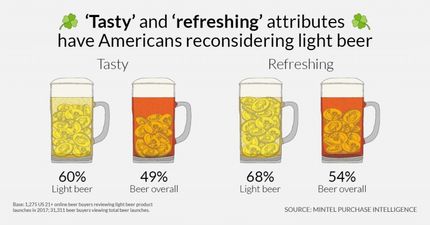
In a laboratory experiment involving 69 students, participants were simultaneously shown beer commercials and soft drink commercials. The key experimental manipulation involved researchers directing participants’ attention: One group was subtly encouraged to pay closer attention to the beer commercials. A second group was guided to ignore them.
Two things were then measured:
- Craving – the subjective desire for a beverage
- Actual consumption – measured in a simulated “taste test” during which participants could drink freely
The results are clear:
- Participants who paid closer attention to beer ads developed a significantly stronger craving for beer.
- This increased craving, in turn, led them to actually drink more beer.
- The connection was confirmed using a technique known as mediation analysis, a statistical method that shows how an effect comes about. The causal pathway in this case: attention → craving → consumption.
What’s remarkable: Paying attention to the advertisement did not directly affect consumption; its effect was mediated by the craving it triggered. Thus, the study provides strong evidence that exposure to alcohol advertising plays a causal role – it is not merely correlated with consumption but actually contributes to it.
These findings may have positive implications for public health. For example, policymakers could regulate advertising in a more targeted manner, such as by restricting particularly eye-catching advertising formats. “In addition, training programs can be developed that aim to consciously divert attention away from alcohol cues,” explains Sera-Maren Wiechert, a postdoc at the Max Planck Institute in Freiburg and one of the study’s co-authors.
At the same time, however, the researchers also point out the study’s limitations. “We examined only beer ads. It remains to be seen whether the results can be applied to other types of alcohol,” says Sera-Maren Wiechert. What’s more, the participants were young adults; other age groups might react differently.
Original publication
Rudaizky, D.; Mazidi, M.; Wiers, R.; Grafton, B.; Wiechert, S.-M.; Mrkonja, L.; MacLeod, C.: Attention to alcohol advertising causes elevated consumption via increased alcohol-related craving. Psychology of Addictive Behaviors (2026)

Other news from the department science