Multinational Outbreak of Salmonella Stanley Infections Linked to Flavored Pasta Products
Recalls Underway: Salmonella in Flavored Pasta Affects Children Most of All
Flavored pasta products are considered the most likely source of an ongoing outbreak of Salmonella Stanley infections affecting several countries; according to a rapid assessment of the outbreak by the EFSA and the ECDC, there is evidence that the cases are linked to products of the same brand.
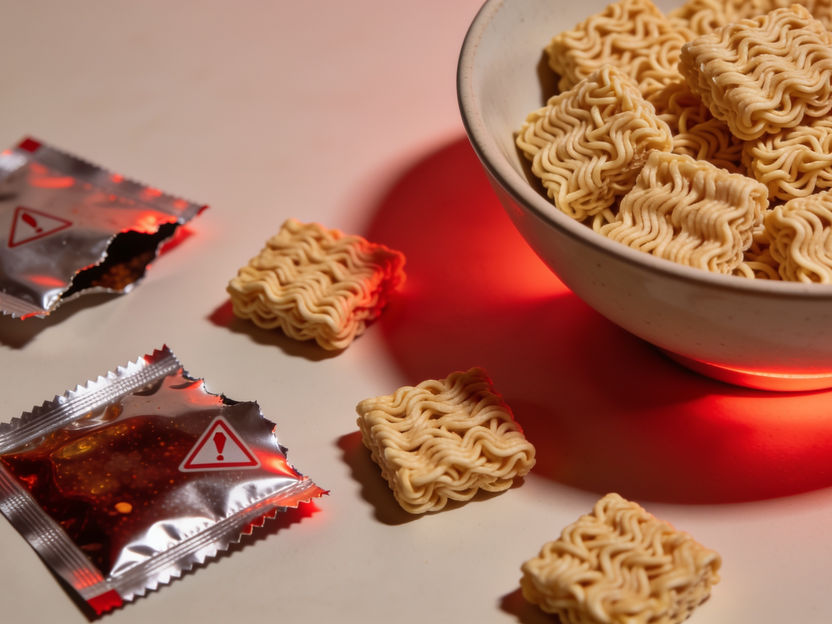
Illustrative image
AI-generated image
Between November 2025 and June 2026, 104 confirmed cases were reported in 13 countries of the European Union/European Economic Area (EU/EEA) as well as in the United Kingdom. The outbreak primarily affected children and young adults; at least 49 people required hospitalization.
Cases were reported from Austria, the Czech Republic, Denmark, Estonia, France, Germany, Hungary, Latvia, Lithuania, the Netherlands, Norway, Poland, Sweden, and the United Kingdom.

Evidence points to flavored pasta products
Epidemiological investigations have shown that those affected in Denmark, Estonia, Germany, Latvia, and Lithuania had consumed flavored pasta products of the same brand.
Microbiological findings further support this link, as the outbreak strain was detected in Germany and Lithuania in chicken-flavored pasta products as well as in spicy chicken-flavored pasta products. Investigations have linked the products, which were distributed in several countries, to the same manufacturer in Ukraine. This suggests a possible common source of contamination at the production facility, although further investigations are needed.
Other Salmonella strains have been detected in products of the same brand, suggesting that more than one source of contamination may be involved.
Control Measures and Risks
Food safety authorities in the affected countries have taken control measures, including withdrawals and recalls of the affected products, thereby reducing the likelihood of new infections associated with this outbreak.
However, the actual cause and the location(s) of contamination have not yet been identified. It is therefore likely that additional cases may occur, particularly since these products have a long shelf life and may remain stored in household kitchens for extended periods.
Advice for Consumers
Consumers should not consume any products affected by the recalls and should return them to the place of purchase or dispose of them.
For products that require further processing before consumption, consumers should strictly follow the instructions on the label. Good food hygiene during preparation is also of the utmost importance.
Further Investigations
Health authorities are urged to interview all new cases, sequence isolates where possible, and share information with the ECDC.
Food safety authorities are urged to continue investigating the suspected products as a source of infection and to determine the cause of the contamination, including whether there is a link to one or more ingredients.
Note: This article has been translated using a computer system without human intervention. LUMITOS offers these automatic translations to present a wider range of current news. Since this article has been translated with automatic translation, it is possible that it contains errors in vocabulary, syntax or grammar. The original article in German can be found here.
Other news from the department politics & laws








More news from our other portals


























See the theme worlds for related content
Topic world Hygiene
Hygiene is the foundation of the food and beverage industry. Hygiene technology ensures that products are not only tasty, but most importantly, safe for consumption. From advanced cleaning processes to sterile filling techniques, the industry is constantly setting new standards to prevent contamination and the growth of microorganisms.

Topic world Hygiene
Hygiene is the foundation of the food and beverage industry. Hygiene technology ensures that products are not only tasty, but most importantly, safe for consumption. From advanced cleaning processes to sterile filling techniques, the industry is constantly setting new standards to prevent contamination and the growth of microorganisms.
Topic world Food safety
Food safety is at the heart of the food and beverage industry. It ensures that the food we eat every day is not only nutritious, but also free of harmful contaminants. From field to plate, the industry monitors and regulates every step of the process with strict quality controls, advanced testing methods and continuous research.

Topic world Food safety
Food safety is at the heart of the food and beverage industry. It ensures that the food we eat every day is not only nutritious, but also free of harmful contaminants. From field to plate, the industry monitors and regulates every step of the process with strict quality controls, advanced testing methods and continuous research.