Legal Reusable Container Quota for Beverages Falls Far Short
German Environmental Aid Calls for Swift Support Measures, Such as a Support Fund and a Single-Use Tax
Advertisement


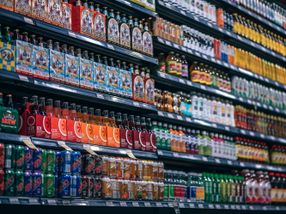
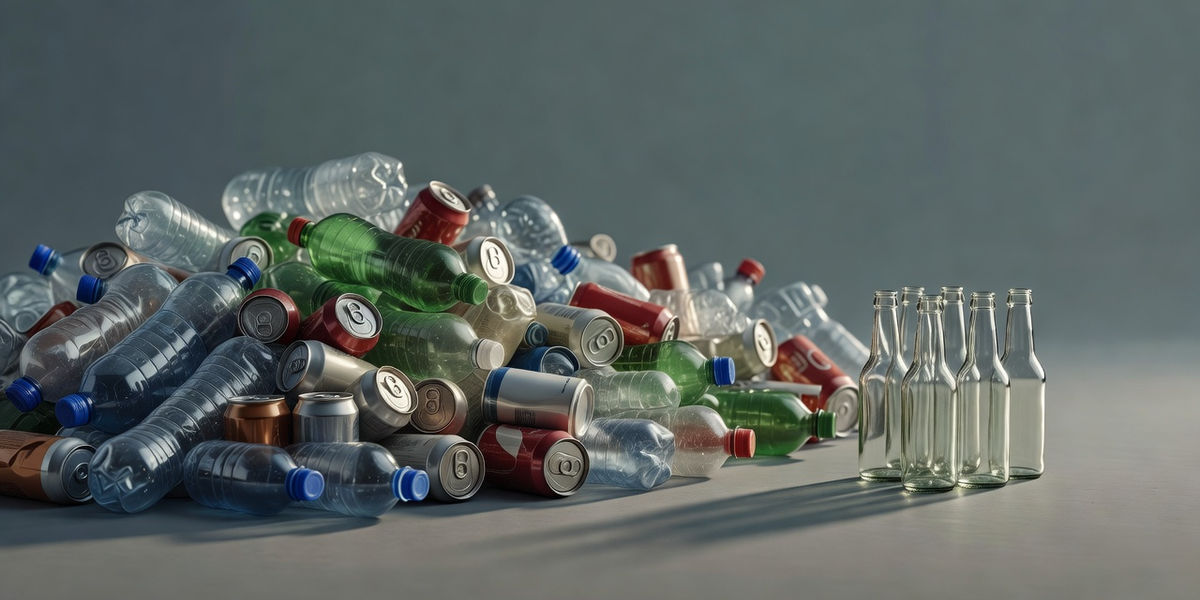
New data from the Federal Environment Agency (UBA) show that the 70 percent reusable quota for beverages set by the Packaging Act has consistently fallen short. According to the data, only 34.5 percent of beverage packaging was reusable in 2024. Single-use plastic bottles remain the dominant form of beverage packaging at 38.6 percent—and, ironically, environmentally harmful beverage cans have seen a significant increase compared to the previous year and now account for a market share of 5.8 percent. The German Environmental Aid Association (DUH) sees this as evidence of the ineffectiveness of current reusable packaging policies and calls on Federal Environment Minister Schneider to immediately improve efforts to promote reusable packaging.
Barbara Metz, Federal Executive Director of the DUH:
“Since 2020, the reusable rate has stagnated between a meager 33.2 and 34.5 percent—instead of the legally mandated 70 percent.Discounters like Aldi and Lidl share responsibility for this, as their exclusive focus on single-use products forces consumers into environmentally unfriendly choices. The fact that no sanctions or measures to promote reusable packaging have followed is a political failure. Reusable bottles save large amounts of CO2 and resources through their repeated reuse and short transport distances. On top of that, they secure 145,000 jobs across Germany. Environment Minister Schneider must now decisively push forward with reusable packaging. We call for a reusable bottle promotion fund financed by single-use industry players and a single-use tax of at least 20 cents on environmentally harmful single-use plastic bottles, cans, and beverage cartons.”
Note: This article has been translated using a computer system without human intervention. LUMITOS offers these automatic translations to present a wider range of current news. Since this article has been translated with automatic translation, it is possible that it contains errors in vocabulary, syntax or grammar. The original article in German can be found here.



Other news from the department politics & laws