Sugar Tax 2027: Beverage Industry Sees Businesses Facing Insurmountable Challenges
Five associations are calling for a postponement—the lack of regulations and tight deadlines leave little room for adjustments
Advertisement


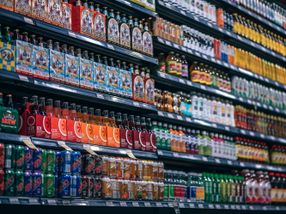
The leading associations of the German Beverage Industry are protesting against the coalition’s specific, current plans to bring forward the introduction of a sugar tax on beverages to January 1, 2027. This option is included in a recent draft amendment by the coalition to the GKV Contribution Rate Stabilization Act, which is scheduled to be passed by the Bundestag at the end of this week. The Non-Alcoholic Beverages Industry Association (wafg), the Association of German mineral water Producers (VDM), the Association of the German Fruit Juice Industry (VdF), the German Brewers’ Association (DBB), and the Association of Private Breweries in Germany describe these plans by the coalition as an “affront to small and medium-sized businesses.” Should the controversial tax actually be introduced in just a few weeks, it would present countless businesses—already under severe pressure—with virtually insurmountable challenges, the associations warn.
Just recently, more than 300 companies in the beverage industry had already spoken out against the introduction of a sugar tax in a joint open letter and strongly warned against additional burdens on small and medium-sized businesses and consumers. The plans for a completely rushed introduction, which came to light over the weekend, significantly exacerbate these concerns for several reasons.
The beverage industry identifies five key problem areas:
- No opportunity to adjust recipes: A sudden introduction of the sugar tax in just a few weeks leaves companies no time whatsoever to adjust beverage recipes or launch new products. Formula changes require extensive development, production, and market launch processes. These cannot be implemented under the scenario now looming.
- High cost risk: Introducing the sugar tax as early as January 1, 2027, effectively deprives companies of any opportunity to factor the inevitable significant additional costs into their ongoing annual negotiations with food retailers. It is well known that the highly concentrated food retail sector in Germany is already extremely reluctant to accept cost increases from manufacturers. Many companies would therefore initially have to bear the additional burdens entirely on their own, without this being economically feasible.
- Complete uncertainty regarding affected products: To date, it is still far from clear which beverages will even be covered by the planned sugar tax. It therefore remains unclear which specific beverages will be taxed and which will not. To date, there is neither a draft bill nor a policy outline from the federal government. How are companies supposed to make far-reaching business decisions without even knowing the legal framework?
- Threat of increased bureaucracy: It is also completely unclear who is supposed to collect the new tax and how. To date, there is no guidance whatsoever on which agency (presumably Customs) is to collect the tax, nor on how a functioning collection and monitoring system can be established within such a short timeframe by both companies and government agencies. In particular, there is a lack of clear and binding guidelines on tax recording and collection, digital procedures, software solutions, and practical implementation regulations for both companies and the (federal) administration.
- Breach of the principle of protection of legitimate expectations: Businesses have relied on key statements in the coalition agreement regarding the promotion of economic growth (“To this end, we will, among other things, promote investment, innovation, and competition, and lower taxes, levies, and energy prices”). The introduction of a sugar tax was clearly rejected during the coalition negotiations in the spring of 2025, and the CDU’s federal party convention also explicitly opposed it just a few months ago. The Federal Ministry of Finance has stated on multiple occasions that it sees no basis for introducing a sugar tax. From a technical standpoint, the Federal Ministry of Food and Agriculture opposes such an incentive tax.
It is revealing that the coalition now states in documents released over the weekend as part of the GKV bill that “it is assumed that tax revenue from sugar-sweetened beverages will amount to 650 million euros in 2027 and, as a result of formula adjustments by manufacturers, will drop to 450 million euros annually starting in 2028.” Revenue for 2027 is thus evidently expected to be higher than in the following year due to this surprise move. Policymakers are well aware that companies will no longer be able to respond under this approach. Conclusion: Health policy arguments are, at best, a facade—the real goal is to plug budget holes.
The associations therefore urgently appeal to the federal government and the Bundestag to abandon plans for a hasty introduction of the sugar tax. Having to implement a tax amid the uncertainties outlined above—with such far-reaching consequences—within just a few weeks would inevitably threaten many livelihoods and lead to business closures. For the beverage industry, which is dominated by small and medium-sized enterprises, the federal government’s approach would be a slap in the face. Especially in economically difficult times, businesses need planning certainty, reliability, and realistic deadlines. The last thing they need are hasty political decisions with unforeseeable consequences.
Note: This article has been translated using a computer system without human intervention. LUMITOS offers these automatic translations to present a wider range of current news. Since this article has been translated with automatic translation, it is possible that it contains errors in vocabulary, syntax or grammar. The original article in German can be found here.


Other news from the department politics & laws