Why apples react differently to climate change than wheat

Advertisement


climate change is altering crop yields—but not to the same extent for all plants. Researchers at the Technical University of Munich (TUM) found that yields are also influenced by the extent to which plants rely on insect pollination. The findings highlight how agriculture must adapt to climate change.
Although climate change is already having a negative impact on crops, declines in yields have so far been offset by technological advances in agriculture. For field crops that do not rely on pollinators, however, this trend appears to be reversing. Researchers at TUM analyzed crop yields in Lower Franconia and Upper Bavaria over a period of more than 35 years. They examined various crops, including wheat, apples, and cherries. While wind or self-pollination is sufficient for wheat, fruit trees and some field crops such as rapeseed depend on insects—and it is precisely this dependence on pollinators that is crucial for the development of crop yields.
Wheat yields are falling—Apples are benefiting
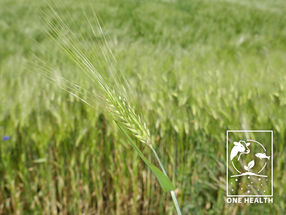
Wheat yields are already falling because temperatures are above their optimal levels. Due to dry soil and hotter conditions, the plants are producing smaller and fewer grains. On the contrary, fruit trees have not produced such yield losses yet. Researchers suspect that they have so far benefited from the rising temperatures, in part because there is less late-frost damage to their blossoms, allowing them to produce more fruit.
Climate change also affects pollinators
However, this trend will only last for a certain amount of time, notes Sara Leonhardt, professor of plant-insect interactions at TUM: “If the climate continues to warm, pollinator-dependent crops will face dual stress.”
On the one hand, these crops will also exceed their optimal climatic conditions. The plants will then grow less vigorously and produce, for example, smaller flowers that are less attractive to pollinators. On the other hand, climate change also affects the pollinators themselves. Depending on their species and group, they exhibit different temperature tolerances. Thus, as the climate changes, the pollinator community in a region and its pollination performance will inevitably change. This is particularly true for species-poor communities, such as those found in many agricultural areas.
Pollinators as part of climate strategy
“Our findings confirm how important pollinators are for agriculture—and how closely biodiversity and climate adaptation are linked,” says Paula Prucker, a doctoral student at TUM and first author of the study. “Strategies for adapting to climate change should therefore not only take into account the climatic requirements of various crops but also specifically and sustainably support pollinators.”
According to Johannes Kollmann, professor of restoration ecology at TUM and co-author of the study, this includes measures such as flowering areas and hedgerows as food and habitat sources, more diverse crop rotations, and reduced use of pesticides. Such measures could help ensure pollination even under changing climate conditions and stabilize crop yields in the long term.
Original publication
Paula Prucker, Johannes Kollmann, Sara Diana Leonhardt; "Pollinator Dependency and Regional Climate Affect Crop Yield Development Under Climate Change"; Ecology and Evolution, Volume 16, 2026-6-3
Paula Prucker, Carmen Alexandra Nebauer, Bastian Saumweber, et al.; "Yield-related costs of drought priming depend on climate and pollinators in an insect-pollinated crop"; Basic and Applied Ecology, Volume 94



Other news from the department science