KAIST and startup SilicoBio opens the era of industrial-scale microbial foods
They proposing growth strategies for the next-generation protein market

Advertisement


The question is no longer whether microbial foods can be made. The question now is who can turn them into an industry first. KAIST researchers have comprehensively analyzed the conditions required for the microbial food industry to succeed across manufacturing, markets, and regulation, and have proposed growth strategies for the next-generation protein industry.
KAIST (President Choongsik Bae) announced on the 31st of July that a research team led by Distinguished Professor Sang Yup Lee from the Department of Chemical and Biomolecular Engineering, together with researchers from SilicoBio, a KAIST faculty startup, has comprehensively analyzed the conditions needed for the microbial food industry to succeed in terms of manufacturing, market entry, and regulatory readiness, and has presented an industrialization strategy and roadmap.
This study is significant in that it did not develop a new microorganism or production technology, but instead systematically analyzed the key challenges involved in connecting laboratory-based core technologies to real-world industry. In particular, by presenting an integrated perspective that encompasses manufacturing readiness, market entry strategies, and regulatory responses, the study proposes a direction for developing microbial foods beyond the next-generation protein industry into a future biomanufacturing platform. It is expected to serve as an important milestone for strengthening national biomanufacturing competitiveness and fostering the global sustainable food industry.
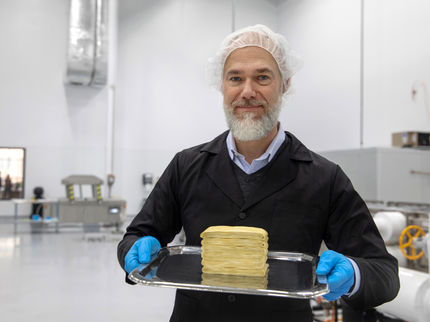
The researchers analyzed that competition in the microbial food industry is shifting from productivity at the laboratory level to manufacturing readiness. They identified stable raw material supply and quality control, control and safety assurance of non-model microorganisms, reduction of downstream processing costs, and regulatory compliance for byproduct recycling as key factors that will determine the pace of commercialization. Manufacturing Readiness refers to the level at which a laboratory technology can be reliably produced at industrial scale. Non-model microorganisms are microorganisms with high industrial potential but insufficient accumulated research infrastructure. Downstream processing refers to the processes of separating, purifying, concentrating, and drying target components after fermentation.
The researchers particularly emphasized that future competitiveness will depend less on the excellence of any single technology and more on the ability to build integrated manufacturing platforms. An Integrated Manufacturing Platform refers to a production system that operates the entire process as one connected framework, from strain development and large-scale fermentation to purification, quality control, and product formulation. Even for the same microbial food product, the choice of raw material can affect pretreatment costs and quality variability, while the choice of strain and fermentation process can greatly influence production cost, energy use, and product quality. The researchers therefore concluded that future industrial competitiveness will depend on how quickly companies can build manufacturing platforms that optimize these factors in an integrated way.
On the market side, the researchers also identified the conditions needed for the microbial food industry to succeed. Based on consumer surveys and industry cases, they found that microbial foods cannot spread simply by emphasizing environmental sustainability. Consumers place importance on taste, texture, familiarity, and safety, while food manufacturers value functionality that can be applied to actual products. Companies and investors, meanwhile, consider the predictability of regulatory approval procedures and speed of market entry to be especially important. In other words, the microbial food market has entered an industrial stage where not only technology, but also product development capability and regulatory readiness are evaluated together.
The researchers also argued that microbial foods should not be viewed merely as an alternative protein industry. They suggested that microbial foods have the potential to develop into a core platform for precision fermentation-based functional food ingredients, high-value biomaterials, and circular biomanufacturing. Precision Fermentation is a technology that uses microorganisms to selectively produce specific proteins or functional substances. Circular Biomanufacturing refers to a sustainable manufacturing system that uses byproducts and renewable resources to produce new bio-based products. This means that microbial foods could become not only a future food source, but also a new production system connecting the global food, materials, and biomanufacturing industries.
The industrialization strategy proposed in this study is also closely aligned with the business direction of SilicoBio, which participated in the joint research. Based on the manufacturing readiness strategy presented in the study, SilicoBio is working to build a platform that connects microbial proteins and functional food ingredients to industrial-scale fermentation, scale-up, and product development. Scale-up refers to the process of expanding production from laboratory scale to industrial scale.
Distinguished Professor Sang Yup Lee of KAIST said, “As global competition surrounding synthetic biology and biomanufacturing intensifies, microbial foods are growing into a key industry that will shape national biomanufacturing competitiveness beyond future food.” He added, “Going forward, competitiveness will be determined by how quickly we can build an industrialization ecosystem that connects core technologies to real production and markets.”
A SilicoBio representative said, “Our goal is to connect the industrialization strategy proposed in this study to actual production and commercialization,” adding, “We will build a platform capable of stably producing microbial-based next-generation foods and functional biomaterials.”
This study, with Seok Yeong Jung, a doctoral student in the Department of Chemical and Biomolecular Engineering, as first author and researchers from SilicoBio participating as co-authors, was published on July 17 in the international journal One Earth (Impact Factor 15.3, JCR top 2.07%).
Original publication


Other news from the department science










Most read news









More news from our other portals

























Something is happening in the food & beverage industry ...
This is what true pioneering spirit looks like: Plenty of innovative start-ups are bringing fresh ideas, lifeblood and entrepreneurial spirit to change tomorrow's world for the better. Immerse yourself in the world of these young companies and take the opportunity to get in touch with the founders.