How Lab-Grown Meat Producers Promise a Better Future
Researchers from the Leibniz Institute for Regional Geography and Freie Universität Berlin analyzed 41 promotional videos about cultured meat
Advertisement


A study involving the Leibniz Institute for Regional Geography shows how promotional videos portray cultured meat as a solution to global crises—and which challenges are being overlooked in the process.
The climate crisis, animal welfare, and the future of food: Cultured meat—that is, protein grown in laboratories from cell cultures—is often presented as a potential solution to key challenges posed by global meat production and its CO2 emissions. But how are companies making this new technology socially acceptable?
A study funded by the Gerda Henkel Foundation and conducted by researchers at the Leibniz Institute for Regional Geography (IfL) and Freie Universität Berlin shows how companies use images and narratives to position cultured meat as a sustainable, ethically sound, and economically attractive technology of the future.
For the study, published in the journal “Geographica Helvetica,” Frank I. Müller of Freie Universität Berlin, along with Frank Meyer and Judith Miggelbrink of the IfL, analyzed a total of 41 promotional videos from the field of cellular agriculture. In the process, they identified six key narrative patterns that companies use to present a technology—which is still relatively unestablished—as a possible future for meat production.
Laboratory images, environmental promises, and emotional stories
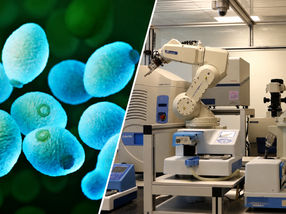
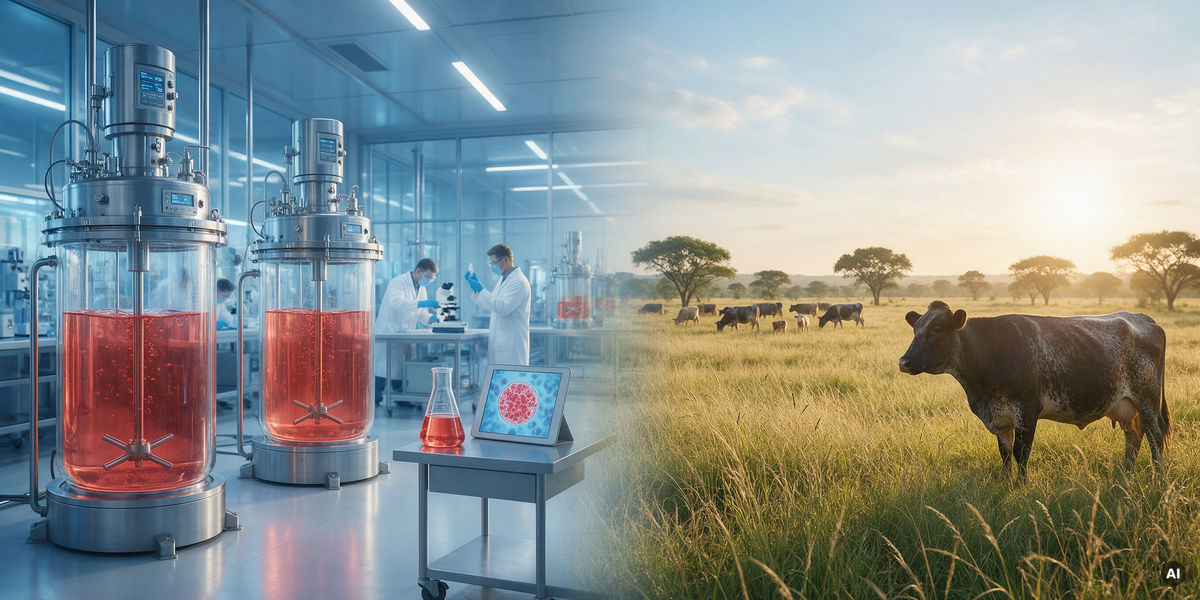
The videos illustrate the technology using infographics and statements from company representatives, linking cultured meat to global environmental and food crises. Images of nature and emotional scenes combine appeals to animal welfare and a connection to nature with the technological possibilities of lab-based meat production. Sterile laboratory environments convey hygiene and control. Cultured meat thus appears as a technological path to a better future, one that is intended to enable meat consumption while simultaneously overcoming ethical concerns regarding conventional animal husbandry.
Yet this portrayal shows only one aspect of a possible future. The challenges of large-scale industrial production—such as energy requirements, infrastructure, and regulatory hurdles—often take a back seat in the videos. Instead, the image that emerges is one of a clean, controllable, and sustainable technology.
How Scientific Possibilities Become Promises for the Future
The researchers demonstrate how companies translate complex scientific processes and societal problems into accessible narratives about the future. In doing so, they position themselves as shapers of a future protein supply.
The study does not show that cultured meat is already bringing about a fundamental transformation of the food system or that the advertising messages are actually changing consumer attitudes. Rather, it reveals how companies portray a possible future of meat production as plausible and desirable—and which aspects they emphasize or omit in the process.
Co-author Judith Miggelbrink emphasizes: “Our findings show that the competition for the future of the protein supply is not taking place solely in laboratories and bioreactors, but also in images, stories, and promises.” The role that cultured meat will play in our food system in the future therefore also depends on how its possibilities and limitations are communicated and discussed within society.
Note: This article has been translated using a computer system without human intervention. LUMITOS offers these automatic translations to present a wider range of current news. Since this article has been translated with automatic translation, it is possible that it contains errors in vocabulary, syntax or grammar. The original article in German can be found here.
Original publication


Other news from the department science