Ultra-Processed Foods: The Degree of Processing Affects Metabolism and the Brain
Why Ready-Made Meals Affect the Body Differently Than Freshly Cooked Food
Advertisement


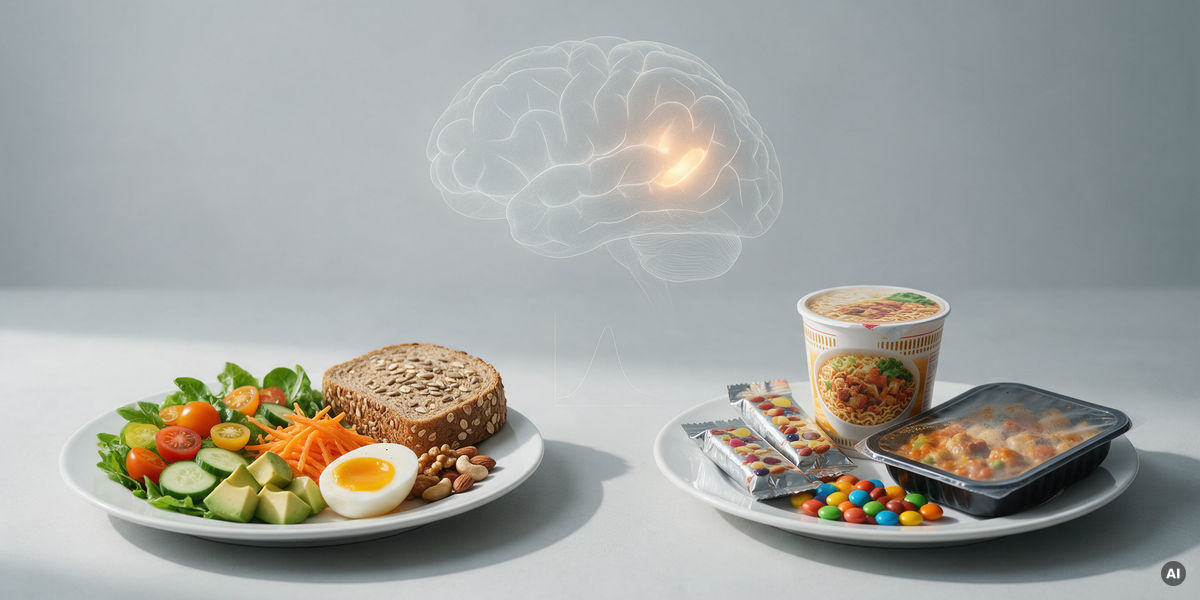
A randomized study shows that even when calorie and nutrient content are nearly identical, an ultra-processed meal triggers different metabolic responses than a freshly prepared one. Differences in metabolism were also linked to varying responses of certain brain regions to food cues. For the German Society of neurology (DGN), the study thus provides an important contribution to the discussion on ultra-processed foods and supports a balanced diet with a high proportion of fresh, unprocessed foods.
Whether ready-made meals, prepackaged snacks, instant products, or industrially produced sweets: ultra-processed foods (UPFs) account for a significant portion of daily energy intake in many industrialized countries. Numerous observational studies link high UPF consumption to obesity, type 2 diabetes, and cardiovascular diseases, as well as to neurological disorders such as stroke, dementia, and Parkinson’s disease. The DGN has therefore repeatedly highlighted the potential risks of high UPF consumption [1, 2].
However, there has been a valid objection to date: ultra-processed foods often contain more calories, sugar, salt, and unhealthy fats, and less dietary fiber than minimally processed foods. As a result, it has been difficult to determine from observational studies whether the degree of processing actually has an independent effect or whether it is rather the different ingredients and calorie content that are responsible. A randomized, controlled crossover study [3] recently published in *Nature Metabolism* now provides new insights into this issue.

The research team studied 57 healthy, normal-weight adults with a mean age of 26 years. For the metabolic portion of the study, 32 participants were given, on two different days in random order, one ultra-processed meal and one non-ultra-processed meal, each containing approximately 300 kilocalories. The key point: The meals were nearly identical in terms of weight, calorie content, energy density, total amount of carbohydrates, fat, and protein, available carbohydrate content, glycemic index, and glycemic load, as well as fiber, sodium, and water content.
Same Calories, Different Metabolic Response
Although the overall blood glucose response did not differ, the insulin response following the ultra-highly processed meal was significantly stronger. Insulin levels were significantly higher 40, 60, 90, and 120 minutes after eating than after the minimally processed control meal (p<0.05); over the entire three-hour observation period, the insulin response was highly significantly elevated (p<0.001). Thus, the study provides experimental evidence that foods with virtually identical nutritional profiles do not necessarily have the same effect in the body. The researchers suspect that industrial processing alters the physical structure of food—the so-called food matrix—and could thus influence how nutrients become available in the digestive tract.
The Connection Between Metabolism and the Brain
Another finding is of particular interest to neurology: Using functional magnetic resonance imaging, the researchers investigated how the brain reacted to images of ultra-processed and less-processed foods. This revealed a correlation between the metabolic response to the test meals and the measured brain response to corresponding food stimuli. Depending on how differently the body utilized the carbohydrates from the two meals, the reactions of certain brain regions associated with the reward system to the food images also differed. In short: Ultra-processed foods were metabolized differently—and processed differently by the brain.
The differing insulin response could also be neurologically relevant: chronically disrupted insulin signaling and insulin resistance have long been investigated as possible factors in neurological diseases, particularly cognitive decline and dementia [4].
“However, we should neither overinterpret nor underinterpret the study. It does not prove that ultra-highly processed foods cause neurological diseases such as dementia or Parkinson’s. But it does show, under randomized conditions, that the degree of processing can be physiologically relevant—even when calories and nutrients are practically the same,” explains DGN President Prof. Dr. Daniela Berg of the UKSH in Kiel.
And this must now be taken into account more strongly in future recommendations for a healthy diet. From the DGN’s perspective, the study results underscore the importance of a fresh, minimally processed diet for (brain) health. “However, further studies are absolutely necessary,” says Prof. Berg, “especially to show whether it is actually the degree of processing—which must also be specified in concrete terms—or the specific composition of the food components (proteins, for example, consist of very different amino acids) that plays the key role.”
Note: This article has been translated using a computer system without human intervention. LUMITOS offers these automatic translations to present a wider range of current news. Since this article has been translated with automatic translation, it is possible that it contains errors in vocabulary, syntax or grammar. The original article in German can be found here.
Original publication



Other news from the department science