The Potential of Sweet Corn in Local Fields
With careful variety selection and breeding, sweet corn could become particularly attractive for organic farming
Advertisement


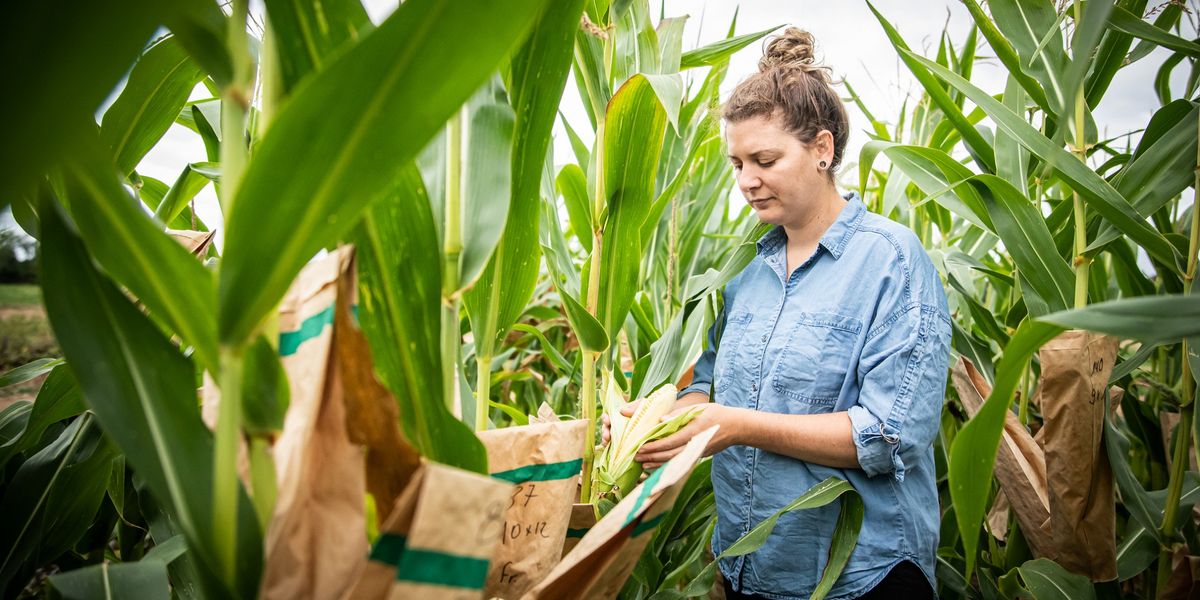
Cornflakes, pastries, or polenta—sweet corn has many uses in the kitchen, but it’s rarely found in German fields. What requirements does it place on crop production? Researchers from the Bavarian State Institute for Agriculture (LfL) and the Dottenfelderhof Research & Development Center (FZD) addressed this and other questions in the three-year “Speise-MaisQual” project. This project was funded by the Federal Ministry of Agriculture, Food, and Home Affairs (BMLEH) as part of the Federal Program for organic farming (BÖL). In addition to developing a set of requirements for cultivation, the project resulted in a rapid test for determining the grits yield—an important quality indicator in sweet corn cultivation.
The cultivation of sweet corn has so far played a minor role in Germany. Large quantities of the raw material are currently imported, even though many regions in the country generally have favorable conditions for its cultivation. Above all, there has been a lack of the necessary knowledge regarding suitable varieties for sweet corn production.
In principle, the cultivation of sweet corn does not differ from that of grain corn for animal feed. However, to achieve the desired qualities for food processing, selecting the right variety is crucial. In addition to the usual desirable traits for cultivation, such as rapid growth and good weed suppression, low susceptibility to fungal diseases is important for sweet corn intended for human consumption, as stricter limits for mycotoxins apply in this sector. Furthermore, the project found that the semolina yield was a key characteristic for processing quality.

To enable a simple prediction of a variety’s semolina yield, the researchers developed a rapid test based on near-infrared (NIRS/NIT) spectrometers. This allows the potential semolina yield to be determined quickly, inexpensively, and consistently for the whole kernel—without milling—for the first time. The measurement method opens up new possibilities for variety testing, breeding, and quality assurance.
In total, the research teams tested 90 available sweet corn varieties. These included current hybrid varieties, historical landraces, and reproducible populations. The studies revealed a clear trade-off between yield and nutritional content: High yields were associated with low levels of desirable, physiologically valuable nutrients, such as semolina content.
The hybrid varieties achieved the highest grain yields but had very low levels of valuable nutrients and lower semolina yields. In contrast, the landraces tested impressed with high levels of protein, essential amino acids, and minerals, as well as high semolina yields. In terms of yield, however, they performed significantly worse. The tested populations fell between hybrid and landraces in terms of yield, semolina yield, and nutrient content.
Based on the results, the research team sees definite potential for the cultivation of sweet corn in Germany. According to the experts, with targeted variety selection, breeding efforts, and the expansion of processing capabilities, sweet corn could be an interesting alternative for German farms, particularly in organic farming.
Note: This article has been translated using a computer system without human intervention. LUMITOS offers these automatic translations to present a wider range of current news. Since this article has been translated with automatic translation, it is possible that it contains errors in vocabulary, syntax or grammar. The original article in German can be found here.


Other news from the department science









Most read news






More news from our other portals



























See the theme worlds for related content
Topic world Quality assurance
In the food industry, quality assurance is about much more than safety. It's about ensuring consistent standards that meet consumers' taste, nutritional and aesthetic expectations. Using state-of-the-art analytical methods and strict protocols, Quality Assurance ensures that every product delivers on the brand's promise. From appearance and taste to texture and shelf life, Quality Assurance ensures consumers get exactly what they expect.

Topic world Quality assurance
In the food industry, quality assurance is about much more than safety. It's about ensuring consistent standards that meet consumers' taste, nutritional and aesthetic expectations. Using state-of-the-art analytical methods and strict protocols, Quality Assurance ensures that every product delivers on the brand's promise. From appearance and taste to texture and shelf life, Quality Assurance ensures consumers get exactly what they expect.