2026 KlarText Prize for Science Communication: Klaus Tschira Foundation Honors Seven Researchers
Articles such as “Good News for Those Who Hate Brussels Sprouts,” “The Stamp-Sized Lab,” and “Faster Drug Development Through Math” won over the jury
What exactly did you do in your doctoral dissertation? The Klaus Tschira Foundation honors the most compelling answers to this question with the KlarText Prize for science communication. On October 22, 2026, seven early-career researchers were honored in Heidelberg for their accessible articles about their dissertations. Since 1997, the KlarText Prize has promoted the bridge between science and the public: It strengthens the communication skills of young researchers and raises awareness of the importance of science communication as a whole.
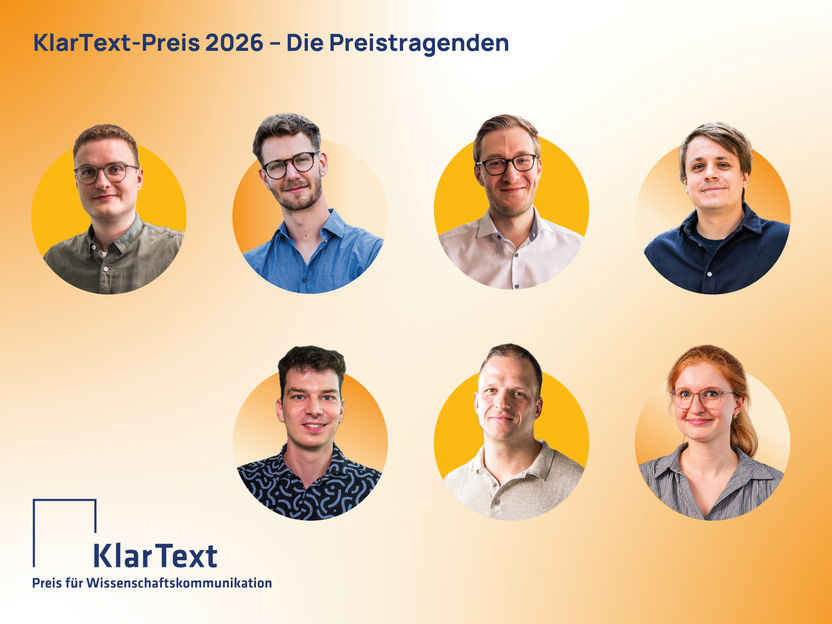
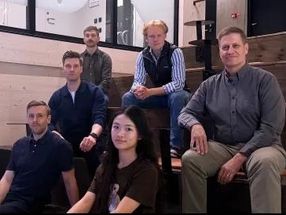
They are receiving the KlarText Award for Science Communication: Top row (from left to right): Dr. Phil Richter, Dr. Thomas Arne Hensel, Dr. Daniel Racek, Dr. Hannes Westphal. Second row (from left to right): Dr. Julian Mangott, Dr. Felix Spiske, Dr. Meike Hettwer
Klaus Tschira Stiftung
“Good science communication has long been more than just a dialogue with the interested public. Even within the scientific community—for example, in multidisciplinary teams—researchers must find a common language that extends beyond their own field of expertise,” said Lilian Knobel, Executive Director for Science Communication and Education at the Klaus Tschira Foundation.
The winners of the 2026 KlarText Prize for Science Communication are (listed with the university where they earned their doctorates):
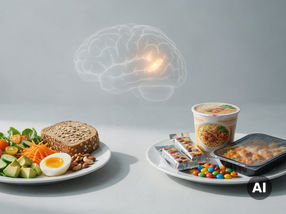
- Biology: Dr. Phil Richter (Technical University of Munich) “Good News for Brussels Sprout Skeptics”: You either love them or hate them: bitter foods. Yet these bitter compounds can be healthy. Some of them aren’t even detectable on the tongue because they’re produced only in the stomach.
- Chemistry: Dr. Hannes Westphal (University of Leipzig) “The Stamp-Sized Lab”: A chemistry lab so small that its minuscule components are barely visible to the naked eye: “lab-on-a-chip” systems are inexpensive and have proven their worth, for example, in testing catalysts.
- Computer Science: Dr. Daniel Racek (Ludwig Maximilian University of Munich) “Clearing the Data Fog of War”: Radar satellites regularly provide freely available data on the Earth’s surface—regardless of weather conditions or daylight. These images can help assess war damage.
- Mathematics: Dr. Julian Mangott (University of Innsbruck) “Faster Paths to New Drugs with Math”: Computers are playing an increasingly important role in the search for new active ingredients. Yet even supercomputers often fail when running simulations—a problem that can be solved with a mathematical trick.
- Neuroscience: Dr. Meike Hettwer (Heinrich Heine University Düsseldorf) “The Brain Under Construction”: During the transition from childhood to adulthood, our brain resembles a major construction site. During this phase of life, young people are vulnerable to mental health crises and need loving support.
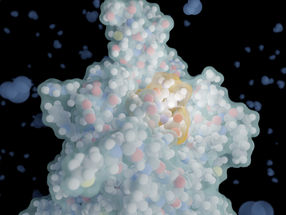
- Physics: Dr. Thomas Arne Hensel (University of Heidelberg) “Lights Out, Action”: Proteins are tiny machines that constantly change their shape. But their movements are so small and fast that they are almost impossible to observe. Using a new method, researchers have now, for the first time, been able to visualize the rapid shape changes of an artificial DNA structure—an important step toward observing proteins at work in the future.
- Infographic: Dr. Felix Spiske (Freiberg University of Mining and Technology) “The Needle in a Haystack”: Some substances are dissolved in water at such low concentrations that they are barely measurable. But their molecular fingerprint can be amplified using a novel method. What this refers to is: solid air.
For this year’s competition, approximately 250 PhD graduates submitted entries based on their doctoral theses—in the form of articles or infographics. The entries underwent a three-stage jury process and were evaluated by scientists and media professionals. The winners will each receive 7,500 euros in prize money.
Note: This article has been translated using a computer system without human intervention. LUMITOS offers these automatic translations to present a wider range of current news. Since this article has been translated with automatic translation, it is possible that it contains errors in vocabulary, syntax or grammar. The original article in German can be found here.
Other news from the department science