TÜV SÜD Debunks Kitchen Myths About Reheating Food
It is crucial to cool the food quickly and store it in a cool place before reheating it a second time
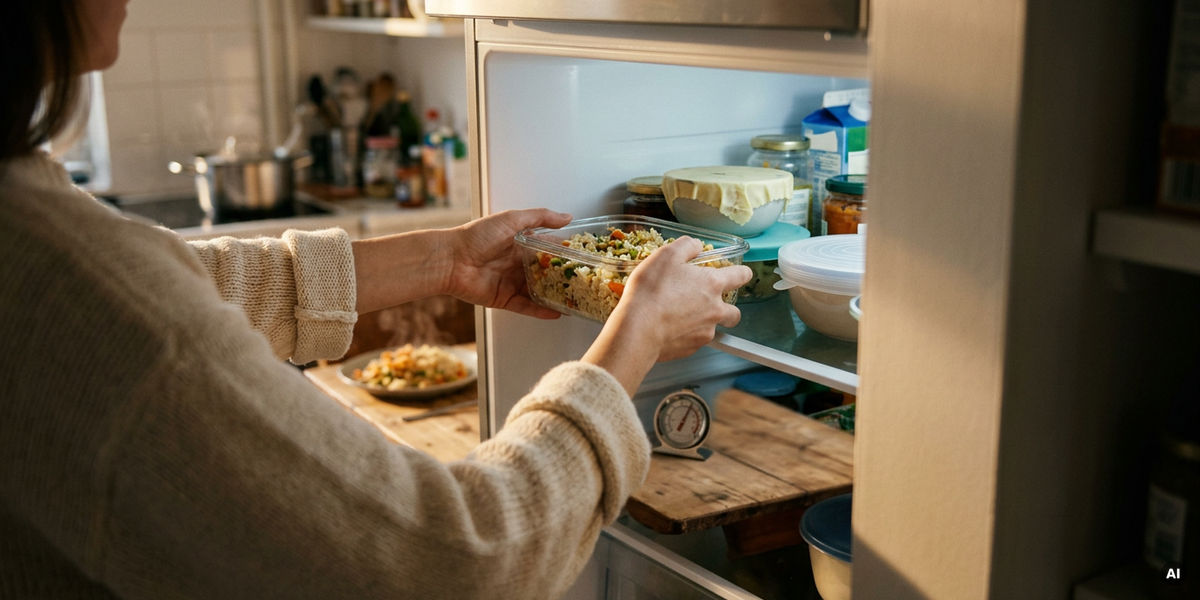
Is it really true that you shouldn’t reheat spinach a second time? What about mushrooms or leftover rice from the day before? And what about potatoes and seafood? There are many persistent kitchen myths surrounding the reheating of leftovers. The good news: Most cooked foods can be reheated and eaten again. TÜV SÜD explains what consumers should definitely keep in mind—and which foods require caution.
“You’re not supposed to reheat spinach!”, “Eat mushroom dishes right up or throw them away!” or “Never reheat seafood!”—almost everyone has heard statements like these at some point. They create uncertainty and sometimes lead to food that’s actually still good being thrown away unnecessarily. Yet many of these “rules” date back to a bygone era without refrigerators. Today, in many cases, it’s not reheating that makes food a problem, but how it’s stored. That’s because cooked food left at room temperature for a long time is an ideal breeding ground for germs. At lukewarm temperatures, bacteria can multiply rapidly and, in some cases, produce toxins that won’t disappear even if the food is reheated later. They thrive especially well between 25 and 45 degrees Celsius.
Spinach: Reheating Is Okay—With One Important Exception
Contrary to old kitchen wisdom, spinach can indeed be reheated. The reason for the previous warning: Spinach naturally contains nitrate, and if it’s kept warm for too long, bacteria convert the nitrate into nitrite. For healthy adults, reheated spinach is safe, provided it is cooled quickly after the first cooking, stored cold, and reheated—quickly—the second time. However, caution is advised for infants and toddlers: Since nitrite can impair oxygen transport in the blood, it’s best not to reheat spinach for them. The same applies to other nitrate-rich leafy and root vegetables in baby food.

Mushrooms are sensitive, but...
The rule against reheating mushrooms is also outdated. It dates back to a time when refrigeration wasn’t available—due to their nature, mushrooms provide ideal growing conditions for microorganisms. At room temperature, they decompose, spoil quickly, and produce toxins. It used to be believed that microorganisms multiply when mushrooms are reheated. Today, that belief is outdated, and reheating mushrooms is considered safe. So, if cooked mushrooms are cooled quickly, stored in the refrigerator at below four degrees for no longer than two days, and thoroughly reheated or boiled before consumption, there’s no reason not to enjoy a second “mushroom” meal.
Caution with Rice, Potatoes, and Pasta
One food that does indeed require special attention is cooked rice. It can contain spores of the bacterium Bacillus cereus that survive cooking. If the rice is left at room temperature for too long afterward, the spores germinate and can produce heat-stable toxins. These toxins cannot be rendered harmless even by reheating. Therefore, the rule is: Cool rice quickly after cooking, refrigerate it immediately, consume it promptly, and heat it through completely when reheating. Cooked potatoes and pasta should also be refrigerated promptly. They’ll then keep for up to about 5 days.
Egg dishes? It depends!
Some egg dishes are suitable for reheating; others are not. Only partially cooked dishes such as fried eggs, poached eggs, or soft-boiled eggs should be eaten immediately or thrown away afterward. Pancakes, gratins, or quiches can be reheated a second time. It’s important to store them in the refrigerator promptly (2–3 days) and to heat them thoroughly before eating. As a rule of thumb, if the egg is fully cooked, it can be reheated or eaten cold.
Meat and Poultry: Heat Thoroughly
Meat—including poultry—can also be reheated. It’s important to heat it thoroughly and evenly all the way to the center to reliably kill any potential pathogens. This is especially important for poultry. However, meat should only be reheated if it was already cooked all the way through during the first meal.
What about fish?
Even fish dishes can be reheated without any problems. However, this requires that the fish be refrigerated very quickly after initial preparation and consumed within the next 1–2 days. Fish should be heated gently but thoroughly. However, if it smells off or looks strange, do not eat it—dispose of it immediately. The same applies to shrimp, although they will lose their tender texture in the process. Seafood such as mussels can also be reheated. To do so, however, they must be stored in the refrigerator immediately after eating and, like fish, consumed very quickly. Caution: Never eat mussels that did not open during the initial cooking, as they may be poisonous.
The golden rule: cool quickly, store cold, reheat hot—or eat cold
As a rule of thumb: Cooked food should not be left at room temperature for more than about two hours and should be placed in the refrigerator as quickly as possible. It is also important to maintain proper kitchen hygiene to prevent “secondary contamination” with spoilage bacteria or pathogens. When reheating, make sure the food is thoroughly and evenly heated to a core temperature of at least 70 degrees Celsius for about two minutes. This reliably eliminates most germs. If there are still leftovers after the second meal, most foods will unfortunately have to be thrown away. Of course, there are exceptions, but in general, reheating and cooling food multiple times is not recommended.
“Many old kitchen adages about reheating are scientifically outdated. They date back to a time when food could not be kept refrigerated at all times. Often, it’s not the reheating itself that poses a risk, but storing food for too long at warm temperatures,” says Dr. Andreas Daxenberger, a food expert at TÜV SÜD. “In addition to maintaining kitchen hygiene, it’s always important to cool leftovers quickly, store them consistently at cold temperatures, and reheat them thoroughly the second time. Foods rich in starch and protein—such as rice, eggs, fish, or mushrooms—as well as food for infants and toddlers require special care.”
Food safety doesn’t begin in the home kitchen, but rather throughout the entire production and supply chain. For many products—and especially for pre-cooked meals, ready-to-eat meals, and convenience products—uninterrupted refrigeration, hygienic processing, and logistics tailored to the product are crucial. TÜV SÜD supports companies in food production and retail in systematically ensuring food safety—including through certifications according to internationally recognized standards such as IFS Food or FSSC 22000. Larger caterers, cafeteria chains, hotels, restaurants, cafés, hotel food service operations, company and school cafeterias, food trucks, and event catering services can also obtain FSSC 22000 certification. In doing so, they must, among other things, evaluate their process for reheating food in their HACCP plan. “Such voluntary standards supplement legal requirements with important quality and safety aspects and create essential transparency,” says Dr. Andreas Daxenberger.
Note: This article has been translated using a computer system without human intervention. LUMITOS offers these automatic translations to present a wider range of current news. Since this article has been translated with automatic translation, it is possible that it contains errors in vocabulary, syntax or grammar. The original article in German can be found here.

Other news from the department science












Most read news










More news from our other portals

























See the theme worlds for related content
Topic world Food safety
Food safety is at the heart of the food and beverage industry. It ensures that the food we eat every day is not only nutritious, but also free of harmful contaminants. From field to plate, the industry monitors and regulates every step of the process with strict quality controls, advanced testing methods and continuous research.
Topic world Food safety
Food safety is at the heart of the food and beverage industry. It ensures that the food we eat every day is not only nutritious, but also free of harmful contaminants. From field to plate, the industry monitors and regulates every step of the process with strict quality controls, advanced testing methods and continuous research.