Study shows how to make insect food palatable to humans
Advertisement


insects are considered the food of the future. Not only are they nutritious, they also produce significantly less CO2 than cows or pigs. But many people are disgusted by mealworms, grasshoppers or maggots. Prof. Dr. Fabian Christandl from the Fresenius University of Applied Sciences, Department of Business & Media, in cooperation with his colleagues Ass. Prof. Sebastian Berger and Annika Wyss from the University of Bern as well as Christian Bärtsch from ESSENTO Food AG and Christina Schmidt from the University of Cologne have now found out in a study. To this end, 180 people took part in an experimental study. The result: insects are more likely to be accepted if they are advertised with sales arguments that promise immediate enjoyment.
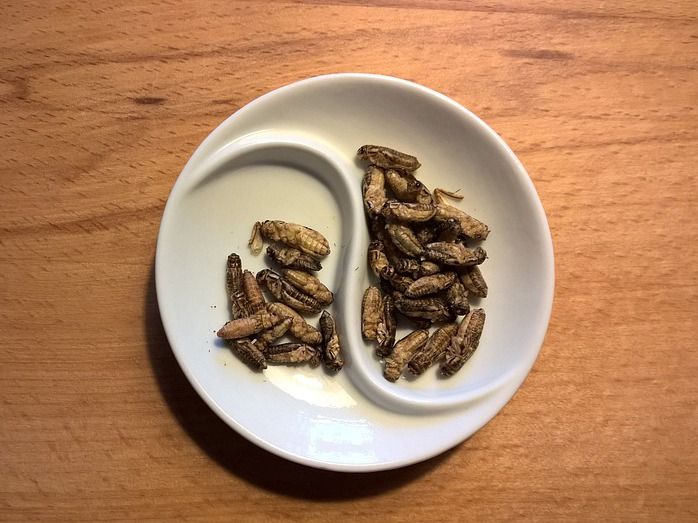
ChristophMeinersmann/ Pixabay
Not only climate change, but also the growing population poses great challenges to society worldwide: How will women, children and men be satisfied in the future without further burdening the climate with food production? After all, 20 percent of all greenhouse gas emissions are caused by them - with livestock farming making a major contribution. A healthy and sustainable alternative is insect-based food.
But how conservative is the population in its eating habits? How can confidence in alternative nutrition concepts be increased? These are the questions that the research group has addressed in its cooperative project. In their study, they investigated which advertising and sales arguments motivate people to eat insects.
A total of 180 subjects took part in the laboratory study, which was conducted at the Fresenius University of Applied Sciences on the Cologne campus. The test persons first received one of six specially produced flyers from a start-up company for insects as food. Half of the test persons were given a flyer with advertising slogans emphasizing the health-promoting and environmentally friendly aspects of insects. Slogans such as "meat has never been so healthy" or "meat has never been so environmentally friendly" were used. The other half of the test persons were presented with flyers in which insects were advertised as luxury products and associated with a trendy lifestyle. The participants were then offered flourworm chocolate pralines.
The result: 76.2 percent of the respondents who were presented with insects as a luxury product dared to eat the chocolate pralines with mealworms. If, on the other hand, it was found that the consumption of insects is good for the environment or health, the figure was significantly lower at 61.3 percent. "Our results suggest that advertising should promote insects as a stimulant. With this strategy, they can tend to convince more consumers to take insects with them on their diet," says Prof. Dr. Fabian Christandl.


Other news from the department business & finance