Brewing industry loses - Veltins gains slightly
Family brewery increases output to 3.37 million hl and turnover to 461 million euros, while German brewing industry records dramatic losses

Advertisement


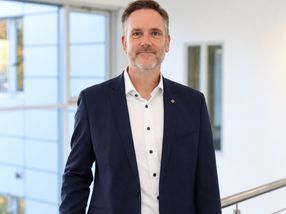
The C. & A. Veltins brewery, Meschede-Grevenstein, improved its output to 3,369,000 hl (+0.3%) in the 2025 financial year and, in view of its stable performance, was unimpressed by the weakening beer market due to consumer demand. "Especially in a difficult economic market phase, consumers appreciate strong brands as reliable companions," said Dr. Volker Kuhl, CEO of the C. & A. Veltins brewery, at the presentation of the business figures. The family-owned brewery also increased its turnover and achieved a result of 461 million euros (+0.4 %). The Pülleken brand, which grew by 13.6 %, was the growth driver within the broad-based product portfolio. Non-alcoholic products also developed dynamically with growth of 10.4%.
Consumer-attractive range bears noticeable fruit
While the German beer market lost around five million hectolitres in 2025 in a single year, the most in 75 years, the C. & A. Veltins brewery bucked this dramatic market trend and closed the financial year with a slight gain well above the market and competitive level. "Our investments in a broad, consumer-attractive product range are bearing noticeable fruit, because the supplementary brands can now excellently compensate for volume losses in the core business", says Dr. Volker Kuhl. The Veltins Pils brand achieved a total output of 2.32 million hl (-1.8 %) and today contributes two thirds to the total sales of the Sauerland-based private brewery. The national market share grew to 6.6 %, while in the home market of North Rhine-Westphalia it soared to 14.1 %, putting it in second place.
Draft beer business remains on track with 443,900 hl
The pale Pülleken and the associated Naturradler Zitrönken further strengthened their position as consumer favorites in the light beer segment. In view of the high market demand, sales were up by 13.6% to 373,600 hl in 2025. Pale Pülleken continues to claim third place in the growing pale beer segment; the young brand remains the market leader in NRW. "Half of all pale beers between the Rhine and Weser rivers are now served as pale Pülleken," says Dr. Volker Kuhl. With the introduction of Veltins Helles Lager, the family brewery launched a new variety as early as 2024 and strengthened its market commitment in 2025 in its first full financial year. The mild, smooth lager with an international reputation accounted for 49,000 hl. The specialty brand Grevensteiner was unable to escape the loss-making variety trend in the national beer market due to consumers' efforts to save, but contributed 111,700 hl (-13.5 %) to the result. The non-alcoholic segment with Veltins Fassbrausen as well as non-alcoholic beers and Radlers, which grew to 241,300 hl and thus increased by 10.4 %, was a source of joy. The draught beer business reached 443,900 hl. "This means that we are still on track in view of the general conditions in the catering and events sales channel," says Rainer Emig, Managing Director Sales at the
C. & A. Veltins brewery.
Surprise: V+ Saure Zungen Cherry and Pülleken Alkoholfrei
In the innovative beer mixes segment, the V+ brand contributed 269,500 hl (-5.5 %) to earnings in the past financial year and is also good for a surprise in 2026. Rainer Emig announced the new V+ Saure Zungen Cherry variety in the 25th year of V+ market activities. It will be released in time for early summer. "Our aim with V+ is to create new, memorable taste experiences for young adult consumers in particular - that's part of V+'s DNA." Another product to be added in 2026 is the non-alcoholic Pülleken. Seasonal draught soda varieties are also in preparation. The Karamalz brand has been fully integrated into the production and distribution processes since the start of the year, meaning that the entire product range is available from the Grevenstein ramp. "We keep the pace of product launches high, but introduce each product to the market with a sense of proportion," added the Sales Director. The C. & A. Veltins brewery stands for enjoyable products and makes no concessions in this regard.
92 % of all containers are reusable
"With foresight and perseverance, thanks to increasing innovative strength and market penetration, we have succeeded in shaping the changes in consumption and the industry in retail and gastronomy," says Dr. Volker Kuhl. Around 92% of all containers were supplied in returnable containers. In the container mix, the proportion of bottles is 79.2%, the proportion of draught beer is 13.2% and the proportion of cans is 7.6%. For the C. & A. Veltins brewery, this is a clear commitment to the traditional reusable orientation and a sustainable signal for brand strength and market anchoring. Veltins beer output has increased by around 25 % since the beginning of the decade, while the German beer market has lost almost 11 % in volume over the same period. The valuable premium positioning could be sustainably cemented despite a renewed increase in competitive intensity, in order to send qualitative growth signals to the market in the continuous course of business. The number of employees has increased by 64 to 754 since the beginning of the decade.
Brewing industry facing a far-reaching structural process
Unlike many other areas of the brewing industry, the 2025 financial year was a positive one for the Sauerland family brewery. While business in the national brewing industry was significantly slower, the C. & A. Veltins brewery was already able to outperform the previous year in the first half of the year. Rainer Emig: "Consumers appreciated the Veltins variety portfolio with reliable sales, despite an unchanged difficult consumer environment." Unlike usual, the consistently warm and consistently beer-friendly spring and summer weather did not help the brewing industry this time to cushion or even absorb the market losses in the entire beer market. One negative factor was the restaurant trade, which sold significantly less beer than in the previous year. The retail sector continued to suffer from private households' efforts to save. "At around five million hectolitres, the volume losses are a heavy burden for Germany's breweries," said Dr. Volker Kuhl. "Unfortunately, many companies will face the question of their existence in the near future. The decreasing sales volumes with an unchanged challenging cost level will mean market exit in many places." Dr. Kuhl sees the past financial year, with a growing number of businesses going out of business, as just the beginning of a far-reaching structural process in the brewing industry.
A favorable time for courageous start-ups
Veltins' export efforts in the key markets of Italy, Spain, the Netherlands, Great Britain and the USA were driven forward with continuity. With an output of 113,000 hl, the presence of the C. & A. Veltins brewery in foreign markets remained stable. Even though the brewing industry suffered considerably from the crisis-induced decline in sales in the gastronomy sector, the private brewery continues to focus on the traditional business segment. "Fortunately, more and more start-ups are showing the courage to set out on their own with new concepts. The opportunities are favorable in these years, because due to many closures and a lack of successors, locations are available that were unthinkable a few years ago," Rainer Emig is convinced. "The gastronomy we will see in the next decade will be different from today."
Investments accelerate energy transformation
Following the completion of the 400 million euro investment offensive, additional investments of 51 million euros were made at the Grevenstein headquarters in 2025. Looking ahead to the second half of the decade, further expenditure is needed to accelerate the energy transformation. The shift towards renewable energies will require around EUR 60 million in construction costs for a wind turbine infrastructure alone. This will be accompanied by the need for technologies that promote the permanent abandonment of fossil fuels.
Note: This article has been translated using a computer system without human intervention. LUMITOS offers these automatic translations to present a wider range of current news. Since this article has been translated with automatic translation, it is possible that it contains errors in vocabulary, syntax or grammar. The original article in German can be found here.



Other news from the department business & finance