Milk market 2025 good overall
Hesitant start to 2026

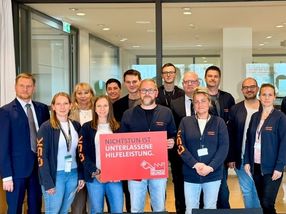
"The annual review for 2025 is positive for the Dairy Industry. There were ups and downs, but for the most part the past year went well for the dairy industry," said Detlef Latka, Chairman of the German Dairy Industry Association and CEO of Hochwald Foods GmbH, at the dairy policy morning pint at the International Green Week in Berlin. "We were once again able to close 2025 with good, high annual sales, although the year-end rally was rather lean," reported Detlef Latka.
While the lower milk volume in the first half of the year caused product prices to rise, the tide turned in the second half of the year. Milk volumes fell much less than expected due to seasonal factors, not only in Germany and the EU but also worldwide. As a result, the EU-27 even achieved the highest milk volume within a calendar year in 2025 (estimated at 148.1 million tons, +1.8% higher than in 2024). In Germany, milk volumes grew by around 1.1 %. The global increase in milk volumes in turn put pressure on product prices.
Reasons for the shift in the milk supply curve
There were many reasons for the increase in milk volumes. The same period in the previous year was low, particularly in Germany, the Netherlands and Belgium, due to bluetongue. This in turn led to delayed calvings in 2025 and thus a change in the usual milk supply curve, especially in the last quarter. In addition, the summer was ideal for the cows: few, short periods of heat meant there was hardly any heat stress, and there were also fewer cow slaughters. In addition to technical progress, which increased milk deliveries, high-quality basic feed was available in large quantities at favorable prices. Prices for purchased feed and fertilizer were also low.
Expectations for 2026
Detlef Latka: "Last year, the milk price was record-breaking for a long time; it will probably be the second-highest annual average milk price we have ever paid to producers. We are currently looking to the still young year of 2026 with skepticism." For 2026, we expect a decline in milk volumes towards the middle of the year. Milk prices have already fallen and are reflecting market conditions with a delay. On the spot markets and quotations in the EU and at GDT, however, there are initial counter-movements.
Structural change
For the first time since 2014, statisticians have counted more animals than in the previous year. However, the slaughter price for dairy cows is currently rising, which could make the sale of cows attractive in the face of falling milk prices and fuel structural change. At the same time, the umbrella organization assumes that the trend towards tethering will continue. While 27 percent of dairy cows were still kept in tethered systems in 2010, this proportion fell to eleven percent by 2020. According to the Thünen Institute, around 417,000 dairy cows were tethered six years ago and this figure will be significantly lower again in 2026.
Inconsistent sales
There were already better signs for exports. The euro is strong, the dollar is weak, and tariffs in the USA and China are also affecting exports. These tariffs are also shifting global trade as a whole, because familiar trade flows are changing and export products are having to compete more strongly with export products from other nations. Trade in dairy products is increasing on the international market, but demand is not keeping pace with the increase in supply. As a result, the EU and Germany have lost ground in the trade in cheese, butter and whole milk powder, with only skimmed milk powder gaining ground. "Overall, the global market situation can be described as rather unstable. We hope that the high quality of German dairy products will be able to hold its own on the market in 2026 under the new conditions," said Detlef Latka.
Dairy products in detail
While butter started the year with higher product prices, consumers experienced unprecedented competition for the fastest falling butter price in food retail at the end of the year. Overall, prices for dairy products and drinking milk fell in the second half of the year and the final quarter, thereby easing the burden on consumers' household budgets. The positive trend in cheese sales continued, but was weaker than in the previous year.
Among alternative dairy products, the cheese and yoghurt variants are insignificant, with only alternative drinks accounting for around 13% of the total volume of milk consumed, although this is a far cry from the growth rates of the past.
Costs and bureaucracy are a burden for the sectors
Last year, too, costs rose not only for agriculture and the dairy industry. This was due in particular to high energy costs in an international comparison, which did not fall to a competitive level for companies in 2025. Inflation has also increased prices overall. The bureaucratic burden is often too high, even if we can see that under this government, for the first time, there is a trend towards actually reducing bureaucracy. We would just like to see more speed.
Dairy industry needs better laws
We have been discussing Article 148 of the CMO for years, the EUDR has been repeatedly postponed but only hesitantly made practicable, and the Single-Use Plastics Fund Act (EWKFondsG) continues to put many sectors in a bad mood. Those involved are waiting for practicable solutions to animal welfare, animal husbandry and labeling.
2026 will be anything but an easy year for the dairy industry. Nevertheless, we in the dairy industry are convinced that our high quality will prevail on the domestic and foreign markets and that we will be able to look back on a successful year at the end of 2026.
Note: This article has been translated using a computer system without human intervention. LUMITOS offers these automatic translations to present a wider range of current news. Since this article has been translated with automatic translation, it is possible that it contains errors in vocabulary, syntax or grammar. The original article in German can be found here.

Other news from the department business & finance