Prospects for milk production: More protein and a healthier environment through grass feeding

Grass-based and low-concentrate cow feed increases protein turnover and reduces environmental impact
27-Dec-2024
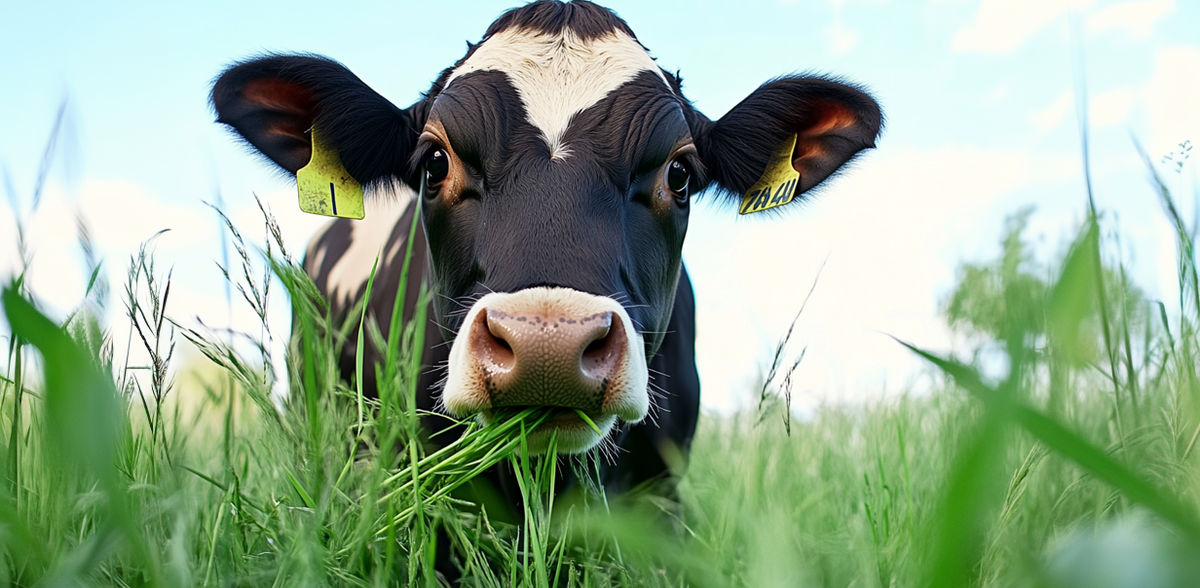
Computer-generated image

Grass-fed dairy cows are in less competition with humans for food than those that receive a lot of concentrated feed (symbolic image).

How can milk production be made more sustainable? And how does feeding concentrates influence sustainability? Researchers at the University of Göttingen and the Kassel Institute for Rural Development have investigated protein utilisation on dairy farms and shown that grass-based and low-concentrate feeding of dairy cows ultimately produces more protein for human consumption. It also reduces the environmental impact by minimising excess nutrients in ecosystems. The results of the study were published in the journal Agricultural Systems.

In order to produce more and more milk, farms have increasingly fed cows protein- and energy-rich concentrated feed – such as cereals or soya – over the past decades. At the same time, grass and pasture-based animal husbandry has declined. However, this practice harbours risks for the environment, requires global feed imports in some cases and increases competition for arable land for the cultivation of food for humans. The researchers therefore looked for approaches to make milk production more sustainable.

To this end, they calculated the protein efficiency of milk production for a total of 52 dairy farms throughout Germany – both organic and conventional – using the so-called hePCR (human-edible protein conversion ratio). This measure describes the ratio of edible protein in feed to protein in milk and shows how much humans and dairy cows compete for the same food resource. The team then compared the protein efficiency with various environmental factors such as plant species diversity and nitrogen pollution in the grassland.

“The results show that a lot of concentrated feed significantly worsens the overall balance in the production of dietary protein,” explains first author Maria Wild from the Department of Grassland Science at the University of Göttingen. “Grass-based milk production, on the other hand, provides more protein for human nutrition despite a lower total milk yield.” Dr Martin Komainda from the same department adds: “High net protein production is associated with significantly greater plant species diversity on the farms’ grassland areas and with fewer nitrogen and phosphorus surpluses.” Professor Johannes Isselstein, head of the department, draws conclusions for the future: “Preserving biodiversity, reducing nitrogen surpluses and at the same time producing high-quality regional food are key aspects of national and international sustainability goals. A paradigm shift in the way we assess efficiency and sustainability in milk production is therefore urgently needed.”

Original publication
Other news from the department science

More news from our other portals

Last viewed contents
Beam Suntory to assume full ownership of Maxxium Spain - Maxxium Spain and Edrington-Beam Suntory UK have been jointly owned by Beam Suntory and Edrington since 2009, with both companies owning a 50% stake in each business

Beam Suntory to assume full ownership of Maxxium Spain - Maxxium Spain and Edrington-Beam Suntory UK have been jointly owned by Beam Suntory and Edrington since 2009, with both companies owning a 50% stake in each business

Rabobank Unveils 15 Food & Agriculture Startup Finalists for FoodBytes! Pitch 2020 - Finalists will showcase their innovations at the FoodBytes! virtual pitch competition December 2

Rabobank Unveils 15 Food & Agriculture Startup Finalists for FoodBytes! Pitch 2020 - Finalists will showcase their innovations at the FoodBytes! virtual pitch competition December 2

First to market: GNT launches micronised powder for solid applications made from colouring foods - New EXBERRY® powders offer true natural and high-performing colours for instant beverages, pressed tablets and seasoned sweet and savoury snacks

First to market: GNT launches micronised powder for solid applications made from colouring foods - New EXBERRY® powders offer true natural and high-performing colours for instant beverages, pressed tablets and seasoned sweet and savoury snacks

Few-foods diet has major effect on ADHD (as opposed to fish oil)

Fibre against pounds: Resistant starch supports weight loss - “Our study will provide a practical approach to treat obesity and its related metabolic disorders by resistant starch”

Fibre against pounds: Resistant starch supports weight loss - “Our study will provide a practical approach to treat obesity and its related metabolic disorders by resistant starch”

Only alcohol -- not caffeine, diet or lack of sleep -- might trigger heart rhythm condition - Lifestyle factors may play role in managing the malady, latest study shows

Only alcohol -- not caffeine, diet or lack of sleep -- might trigger heart rhythm condition - Lifestyle factors may play role in managing the malady, latest study shows

German market for dietary supplements continues to grow uninterruptedly

German market for dietary supplements continues to grow uninterruptedly

Budweiser Brewing Group, En+, Canpack and Elval pilotnew beer can with lowest carbon footprint

Budweiser Brewing Group, En+, Canpack and Elval pilotnew beer can with lowest carbon footprint

Bel and Lactalis enter exclusive talks to sell Leerdammer® and related rights - Dairy products world no. 1 Lactalis acquires iconic European cheese brand Leerdammer

Bel and Lactalis enter exclusive talks to sell Leerdammer® and related rights - Dairy products world no. 1 Lactalis acquires iconic European cheese brand Leerdammer

IBEN GmbH Institut für Lebensmittel- und Umweltanalytik - Bremerhaven, Germany

IBEN GmbH Institut für Lebensmittel- und Umweltanalytik - Bremerhaven, Germany

Milk will continue to play an important role in our diet in the future

Milk will continue to play an important role in our diet in the future

Diageo sells Guinness Cameroon S.A. to Castel Group for £389m - Reflects Diageo’s efficient and flexible beer operating model

Diageo sells Guinness Cameroon S.A. to Castel Group for £389m - Reflects Diageo’s efficient and flexible beer operating model