Growing Bell Peppers, Chili Peppers, and Strawberries Locally and Sustainably
Vertical Indoor Farming: TH Köln and NourTec GmbH Develop a Smart System for Demanding Plants
Advertisement


The supply of fresh fruits and vegetables faces major challenges worldwide: climate change, water scarcity, shrinking farmland, and unstable supply chains are putting a strain on agriculture. As part of the “GreenFarmTEC” project, TH Köln is therefore working on new technologies for the sustainable and regional cultivation of fruits and vegetables in vertical indoor farming facilities.
“United Nations projections show that by 2050, approximately 9.7 billion people will live on Earth—the vast majority of them in cities.” At the same time, agricultural land is becoming scarcer, extreme weather events are on the rise, water is increasingly becoming a limited resource, and pressure on global supply chains is mounting,” says project leader Prof. Dr. Mohieddine Jelali from the Cologne Lab for Artificial Intelligence and Smart Automation (CAISA) at the Cologne University of Applied Sciences. Against this backdrop, food production in controlled indoor environments is becoming increasingly important.
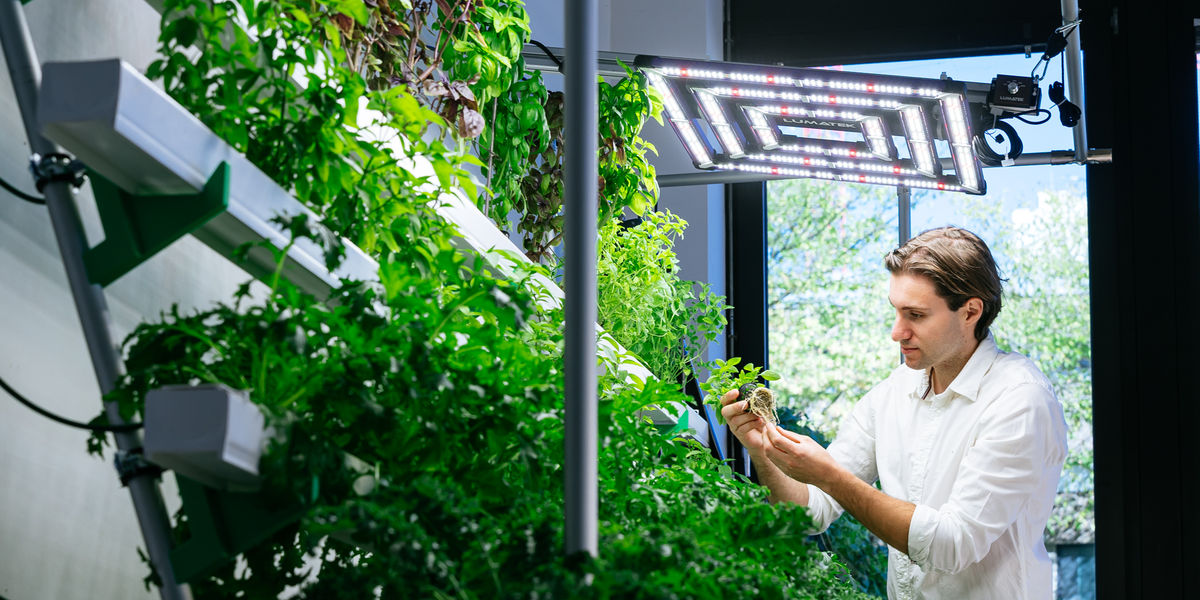
The project therefore focuses on what is known as vertical indoor farming. This enables plants to be grown in vertically arranged, enclosed cultivation systems with artificial lighting. While existing systems have so far been designed primarily for fast-growing lettuces and herbs, the research team is developing a technology that allows for the cultivation of particularly demanding fruit-bearing plants such as strawberries, tomatoes, cucumbers, bell peppers, and chili peppers.
Smart Control for Optimal Growing Conditions
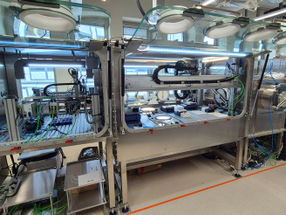
At the heart of the project is a modular indoor farming system based on a building-block principle. The snap-on, stackable boxes can be flexibly combined and equipped with energy-efficient LED lighting, sensors, and various hydroponic growing systems in which the plants grow in a nutrient solution without soil. “Our goal is to create optimal growing conditions while keeping operating and energy costs as low as possible,” says Jelali.
To achieve this, the team is using industrial image processing and artificial intelligence. Cameras monitor plant growth in real time and analyze, among other things, the plants’ developmental stage and vitality. Based on this data, the system is designed to automatically adjust lighting, temperature, and water and nutrient supply to the needs of the respective plants. For example, the team plans to develop energy-efficient lighting strategies in which the light spectrum and intensity are specifically tailored to the individual growth phases.
“With vertical indoor farming, food can be produced right where it’s needed—in a resource-efficient manner, independent of weather conditions, and available year-round. The system we are developing as part of our project is designed to enable sustainable and regional food production, conserve water and land, and shorten transportation distances, thereby keeping fruits and vegetables fresh longer,” explains Jelali. Once the project is complete, the technology should be flexible enough to be adapted to different locations and used especially in areas where arable land is limited.
Note: This article has been translated using a computer system without human intervention. LUMITOS offers these automatic translations to present a wider range of current news. Since this article has been translated with automatic translation, it is possible that it contains errors in vocabulary, syntax or grammar. The original article in German can be found here.



Other news from the department science












Most read news







More news from our other portals























See the theme worlds for related content
Artificial intelligence (AI) for food and beverages
Artificial intelligence (AI) is optimizing the food and beverage industry through automated quality control and more accurate demand forecasting. AI plays a particularly important role in product development by analyzing taste preferences and market trends. This allows new products to be developed that are better tailored to consumer needs, increasing efficiency and customer satisfaction.

Artificial intelligence (AI) for food and beverages
Artificial intelligence (AI) is optimizing the food and beverage industry through automated quality control and more accurate demand forecasting. AI plays a particularly important role in product development by analyzing taste preferences and market trends. This allows new products to be developed that are better tailored to consumer needs, increasing efficiency and customer satisfaction.