Tough Shell, Nutritious Kernel—82 Nut Mixes Under the Microscope
The German Nutrition Society (DGE) recommends eating a handful of nuts every day
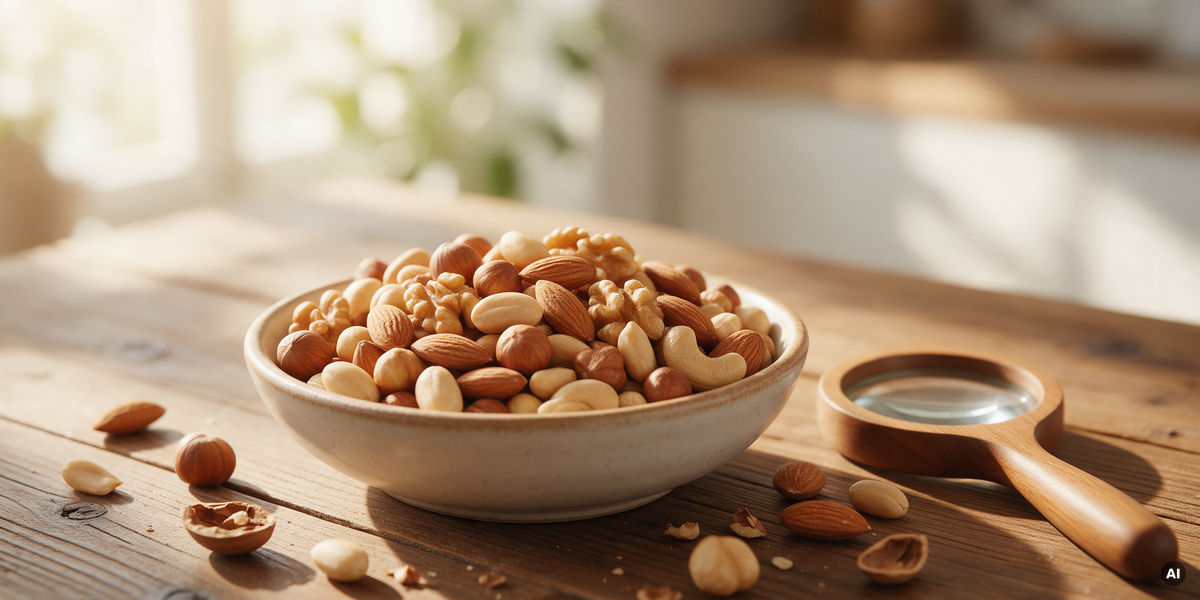
Whether hazelnuts, peanuts, walnuts, almonds, or cashews: According to the Federal Center for Agriculture, Germans consume about 5.8 kilograms of nuts per person each year—about 27 percent more than they did ten years ago. Nuts are valued as a source of high-quality fats such as omega-3 fatty acids, as a source of protein, and for their vitamin and mineral content. The German Nutrition Society (DGE) also recommends eating a handful of nuts every day.
A mix of different types of nuts is particularly beneficial, as the individual varieties differ in their nutritional composition and taste and thus complement each other perfectly. The Bavarian State Office for Health and Food Safety (LGL) has tested a total of 82 nut mixes in recent years. Only one sample had to be classified as potentially harmful to health: This impure nut kernel mixture, which also contained roasted corn kernels and chili crackers, lacked the required allergen declaration for gluten.
In 58 of the 82 samples tested between late 2024 and 2025, the LGL found no irregularities whatsoever. Each sample was examined for its sensory characteristics, composition, and packaging labeling. Seventeen samples were rejected solely due to (non-health-hazardous) labeling deficiencies. Significant sensory deviations were found in five samples; in these cases, the nuts smelled and tasted rancid or musty.
Background: Nuts in the Diet
When enjoyed in small portions, mixed nuts serve as part of a balanced diet. They also represent a good alternative to animal-based foods. Nuts primarily contain fats, plant-based protein, and dietary fiber. The fat content of many types of nuts is usually well over 50 g per 100 g, which is why nuts are considered particularly high in calories. However, the high fat content is due to valuable monounsaturated and polyunsaturated fatty acids, which are of particularly high quality. In addition, nuts are a vegan source of protein; peanuts and almonds, in particular, contain a high proportion of protein. Furthermore, nuts provide, among other things, vitamin E and various B vitamins, minerals such as magnesium, potassium, calcium, iron, zinc, and selenium, as well as phytochemicals and antioxidants.
Note: This article has been translated using a computer system without human intervention. LUMITOS offers these automatic translations to present a wider range of current news. Since this article has been translated with automatic translation, it is possible that it contains errors in vocabulary, syntax or grammar. The original article in German can be found here.

Other news from the department science











Most read news









More news from our other portals




























See the theme worlds for related content
Topic world Food safety
Food safety is at the heart of the food and beverage industry. It ensures that the food we eat every day is not only nutritious, but also free of harmful contaminants. From field to plate, the industry monitors and regulates every step of the process with strict quality controls, advanced testing methods and continuous research.
Topic world Food safety
Food safety is at the heart of the food and beverage industry. It ensures that the food we eat every day is not only nutritious, but also free of harmful contaminants. From field to plate, the industry monitors and regulates every step of the process with strict quality controls, advanced testing methods and continuous research.