Cellular agriculture for the food of the future
Novel, biointelligent food production from laboratory to pilot scale
Advertisement


Proteins, fats or flavors from cellular agriculture: microorganisms and fungi open up new ways of producing alternative foods and food ingredients. What is already successful on a laboratory scale presents researchers with challenges when it comes to transferring it to larger quantities. The scalable Hohenheim Cellular Agriculture Platform is now being developed in the C.A.T.A.L.I.S.T. project. The University of Hohenheim in Stuttgart is receiving 1.1 million euros in funding from the European Regional Development Fund (ERDF) for its construction. In addition to the Institute of food science and biotechnology, the bioreactor platform will also be open to partner institutions in the region.
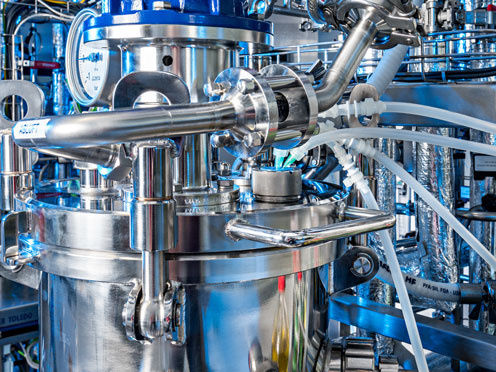
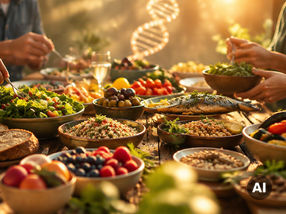
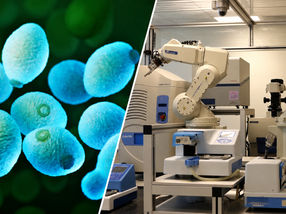
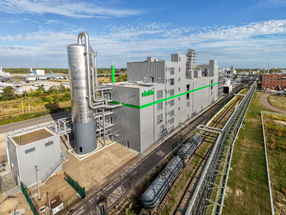
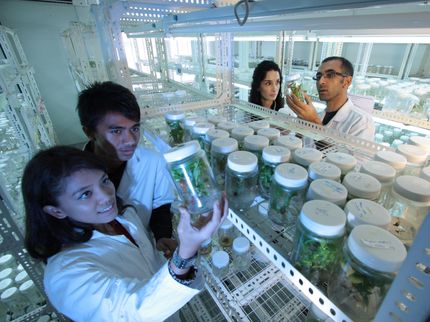
Resource-saving & future-oriented: A scalable bioreactor platform for cell-based, sustainable food production from laboratory to pilot scale is being developed at the University of Hohenheim (symbolic image).
Universität Hohenheim
In view of the growing scarcity of land, globally interconnected markets and increasing demands for sustainability and animal welfare, the agricultural and food system is under considerable pressure to change worldwide.
Cellular agriculture, as it is known internationally, is a promising approach. It uses biointelligent, biotechnological processes to produce food and valuable ingredients from microorganisms or fungi. However, the prerequisite is that these processes can be reliably scaled up to produce larger quantities and thus contribute to a resource-conserving, resilient supply.
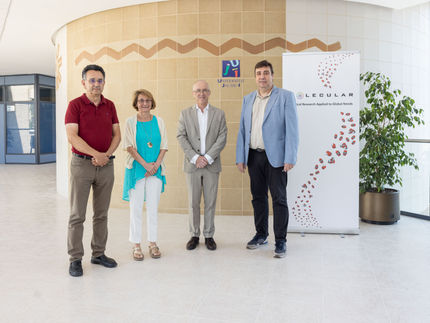
Under the leadership of the Department of Plant-Based Foods, a modern bioreactor system is therefore being developed in cooperation with the Bioeconomy Office at the University of Hohenheim, in which all production processes can be carried out from laboratory to pilot scale.
"Food First"
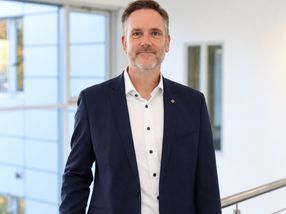
"With C.A.T.A.L.I.S.T., we can produce cell-based products in sufficient quantities to investigate them further across disciplines, for example with regard to technological properties or health effects," explains Professor Mario Jekle from the Department of Plant-Based Foods.
The project follows the guiding principle of "Food First". Microorganisms and fungi primarily process biomass and side streams into high-quality foods and functional ingredients. Raw materials from traditional agriculture can serve as the basis for nutrient media and are combined with precision fermentation and digital process control.
"For example, protein-rich components for human nutrition can be obtained from acid whey or press cake from soy processing. Ideally, any remaining residues can then be further refined and fed into other use cycles," explains Dr. Sabina Paulik, head of the Functional Proteins and Biopolymers working group at the Department of Plant-Based Foods.
New form of agriculture
For the University of Hohenheim, C.A.T.A.L.I.S.T. is much more than an infrastructure project: The project further sharpens Hohenheim's profile in the field of bioeconomy and research into sustainable agricultural and food systems. The University is also building on its particular strength: By combining cell-based food production with existing forms of outdoor and indoor farming, it is bridging the gap between traditional agriculture and modern biotechnological food production.
"This system enables a new and complementary form of food production that does not take place traditionally in the field or in a greenhouse. This assigns expanded roles to agricultural and food sciences and enables new collaborations, innovative questions and forward-looking forms of biomass use," says Professor Jekle.
"The integration of the field of phytopathology and biotechnological processes for safe precision breeding will bring the agricultural and food sciences even closer together. C.A.T.A.L.I.S.T. will further strengthen cooperation between the departments and faculties at the University of Hohenheim and accelerate the transfer to application-oriented research," he is convinced.
C.A.T.A.L.I.S.T. closes infrastructure gap
C.A.T.A.L.I.S.T. is anchored at the Institute of Food Science and Biotechnology at the University of Hohenheim. The interdisciplinary platform is open to all twelve departments of the Institute as well as the Department of Phytopathology of the Faculty of Agricultural Sciences and related disciplines and other institutions in the region. As part of a newly emerging transfer center, it is also geared towards knowledge transfer so that research results can be quickly translated into commercial applications and marketable products.
"With the C.A.T.A.L.I.S.T. project, the university is closing a key gap in its existing infrastructure. In future, scaling steps can be developed, optimized and tested independently without having to rely on external partners," says Dr. Evelyn Reinmuth, Head of the Bioeconomy Office.
Sustainable and knowledge-based food production in metropolitan regions
Indoor processes in particular increase the resilience of food systems because they enable food production even where land is scarce or agricultural conditions are unfavorable. "For regions with high competition for land, such as the Stuttgart metropolitan region and large parts of Baden-Württemberg, this opens up new prospects for diversification and value creation," explains Dr. Reinmuth.
"By closely interlinking food science, agricultural science, biotechnology and digitalization, we can research innovative production processes at an early stage, train qualified specialists and lay the foundations for a resilient, sustainable and knowledge-based food supply of the future," she continues.
The project is closely integrated into Stuttgart's bioeconomy innovation ecosystem and cooperates with regional business development agencies, the Chamber of Industry and Commerce, Fraunhofer institutions, Umwelttechnik BW and national and international networks.
Note: This article has been translated using a computer system without human intervention. LUMITOS offers these automatic translations to present a wider range of current news. Since this article has been translated with automatic translation, it is possible that it contains errors in vocabulary, syntax or grammar. The original article in German can be found here.


Other news from the department science