DANK Calls for Legal Limits on Marketing to Children in World Cup Collectible Campaigns
DANK and DDG accuse food companies of deliberately exploiting children's enthusiasm for the World Cup to promote sugar-sweetened products
Advertisement


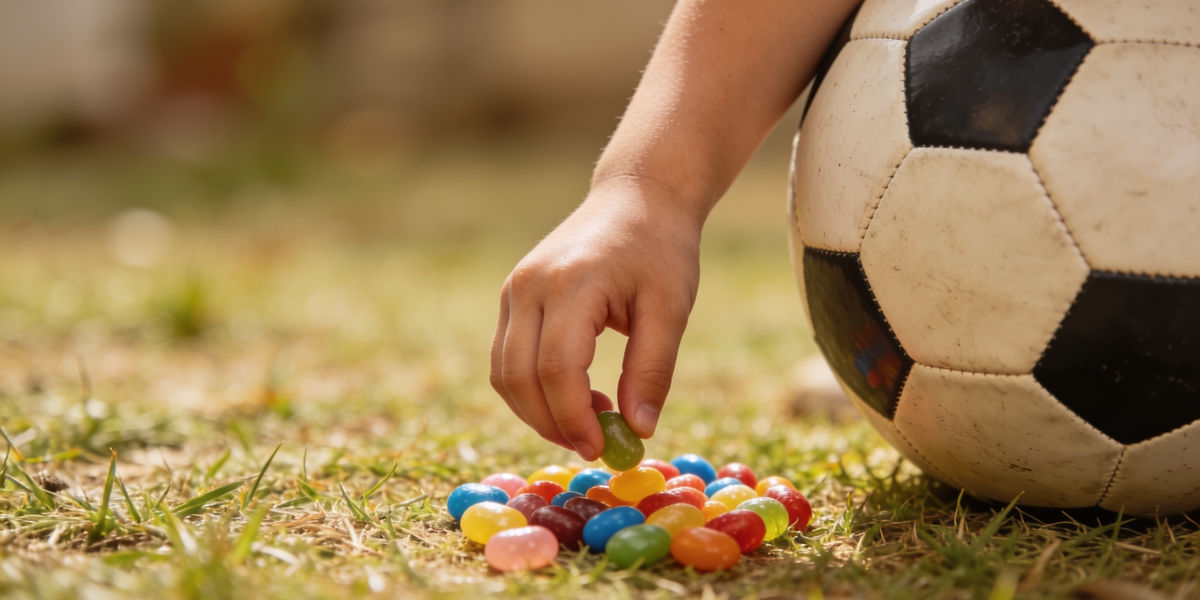
Collectible campaigns, special editions, and rewards: In the run-up to the 2026 FIFA World Cup, food manufacturers are enticing consumers with various offers and fan promotions. The German Alliance for Noncommunicable Diseases (DANK) criticizes these campaigns, which use collection incentives to encourage children and families to buy products high in sugar and fat.
This is particularly evident in the current Ferrero collection campaign. Anyone who wants to receive a water bottle, a T-shirt, or a soccer ball must collect points on products such as Nutella, Duplo, Kinder Happy Hippo, or Hanuta. The quantities of these products required to earn the points sometimes contain enormous amounts of sugar.
For example, consumers must:
- buy about 1.4 kilograms of sugar in the form of 15 Duplo multipacks to get a water bottle,
- purchase more than 3 kilograms of sugar in the form of Kinder Happy Hippo packs to get a T-shirt,
- to get a soccer ball, they must buy over 5 kilograms of sugar in the form of 20 jars of Nutella.
Coca-Cola is also running a collectible promotion as part of the World Cup. To receive a World Cup T-shirt, consumers must collect twelve different special editions. If twelve 0.5-liter bottles of sugary Coca-Cola were purchased for this purpose, it would amount to about 636 grams of sugar—more than half a kilogram. Although the campaign is also available with sugar-free options, the incentives for collecting are directly linked to the purchase of soft drinks.
“The World Cup inspires millions of children and encourages them to play sports and emulate their ‘heroes.’ It is precisely this enthusiasm that food companies deliberately exploit to boost sales of high-sugar products,” says Barbara Bitzer, spokesperson for the German Alliance for Noncommunicable Diseases (DANK) and executive director of the German Diabetes Society (DDG). “If, mathematically speaking, more than five kilograms of sugar must be purchased for a single soccer ball, this highlights the absurdity of such advertising campaigns. Children are thus deliberately encouraged to buy sugar bombs. And the positive effect on physical activity and sports is negated.”
The German Nutrition Society (DGE) recommends limiting the intake of added sugars to less than ten percent of daily energy intake. A single Duplo bar already contains 9.2 grams of sugar. Portions that seem small can thus quickly turn into sugar bombs.
“What’s particularly problematic is that such campaigns don’t promote the consumption of a single product, but instead rely specifically on collection mechanisms,” Bitzer continued. “Anyone who wants to receive a reward must keep buying new products. This creates purchasing incentives that go far beyond actual consumption.”
For years, DANK has therefore been calling for effective legal restrictions on marketing of unhealthy foods targeted at children. Major sporting events should not be used to systematically attract children and adolescents to products with high sugar content.
“Sports stand for physical activity, health, and disease prevention. Many children are looking forward to the World Cup and the German team’s matches. When associations and organizers enter into partnerships with manufacturers whose products have been shown to contribute to obesity, type 2 diabetes, and other noncommunicable diseases, they send mixed messages to children and families,” says Bitzer. “Soccer should motivate children to be active, not to consume more candy and soft drinks.”
Note: This article has been translated using a computer system without human intervention. LUMITOS offers these automatic translations to present a wider range of current news. Since this article has been translated with automatic translation, it is possible that it contains errors in vocabulary, syntax or grammar. The original article in German can be found here.


Other news from the department politics & laws