Will a sugar tax on sweetened beverages be introduced in 2028?
Advertisement


For years, the German Society for General Practice and Family Medicine (DEGAM) has been calling for greater efforts in environmental prevention. That is why DEGAM expressly welcomes the recently announced sugar tax on sweetened beverages.
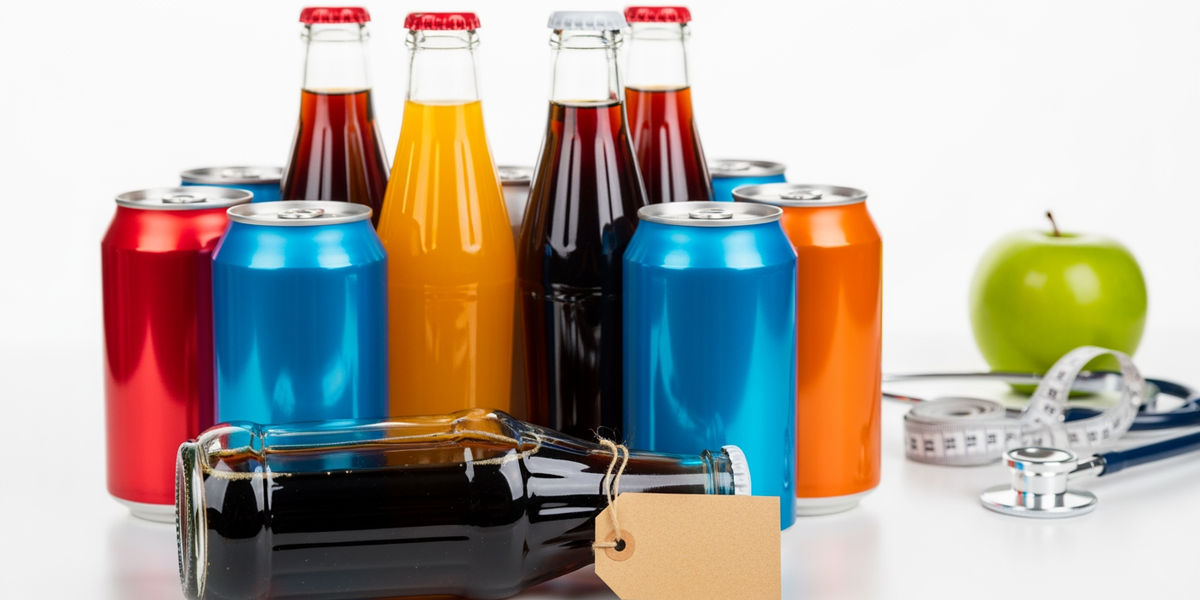
Time for cautious optimism: After years of stagnation, the federal government plans to introduce a sugar tax starting in 2028—not on all foods, but as a targeted levy on sweetened beverages, tiered according to sugar content.
DEGAM has long supported the planned taxation of foods with particularly high sugar content. “It is high time that Germany finally catches up in the area of environmental prevention—and that includes a sugar tax. While other countries have long been gaining experience with higher taxes on sugar, tobacco, and alcohol, we’ve been collecting arguments as to why it can’t or shouldn’t be done. A sugar tax on sweetened beverages would be a first step in the right direction,” comments Prof. Eva Hummers, President of DEGAM.

Excessive sugar consumption is associated with the development of numerous chronic diseases such as obesity, type 2 diabetes, cardiovascular disease, and tooth decay. Prof. Bettina Engel, spokesperson for the DEGAM Prevention Section, explains: “In general practice, we see the consequences of excessive sugar consumption every day. We also see that it is generally very difficult to change individual behavior when unhealthy foods are the cheapest and are also heavily advertised.”
Higher Prices and Greater Transparency
The idea behind a tax is simple: higher prices for particularly sugary beverages can reduce their consumption. International experience also shows that manufacturers do, in fact, change their recipes and add less sugar.
There is also room for improvement when it comes to transparency: Sugar in industrially processed foods is often difficult to identify because it is listed under various names (sucrose, maltose, fructose, agave syrup, etc.), and added sugars are also present in products that are not primarily perceived as sweet. This makes it particularly difficult to make a “healthier” choice. Against this backdrop, DEGAM advocates for clear labeling requirements.
DEGAM also points out another problematic aspect: Sugar affects the central nervous system in much the same way as drug use. DEGAM calls for this addictive potential to be clearly highlighted. “Of course, the government is not responsible for what or how much people eat or drink. However, as with other addictive substances, it should ensure that readily available foods do not cause illness,” adds Dr. Ilja Karl, deputy spokesperson for the DEGAM Prevention Section.
Tax as Part of a Comprehensive Package
DEGAM advocates for an interdisciplinary, coordinated approach: The sugar tax should be an important component of a comprehensive package: In addition to taxing soft drinks and other foods high in sugar, access to healthy foods must also be made easier, so that a healthy diet becomes more of a matter of course overall. At the same time, it is of course also important to expand opportunities for physical activity in everyday settings—such as daycare, school, and the workplace.
Note: This article has been translated using a computer system without human intervention. LUMITOS offers these automatic translations to present a wider range of current news. Since this article has been translated with automatic translation, it is possible that it contains errors in vocabulary, syntax or grammar. The original article in German can be found here.



Other news from the department politics & laws