New "Computational Precision Nutrition" Division at DIfE
Prof. Stefan Konigorski leads the new team that links N-of-1 trials with multimodal cohort data
On July 1, 2026, the new “Computational Precision Nutrition” department began its work at the German Institute of Human Nutrition Potsdam-Rehbrücke (DIfE) under the leadership of Prof. Stefan Konigorski. The goal of the new research team is to advance the development of reliable and personalized dietary recommendations using so-called N-of-1 trials and new analytical methods based on artificial intelligence and causal inference.
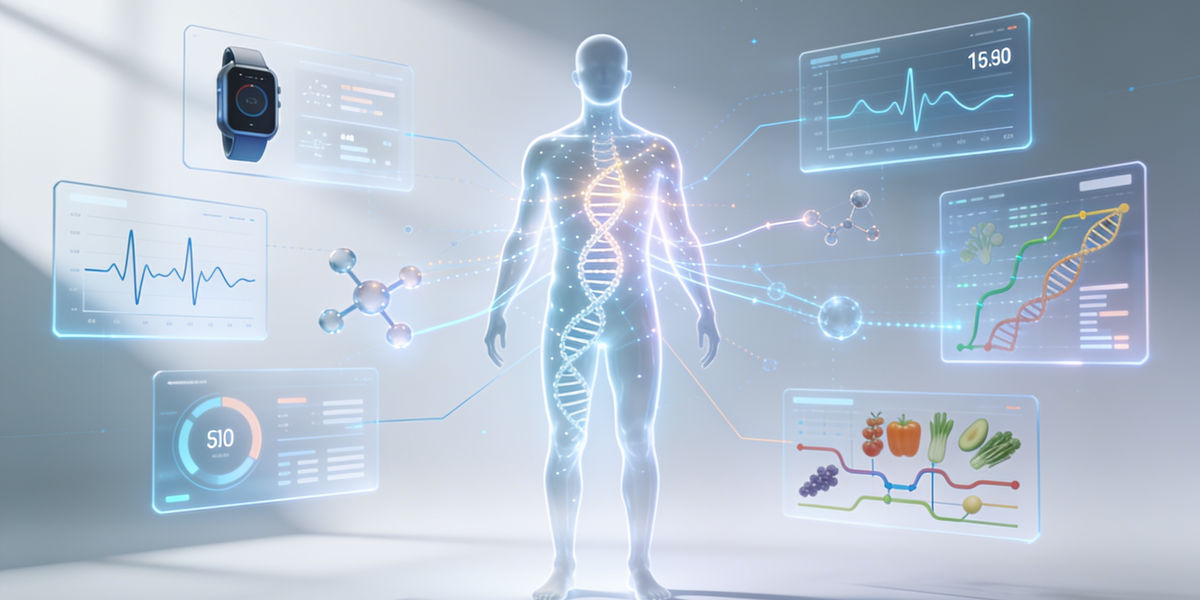
The Computational Precision Nutrition (CPN) department goes beyond the “one-size-fits-all” approach. By utilizing advanced data methods and algorithms, it takes into account the individuality of each person. This enables the development of personalized nutrition strategies that can contribute to improved health. (Graphic: DIfE)
Diet trends such as intermittent fasting or low-carb diets are everywhere. But what works for one person may have no effect on another. This is precisely where the new “Computational Precision Nutrition” (CPN) department at DIfE comes in. Led by Prof. Stefan Konigorski, the team is driving a paradigm shift from a general “one-size-fits-all” mindset toward precision nutrition. The goal is to analyze complex health and study data and use it to develop strategies for personalized dietary and behavioral recommendations aimed at preventing and treating chronic diseases, such as obesity or type 2 diabetes.

Moving Away from Generalized Advice—Toward Individualized Precision Nutrition
For Stefan Konigorski, the solution is no longer just a diet, but a scientifically verifiable plan that takes into account each person’s unique metabolism. “We combine computer-aided approaches with apps, data from cohort studies, and personalized studies to establish causal relationships. The database is multimodal, meaning it’s based on the integration of molecular data, wearable data, and detailed lifestyle patterns. It’s precisely this depth that enables us to achieve true precision when it’s needed,” he explains.
N-of-1 Trials: Evidence Tailored to the Individual
Konigorski’s team is developing new methods at the intersection of statistics and artificial intelligence and integrating them with data from large population-based studies, such as the European Prospective Investigation into Cancer and Nutrition (EPIC)-Potsdam study or the NAKO Health Study. However, individually designed studies will also be utilized, and the CPN team employs the N-of-1 trial principle to analyze them. This statistical method allows for the personalization of experimental studies.
Prof. Stefan Konigorski has headed the new CPN department at the DIfE since July 1, 2026.
To investigate the influence of individual dietary factors on health, the expansion of the digital open-source study platform StudyU is central. In combination with methods of causal inference, it will be possible to identify actual cause-and-effect relationships between lifestyle factors, diet, and disease risks.
This approach helps answer individual questions such as, “Do I feel better, and can intermittent fasting lower my blood sugar levels in the long term?” Konigorski explains: “For this research approach, participants would, for example, go through one phase with and one phase without intermittent fasting, during which specific health markers would be recorded in each phase. Ultimately, the statistical analysis can identify individual effects and provide personalized lifestyle recommendations. Participants thus learn firsthand, for example, which dietary patterns are beneficial for them.”
Combining AI and Human Biology
The unique combination of databases, artificial intelligence, and the experiential tool of N-of-1 trials not only enables the linking of micro-level approaches with macro-level data. Rather, the vast diversity of data promises precision medicine insights into the development of cardiometabolic and age-related diseases. “From previous research, we know which dietary patterns can provide protection and therapeutic support. But what does that mean for the individual? For whom are general recommendations sufficient? When is precision needed? Our new “Computational Precision Nutrition” department will provide answers to these questions and develop tools for personalized dietary recommendations, ranging from precise data to digital implementation. This will redefine the standard in nutrition research,” says Prof. Tilman Grune, DIfE’s Scientific Director, highlighting the significance of the new department.
Background information
N-of-1 Trials
The methodology of N-of-1 trials originated in general medicine and clinical care, where it is crucial to measure individual
efficacy. In the field of nutrition, this methodological approach is useful because human metabolism is extremely individual, and
general “correct” recommendations are sometimes hardly effective.
Causal Inference
Causal inference is a scientific process that helps identify genuine cause-and-effect relationships in data. While mere
correlations merely describe statistical associations, causal inference investigates whether one variable directly causes another,
and quantifies the strength of this effect.
Note: This article has been translated using a computer system without human intervention. LUMITOS offers these automatic translations to present a wider range of current news. Since this article has been translated with automatic translation, it is possible that it contains errors in vocabulary, syntax or grammar. The original article in German can be found here.

Other news from the department science



















Most read news







More news from our other portals






















See the theme worlds for related content
Artificial intelligence (AI) for food and beverages
Artificial intelligence (AI) is optimizing the food and beverage industry through automated quality control and more accurate demand forecasting. AI plays a particularly important role in product development by analyzing taste preferences and market trends. This allows new products to be developed that are better tailored to consumer needs, increasing efficiency and customer satisfaction.

Artificial intelligence (AI) for food and beverages
Artificial intelligence (AI) is optimizing the food and beverage industry through automated quality control and more accurate demand forecasting. AI plays a particularly important role in product development by analyzing taste preferences and market trends. This allows new products to be developed that are better tailored to consumer needs, increasing efficiency and customer satisfaction.