Supermarkets are driving the sustainability transformation—but are not fully realizing their potential
According to IDOS, harmonized reporting requirements and multi-stakeholder sector strategies could significantly increase the impact of the food retail sector.
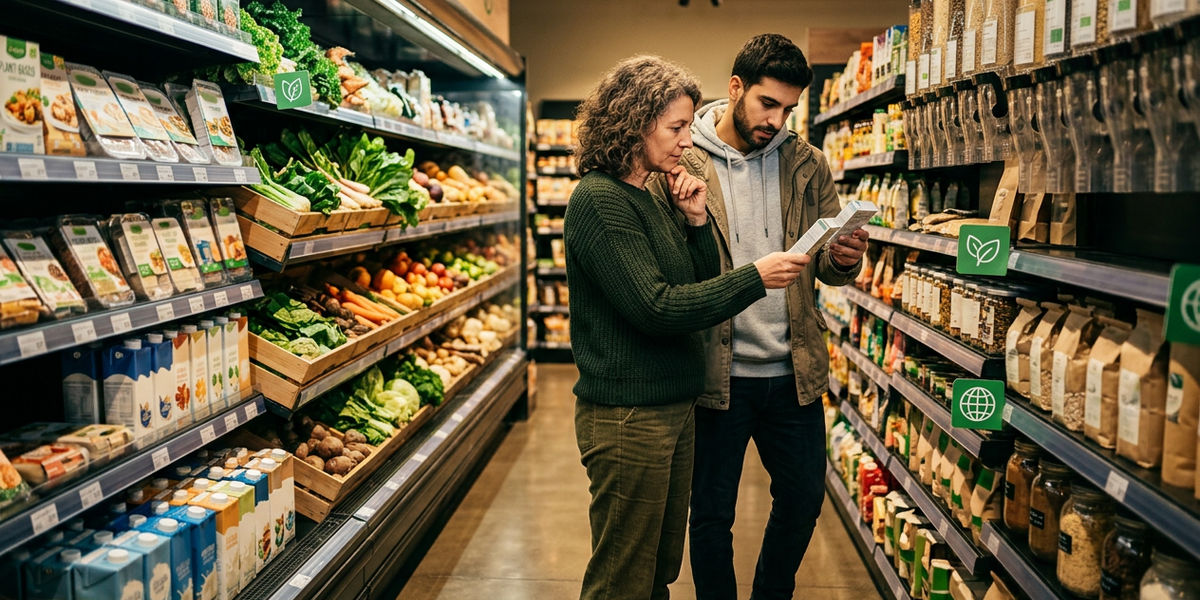
“Are Supermarkets Drivers of the Sustainability Transformation?” New research findings from IDOS and partner universities in Sweden, Turkey, and the U.S. show that food retailers are often successfully driving environmental and climate protection measures.
However, supermarkets could leverage their role as key actors between supply chains and customers even more ambitiously. Reporting requirements that stimulate competition, integration into ambitious multi-stakeholder sector strategies, and the systematic upscaling of successful individual measures could reinforce their transformative impact.
Key findings include:
- Supermarkets, particularly in Northern European countries, are pursuing ambitious environmental protection measures and reporting on their progress with a high degree of transparency.
- Differences among major companies such as Lidl and Aldi, REWE, and Edeka: On many environmental issues, it is the discounters Lidl and Aldi Süd that are particularly committed in Germany. They benefit from centralized decision-making processes and strong influence over the supply chain for their private-label brands.
- The retail cooperatives Edeka and REWE, on the other hand, are leaders in regional sourcing due to their network of semi-autonomous stores embedded in their respective regions, and their business models include the provision of deposit-return systems.
- The study shows that retailers’ private labels, on average, undergo more rigorous certification than manufacturer brands, and it highlights the reasons for this.
- Weaknesses in reporting: Companies generally report in ways that make their data difficult to compare. Harmonized reporting requirements can spur innovation-driven competition if clear standards are set, as is happening within the framework of the Science-Based Targets Initiative.
- Supermarkets exert pressure on their suppliers to produce sustainably, but price pressure makes implementation difficult; they very rarely offer support. Multi-stakeholder initiatives can help remedy this situation.
- In the transition to climate-friendly vegan protein sources, there have recently been a variety of best practices that could be combined even more effectively.
- Consumers underestimate the negative environmental impacts of meat consumption. Targeted information on this topic can help promote more sustainable purchasing decisions.
The findings will be discussed during a virtual conference on June 23 and 24, 2026; some will be published shortly on the SSRN platform, among others. The three online panel discussions on June 24 are open to journalists.
The findings will be discussed at a virtual conference on June 23 and 24, 2026, and some will be published shortly on platforms such as SSRN. The three online panel discussions on June 24 are open to journalists. The focus will be on the following questions:
1\. Beyond Standards: (How) can retailers support producers in the transition to sustainable food production?
2\. Discounted barbecue meat offers and the vegan boom: The role of food retail chains in dietary change
3\. When do sustainability innovations lead to an industry-wide transformation in retail?
The discussion will feature representatives from academia, supermarkets (Lidl, ICA, Migros Turkey, Axfood, Coop), civil society organizations such as Oxfam and Questionmark, industry-related associations such as the World Business Council for Sustainable Development and the Science-Based Targets Initiative, as well as public institutions such as the Federal Environment Agency and the Federal Ministry for Economic Cooperation and Development (BMZ).
Note: This article has been translated using a computer system without human intervention. LUMITOS offers these automatic translations to present a wider range of current news. Since this article has been translated with automatic translation, it is possible that it contains errors in vocabulary, syntax or grammar. The original article in German can be found here.
Other news from the department science