Crossbreeding old chicken breeds with hybrids improves animal welfare and egg production
Crossbred animals also made better use of regional, low-energy feed than purebreds
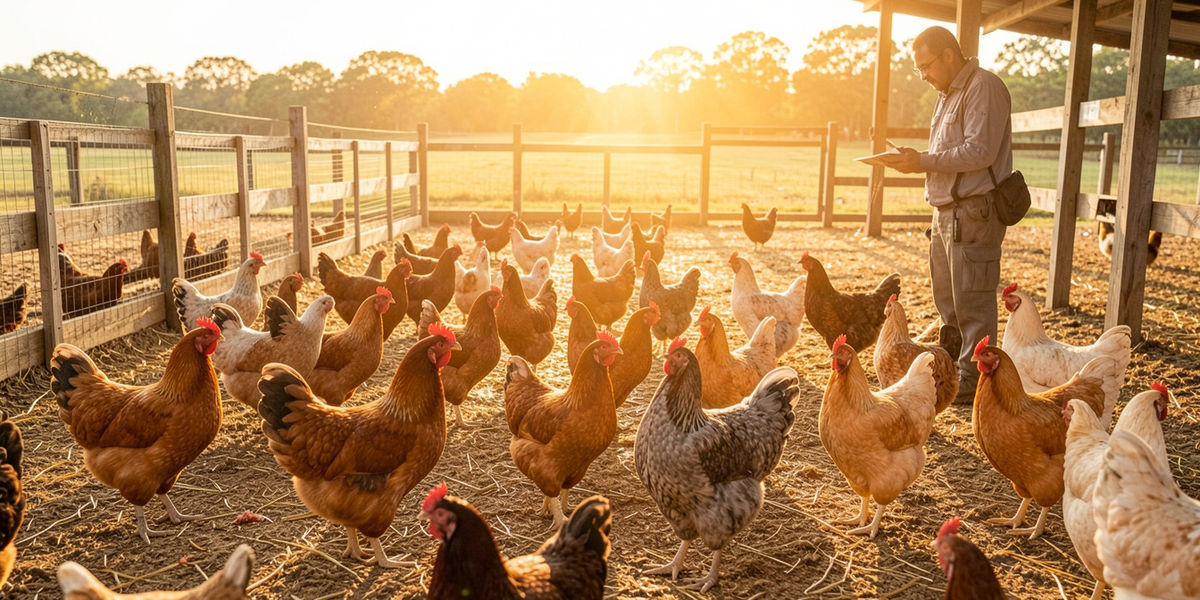
Researchers have investigated how crossbreeding old, native—and in some cases endangered—chicken breeds with modern lines affects the animals’ performance, health, hardiness, behavior, and adaptability. The result: This combination can be worthwhile—both in organic farming and in conventional poultry production. At the same time, it contributes to the preservation of biodiversity.
The requirements for sustainable and animal-welfare-friendly poultry farming have increased significantly. At the same time, demand for poultry products is growing steadily. Experts see the crossbreeding of old, native chicken breeds with parent stock from commercial poultry breeding as a potential solution.
For three years, researchers from the University of Bonn and Osnabrück University of Applied Sciences, together with project partners from the Universities of Göttingen and Kassel, as well as the Institutes for Livestock genetics in Mariensee and Immunology at the Friedrich Loeffler Institute, conducted targeted crossbreeding studies as part of the “ÖkoGen” to develop targeted crossbreeding strategies, primarily to provide recommendations for the breeding and fattening of laying hens and broiler chickens in organic farming.
Good laying performance with unchanged calcium balance:
In this study, old, native breeds such as Ramelsloher and Bielefelder Kennhuhn were specifically crossed with parent stock from commercial poultry breeding. This was followed by a comprehensive characterization of the animals in terms of performance, animal health, robustness, behavior, adaptability, and other traits.
The results:
Crossbreeds with high-performing parent birds excelled in terms of egg production without any negative changes in calcium balance. However, they had a slightly increased risk of sternum fractures—although this is influenced by other factors such as housing conditions, the onset of egg-laying, or feeding.
Animal welfare indicators and behavioral tests showed a high level of animal welfare for all purebreds and crosses; but crossbred birds performed better. Studies under experimental and practical conditions revealed that crossbreds can also efficiently utilize regional, energy-reduced feed. In this context, it was crucial to adapt the feeding regimen to the genetics and housing system. In addition, there were indications of possible differences in tolerance to parasite infestation between the genotypes.
The researchers also examined the animals’ response to a vaccination against Newcastle disease. In terms of immune competence, the old, native breeds performed particularly well.
The three-year “ÖkoGen” project was funded by the Federal Ministry of Agriculture, Food, and Home Affairs (BMLEH) through the Federal Program for Organic Farming (BÖL) at the Federal Office for Agriculture and Food (BLE). The final report is now available online.
Note: This article has been translated using a computer system without human intervention. LUMITOS offers these automatic translations to present a wider range of current news. Since this article has been translated with automatic translation, it is possible that it contains errors in vocabulary, syntax or grammar. The original article in German can be found here.
Other news from the department science