Nestlé Expands Coffee Production at Its Schwerin Facility
About 50 new jobs
Advertisement


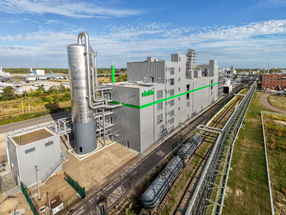
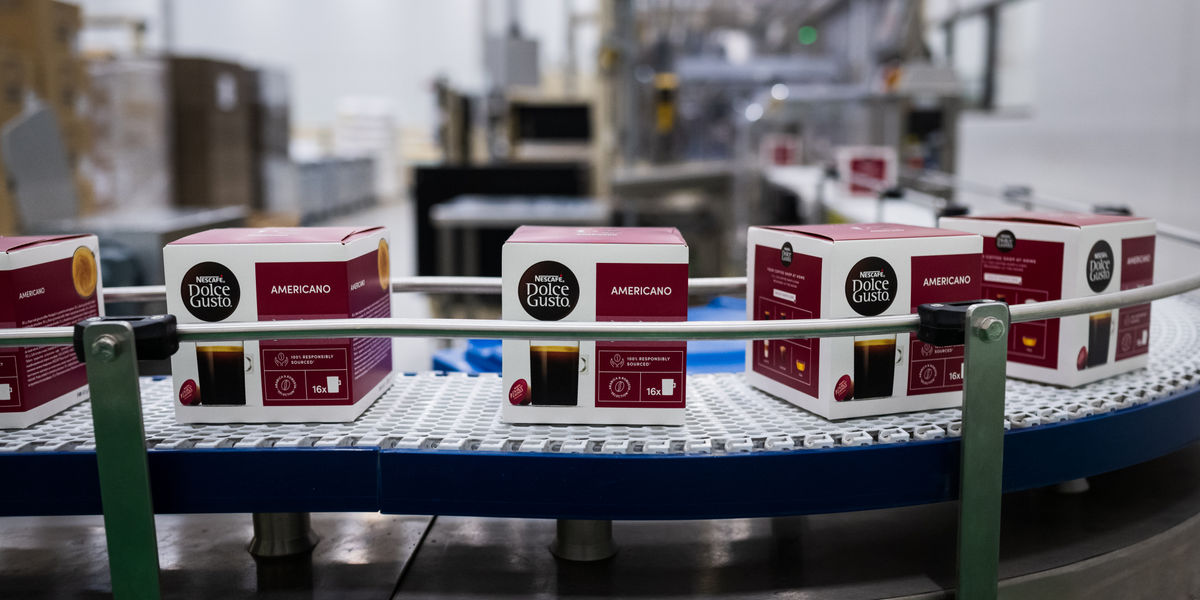
The NESCAFÉ Dolce Gusto plant in Schwerin is taking on additional production tasks within Nestlé’s production network and significantly expanding its capacity. Starting in 2027, the facility is expected to produce approximately 2.3 billion coffee capsules annually. This represents an increase of about 28 percent—or 500 million capsules per year—over the current production volume. As part of this growth, approximately 50 new jobs will be created, to be filled starting in October 2026, underscoring the long-term importance of the Schwerin plant as a site for the future.
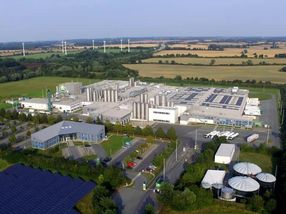
Since its opening in 2014, the Schwerin plant has established itself as a high-performance and efficient production site, with an annual output to date of approximately 1.8 billion coffee capsules. With a total of ten filling lines and eight packaging lines, the plant team produces 28 different varieties of coffee capsules under the NESCAFÉ Dolce Gusto brand for various markets.
Alexander von Maillot, CEO of Nestlé Germany: “The decision to increase production capacity in Schwerin sends a strong signal and reflects our confidence in the site’s capabilities and its employees. In recent years, Schwerin has developed into a key production site within our international network, and we see further potential here. With this expansion, we are strengthening the site’s competitiveness and future viability.”
Job openings for employees in production, engineering, and logistics
To handle the additional production volumes, three of the ten production lines are to be converted from three-shift to four-shift operations. This adjustment will enable the reliable production of the increasing volumes. To this end, approximately 50 additional employees will join the plant team—which currently numbers around 350—in the necessary areas.
Starting October 1, Nestlé will be hiring machine and plant operators, mechatronics technicians/electricians, and warehouse staff in Schwerin. Interested candidates can find information on specific job profiles, qualification requirements, and application procedures online on the company’s careers page.
Thomas Kolodzinsky, Plant Manager: “With the positive growth in our production volumes, we are opening up new career opportunities for people in Schwerin and the surrounding region. Our facility is one of the most modern at Nestlé in Germany, and we look forward to welcoming new colleagues to our team.”
Schwerin as a Site of the Future with a Focus on Sustainability
Nestlé invests approximately 60 to 90 million euros annually in the modernization, further development, and long-term sustainability of its plants. Thanks to modern production facilities, the high level of expertise among its employees, and its strategic importance within the production network, the NESCAFÉ Dolce Gusto plant in Schwerin is very well positioned to continue implementing further development initiatives in the future.
A key focus is also on sustainability: The plant already processes responsibly sourced coffee for NESCAFÉ Dolce Gusto, 100 percent of which comes from the NESCAFÉ PLAN. More than ten years ago, Nestlé launched one of the world’s largest sustainability programs in coffee farming. The program’s goal is to make the coffee supply chain more resilient and to ensure the long-term viability of coffee farming. The coffee is also traceable all the way back to farmer groups in over 16 producing countries. Through the program, Nestlé supports coffee farmers by, among other things, helping them adopt more climate-resilient cultivation methods, more sustainable agricultural practices, and ways to secure their yields in the long term. In 2025, NESCAFÉ sourced more than half of its green coffee from farmers who practice regenerative agriculture on their coffee farms. Further information is available in the Nescafé Plan 2030 Progress Report 2025.
The coffee beans from the NESCAFÉ Plan are roasted, ground, and processed at the facility in Schwerin. All electricity used in production comes from renewable energy sources, which significantly reducesthe plant’sCO2 emissions. Improvements in packaging also contribute to environmental protection: for example, reducing the wall thickness of the coffee capsules by 20 percent has significantly lowered the amount of plastic used.
Note: This article has been translated using a computer system without human intervention. LUMITOS offers these automatic translations to present a wider range of current news. Since this article has been translated with automatic translation, it is possible that it contains errors in vocabulary, syntax or grammar. The original article in German can be found here.


Other news from the department Production