METRO is testing an alternative to a biogas plant for food waste
The Aachen-based company Omnivore Recycling relies on material recovery rather than energy recovery using insect larvae.
Advertisement


- Reducing food loss is a central component of METRO Germany’s sustainability strategy. In addition to process optimizations, the company is focusing on innovative approaches to recycling unavoidable food waste that is no longer suitable for human consumption and therefore cannot be donated to food banks or other charitable organizations.
- In a pilot project lasting several months with Omnivore Recycling, METRO Germany is testing a recycling process using black soldier fly larvae. The larvae convert organic food scraps into usable raw materials. *
- The process returns nutrients from food scraps to the food and agricultural cycle, producing, among other things, raw materials for animal feed and organic fertilizer.
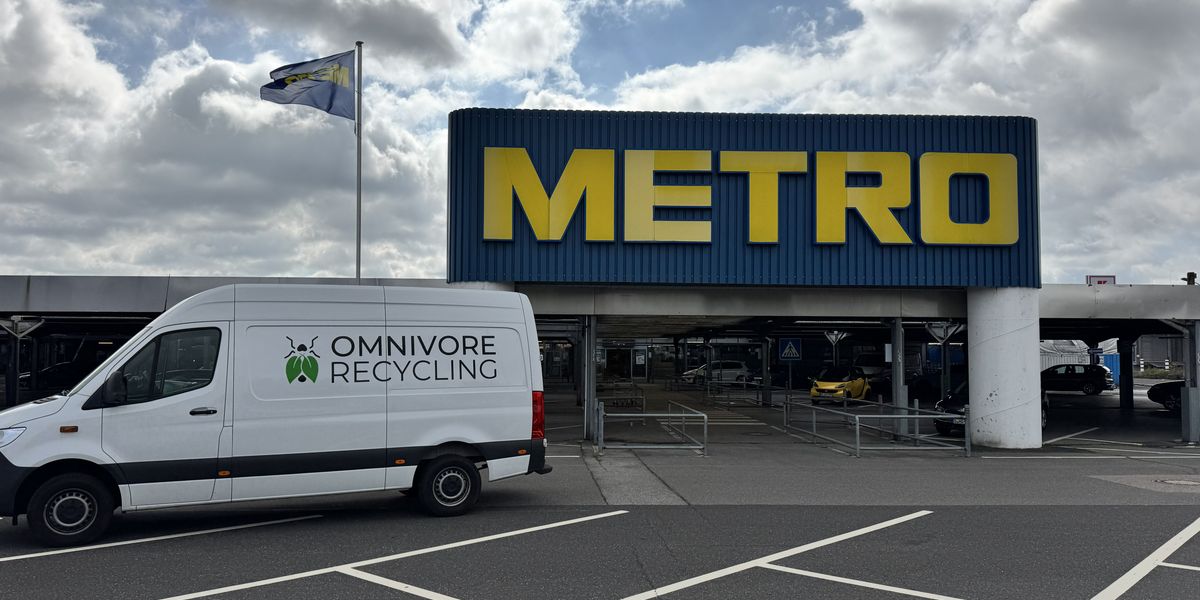
Reducing food loss has been one of METRO Germany’s key sustainability goals for years; to this end, the company relies, for example, on demand-based inventory management and optimized processes. For unavoidable food waste that is no longer suitable for human consumption and therefore cannot be donated to food banks or other charitable organizations, METRO is seeking innovative recycling solutions. A trial lasting several months has now begun in collaboration with the technology-focused Aachen-based company Omnivore Recycling: In this process, organic food waste is collected directly from the METRO wholesale market and fed into an innovative recycling process involving the larvae of the black soldier fly (BSF)—a technology used for the material recovery of organic waste. The goal of the partnership is to recover valuable nutrients from organic waste and return them to the food and agricultural cycle.
Animal Feed and Fertilizer for the Nutrient Cycle
The organic waste generated at the wholesale market—including fruits, vegetables, and processed products such as yogurt or pasta—is first unpacked and sorted. Fish and meat waste are excluded from the process. The residues are then processed into an optimized feed substrate. This substrate serves as a food source for insect larvae, which are raised in special containers. The larvae convert the nutrients from the food waste into high-quality biomass, which can be used as an alternative feed ingredient for poultry, swine, or fish farming. At the same time, the larvae’s excrement is turned into organic fertilizer for agriculture.
Higher-value recovery according to the waste hierarchy
In accordance with the waste hierarchy, this innovative recycling process enables a higher level of material recovery from food waste compared to conventional energy recovery: Instead of using food waste, for example, in biogas plants to generate energy, the Omnivore Recycling process converts the nutrients it contains into alternative feedstock and organic fertilizer. This preserves valuable resources within the food and agricultural cycle. As a result, METRO can channel unavoidable food waste into higher-value recovery, conserve natural resources, and further advance the implementation of its sustainability and circular economy strategy.
Partner with International Expertise
Through its partnership with Omnivore Recycling, METRO Germany is collaborating with a company that specializes in the recycling of organic waste using insects. Omnivore Recycling supports projects worldwide in the field of black soldier fly technology and has extensive experience in the development and operation of related facilities for the circular economy. For more information about the company, visit: www.omnivore-recycling.com.
Note: This article has been translated using a computer system without human intervention. LUMITOS offers these automatic translations to present a wider range of current news. Since this article has been translated with automatic translation, it is possible that it contains errors in vocabulary, syntax or grammar. The original article in German can be found here.



Other news from the department Production