Arla Foods achieves strong result in a record year in 2025
New records in all divisions
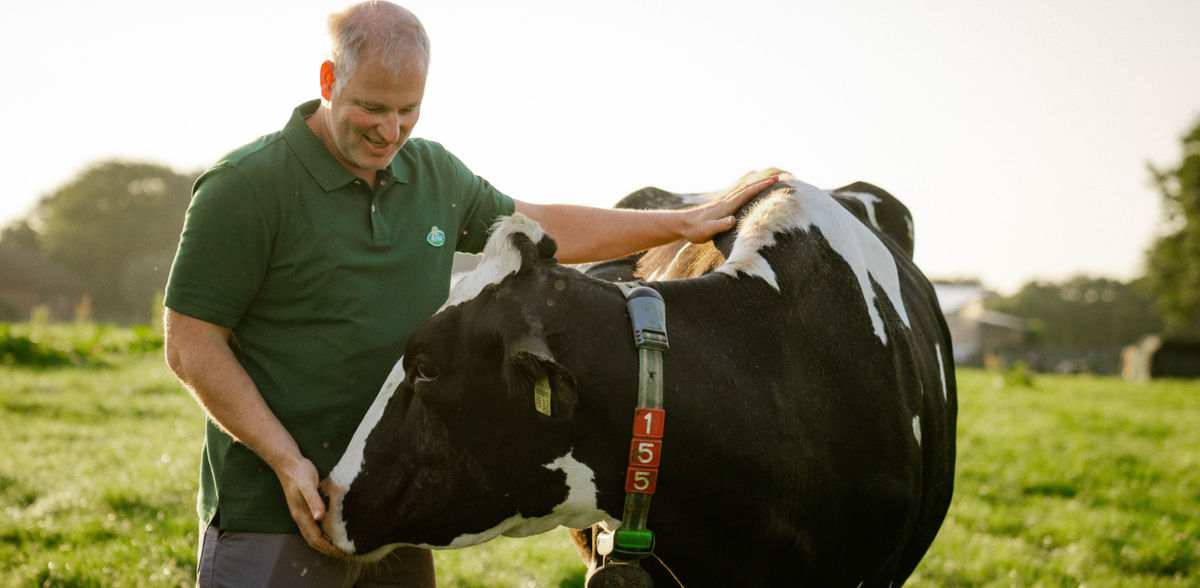
In 2025, the Arla Group's total revenue reached a record of EUR 15.1 billion (2024: EUR 13.8 billion). This was driven by a record milk volume of 14.3 billion kilograms of milk, high raw material prices in the first half of the year and exceptional growth in the ingredients business via 'Arla Foods Ingredients' (AFI).
Arla Foods achieved a net profit of EUR 415 million (2024: EUR 401 million) and a competitive milk price of 56.4 euro cents/kg. The milk performance price measures the value added per kilogram of milk from the cooperative members, including the annual supplementary payment and retained earnings in the form of the individual and collective capital contribution. In combination with a sound financial position, Arla's Board of Directors proposes an additional payment of 2.2 euro cents per kilogram of milk delivered.
In Germany, Arla also recorded a positive result with a revenue increase of 4.8 %, driven in part by a stable brand and private label business. In Germany, the Arla price for conventional milk in 2025 averaged 55.1 euro cents/kg (at 4.2% fat and 3.4% protein; vs. 49.64 euro cents in 2024; prices are stated including the annual back payment and interest and excluding the annual capital contributions).
"Our historical performance shows that our strategy is working. We have strengthened our market position, delivered record value for our farmers and taken important steps towards a more sustainable future," says Peder Tuborgh, CEO of Arla Foods.
The annual result was achieved against the backdrop of two very different market situations. While the year began with strong demand and balanced supply, the situation changed noticeably in the second half of the year. Very good weather conditions and good fodder harvests throughout Europe led to a significant increase in milk volumes in the fourth quarter.
"I am pleased that we are able to propose a solid additional payment after a year that demanded enormous flexibility from our owners. We have gone from a tight milk supply to a sudden oversupply, which naturally puts pressure on the market. As a farmer, this gives me confidence that our cooperative will handle this volatility with aplomb and once again prove to be a strong, competitive partner for our milk," says Jan Toft Nørgaard, Danish farmer and Chairman of Arla's Board of Directors.
A natural market correction
In the second half of 2025, milk supply increased significantly across Europe, including in Arla's key markets such as the UK and Denmark (7.7% and 3.6% respectively for 2025 compared to 2024). The sudden increase in European milk volumes, one of the strongest increases in recent years, triggered a classic market correction. This oversupply pushed down global trade prices and put pressure on the general value of milk across the industry. Despite this situation, Arla's strong business structure ensured a stable performance throughout the year. Thanks to the strong ingredient business 'Arla Foods Ingredients' (AFI), a strong position in retail and foodservice and better than expected net savings of EUR 158 million, the cooperative was able to successfully manage the decline in global market prices.
"Especially in volatile times like these, our strategy proves its worth. We are experiencing a natural market cycle in which high milk production leads to a fall in prices across the industry. The sudden increase does present us with challenges, but our company is built on solid foundations. Thanks to the combination of our brands, our efficiency and an outstanding year for our ingredients business, we have been able to deliver a competitive result for our owners," says Peder Tuborgh.
Ingredients business drives value creation
A key factor in the strong annual result was the exceptional performance of Arla Foods Ingredients (AFI). The subsidiary achieved a 43.1% increase in revenue to EUR 1.45 billion, driven by strong global demand for high quality proteins and the successful integration of the acquired Whey Nutrition business from Volac (renamed AFI Felinfach).
Investments secure future growth
Despite the difficult market environment at the end of the year, Arla continued to invest in future-oriented projects in 2025. The cooperative decided to invest EUR 731 million in targeted capacity expansion in high-growth categories.
Key strategic decisions included the establishment of a UHT (Ultra High Temperature) competence center in Lockerbie, Scotland, to meet the increasing demand for long-life milk, and an expansion of the Holstebro site in Denmark to increase fresh cheese production by an additional 16,000 tonnes.
Arla also gave the green light for the expansion of Puck® brand production capacity in Bahrain and a new skyr production line at the Linköping dairy in Sweden. These measures underline the clear commitment to further expand the brand portfolio in the core markets.
"As we navigate through the current market environment, we continue to keep an eye on the long-term perspective. With our investments in key growth drivers, we are sending a clear signal: we believe in the future of the dairy industry and take responsibility for ensuring that the world's population is supplied with nutritious, sustainable dairy products," says Peder Tuborgh.
In parallel with the internal investments, Arla continues to push ahead with the planned merger with the DMK Group. The merger was approved by the decision-making bodies of both cooperatives in June 2025. The aim is to unite two leading European dairy cooperatives with complementary portfolios to strengthen resilience and drive innovation. The proposed merger is now undergoing the regulatory approval process, which is expected to be completed in the first half of 2026.
Strong value creation and returning brand momentum
Arla's strategic brands made a significant contribution to the annual result in 2025. Total sales of branded products increased by 6.9% to EUR 7.03 billion. This development was largely driven by the cooperative's ability to maintain reasonable prices in an inflationary environment.
While these price levels affected sales volumes in the first half of the year, underlying demand remained stable. As purchasing power recovered, consumers returned to the brands they trust. Over the course of the year, business steadily gained momentum: volume growth of 1.8% was achieved in the second half of the year, leading to growth of 0.2% for the year as a whole.
"Our brands have proven their value this year with impressive sales figures. The significant recovery in sales volumes in the second half of the year confirms that our brands remain highly relevant. Ending the year with positive volume growth - coupled with strong sales development - underlines the robustness of our portfolio," says Peder Tuborgh.
Improving sustainability efficiency
In operations, Arla reduced Scope 1 and Scope 2 emissions (production, own logistics fleet and energy use) by a further 5.6 percentage points, achieving an overall reduction of 43.6% compared to the 2015 baseline. This milestone was achieved through continuous measures to increase energy efficiency and the transition to 100% renewable energy at all European production sites.
On farms (Scope 3), the data shows that farmers are operating more efficiently. The average score in Arla's sustainability program, the FarmAhead(TM) Incentive, increased from 53 to 55, while the emissions intensity per kilogram of milk decreased by 0.4 percentage points. Arla is thus building on the progress made over the past five years and has now achieved an overall reduction in emissions of 9.9% per kilogram of milk produced compared to the base year 2020.
Although efficiency gains per kilogram of milk were achieved, the significant increase in milk volumes assumed by the cooperative led to a slight increase in Scope 3 FLAG emissions of 4.4 percentage points.
Germany: Stable brand and private label business
Arla was also able to increase total revenue in the German market in 2025, by 4.8 % . (branded and private label retail business and foodservice). Both the branded business, with revenue growth of 6.1 %, and the positive development of private label contributed to this result. Arla® Pro in Foodservice, the trend category Arla Skyr® and the Arla Buko® brand were particularly strong; all three achieved volume-based revenue growth in the low to mid double-digit percentage range compared to the previous year. With the successful launch of Starbucks® Protein last March, Arla also stimulated growth in the dairy drinks segment.
"Especially in a year with strongly changing market conditions, it is clear how important a clear strategic focus is. Our brands play a central role in this: they create trust among consumers and are a key lever for sustainable value creation - from the farm to the chiller cabinet. The private label business also contributed to growth as an important pillar. The expansion of this segment in close collaboration with retailers is a key factor in strengthening cooperation and tapping into additional sales potential. On this basis, we are consistently developing our business in Germany and creating the conditions for future growth," says Tino Gottschalk, Managing Director of Arla Foods Germany.
Sustainability on the farms and at the plant in Pronsfeld
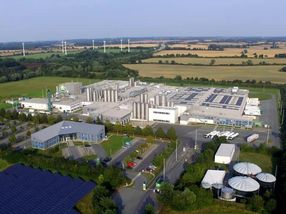
Five years after the introduction of the FarmAhead(TM) Check (formerly Climate Check), Arla drew a positive balance in 2025: Arla farmers are continuously working to further reduce emissions per kilogram of milk. Targeted measures in the areas of feeding, fertilization and energy supply showed that ecological progress and economic stability can be successfully combined. This approach was also widely recognized in dialogue with German politicians. At the same time, Arla invested in the decarbonization of sites and logistics: a new facility with two powerful electric heat pumps was inaugurated at Arla's largest production plant worldwide in Pronsfeld. In future, the two pumps will replace a natural gas-based steam boiler in the milk heating process. In total, this will reduce CO2e emissions at the site by a good 5,000 tons per year. In addition, the entire truck fleet has been converted to the more environmentally friendly HVO fuel.
Outlook for 2026: Lower prices should promote brand growth
Looking ahead, Arla expects the volatile market conditions seen at the end of 2025 to continue into the new year. The increase in supply seen in the fourth quarter is likely to continue to influence the market at the start of 2026 and put pressure on global dairy prices. However, a partial normalization is expected later in the year as soon as the supply/demand balance has stabilized again.
While lower prices will have an impact on overall sales, they are also likely to strengthen consumers' purchasing power. As a result, Arla expects a return to stronger growth for its strategic brands. Volume-based revenue growth in the branded business is expected to be in the range of 1.0% to 3.0% in 2026.
For the financial year 2026, Arla forecasts Group revenue between EUR 13.3 and 14.1 billion, reflecting lower market prices compared to the beginning of 2025. The net profit share is expected to remain within the target range of 2.8% to 3.2%.
Arla will continue its disciplined focus on cost efficiency and target efficiency gains of EUR 90 to 110 million as part of the Fund our Future transformation and efficiency program.
"We start 2026 well prepared and ready for the upcoming market conditions. The pressure from high milk volumes will characterize the first half of the year, but we also see opportunities in this. We assume that consumers will increasingly turn to dairy products again with the price adjustment and thus drive the growth of our strategic brands. We are ready to meet this demand while maintaining a strict focus on efficiency to ensure that we achieve our goals," says Peder Tuborgh.
Note: This article has been translated using a computer system without human intervention. LUMITOS offers these automatic translations to present a wider range of current news. Since this article has been translated with automatic translation, it is possible that it contains errors in vocabulary, syntax or grammar. The original article in German can be found here.

Other news from the department business & finance