New research approach improves the flavor stability of flaxseed oil and extends its shelf life
Magnesium aluminium silicate reduces cyclolipeptides by over 80 per cent without altering the fatty acid profile
Advertisement


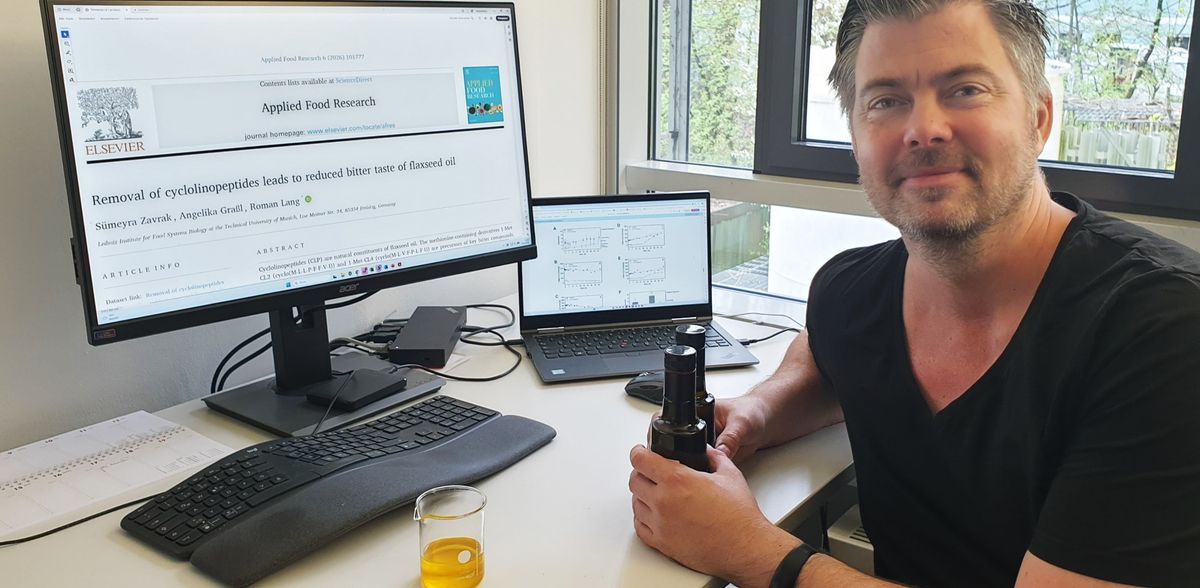
How can the mild flavor of flaxseed oil be preserved for longer? A research team led by Roman Lang from the Leibniz Institute for Food Systems Biology at the Technical University of Munich has investigated this question. As the team demonstrates in its study, natural precursors of bitter-tasting compounds can be gently removed from the oil using bleaching earth (magnesium-aluminum silicate). This results in significantly fewer bitter-tasting compounds formed during storage, and the flaxseed oil remains flavor-stable for longer. The particular advantage: The high content of health-beneficial fatty acids as well as the oil’s typical character are preserved despite the purification process.
The German Federal Center for Nutrition recommends reducing saturated fatty acids in the diet in favor of polyunsaturated fatty acids, as this can help lower LDL cholesterol levels and reduce the risk of coronary heart disease. Flaxseed oil can contribute to this, as it is particularly rich in the polyunsaturated omega-3 fatty acid alpha-linolenic acid.
However, flaxseed oil has a drawback: while it has a pleasantly mild taste when fresh, it quickly develops bitter notes during storage and eventually becomes inedible. Previous research by the Leibniz Institute and the Technical University of Munich had already shown that so-called cyclolinopeptides are responsible for this change in taste. These peptides, which are naturally present in the oil, oxidize during storage into substances with a strong bitter taste.
“We therefore investigated whether the flavor stability of flaxseed oil can be improved by specifically removing these cyclolinopeptides,” explains principal investigator Roman Lang. To test this hypothesis, the research team examined eight mineral-based cleaning agents approved for the refining of edible oils, including bleaching earth.
Successful application on a laboratory scale
On a laboratory scale, the research team at the Leibniz Institute has now succeeded in selectively reducing the natural bitter compound precursors using magnesium-aluminum silicate. When the researchers mixed 200 grams of oil with 10 grams of the natural mineral, stirred it for 20 minutes at 30°C, and separated the mineral again by centrifugation, the cyclolinopeptide content in the oil decreased by more than 80 percent. The color, odor, and fatty acid profile of the oil remained largely unchanged.
Sensory tests subsequently confirmed the success of the new research approach: While the untreated flaxseed oil exhibited a noticeable bitterness right from the start, the treated oil tasted hardly bitter at all. The taste advantage of the treated oil persisted even over a longer period.
As the research team further reports, although the bitterness increased in both samples after nine weeks of storage in the dark, the treated oil reached only the bitterness level of fresh, untreated oil. Even at room temperature, under UV light and air exposure, the oil purified with bleaching earth remained milder for longer and exhibited significantly lower concentrations of bitter-tasting oxidation products.
Potential for more sustainable food production
Given the rising demand for omega-3-rich foods, the new research approach offers a solid foundation for extending the sensory shelf life of flaxseed oil and increasing consumer acceptance—without chemical additives or complex refining.
The Researchers view the reduction of cyclolynopeptides as a sustainable approach to waste prevention due to the extended shelf life.
In further studies, they aim to investigate the optimal combination of materials used, as well as the influence of treatment duration and temperature on cyclolinopeptide residues and the stability of polyunsaturated fatty acids, in order to further refine the purification process.
Original publication


Other news from the department science