EDEKA Expands Its "Cocoa For Future" Program to Côte d'Ivoire and Peru
In Côte d'Ivoire, EDEKA partners with the cocoa processor CÉMOI; in Peru, it partners with the Rainforest Alliance
Advertisement


- "Cocoa For Future" Extended for Another Five Years
- Expansion from Ghana to two additional cocoa-producing countries
- Plans to expand to all private-label chocolate bars starting in 2027
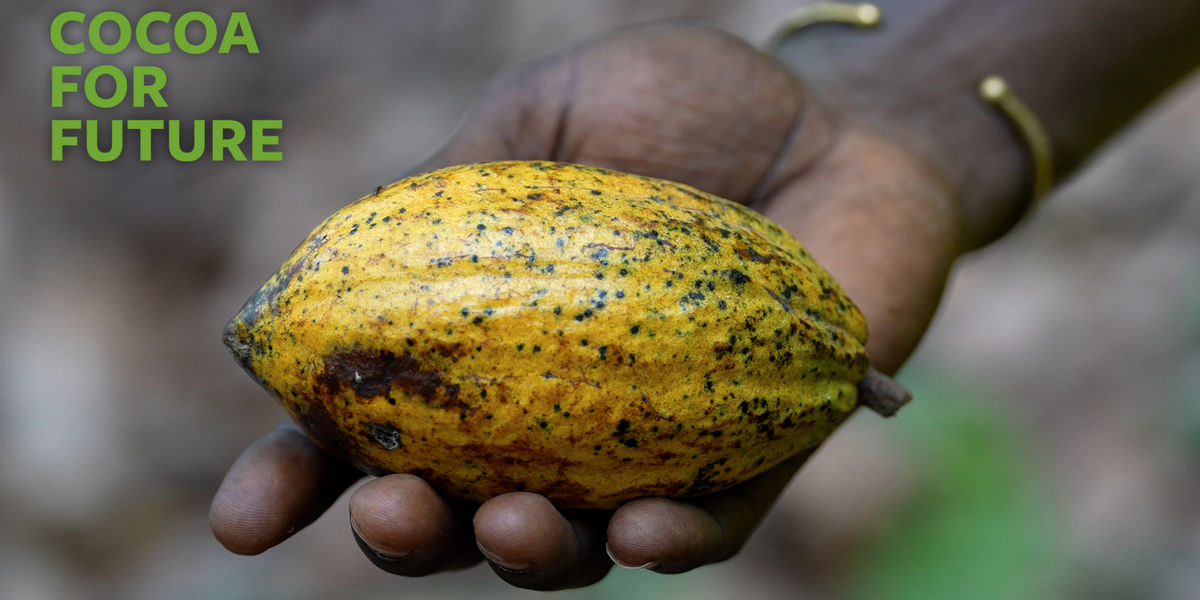
The EDEKA Group, including Netto Marken-Discount, is extending its “Cocoa For Future” program—after five years in Ghana—for another five years and expanding it to Côte d’Ivoire and Peru. At the same time, EDEKA plans to apply the "Cocoa For Future" approach to all private-label chocolate bars starting in 2027, in addition to the existing program products. In doing so, the grocery retailer is consistently advancing its cocoa program.
“Cocoa is an important raw material for many of our private-label products. With ‘Cocoa For Future,’ we are pursuing a long-term approach that addresses various challenges in cocoa farming. The experience gained over the past five years forms the basis for further developing the program, expanding it to additional growing regions, and embedding it even more broadly in our private-label product range in the future,” said Markus Mosa, CEO of EDEKA ZENTRALE Stiftung & Co. KG.

Launched by the EDEKA Group in 2021, the Cocoa For Future program takes a holistic approach with three areas of focus: agroforestry systems and training programs in cocoa farming, forest conservation and traceability, as well as initiatives for farmers, their families, and local communities.
Program measures are interconnected
In Ghana, various agroforestry models have been introduced in recent years that combine cocoa trees with shade trees, fruit trees, and other crops. These models strengthen resilience, provide protection against rising temperatures, diversify crop production, and open up additional opportunities for use and potential income for households. In addition, farmers have been trained in improved cultivation practices and farm management. In addition, program farms are mapped using polygons to digitally record farm boundaries and better assess deforestation risks.
Social and economic issues are also an integral part of Cocoa For Future. These include initiatives to combat child labor, support services for families, and local savings and credit groups that facilitate access to financial resources.
Next Steps for the Program and Expansion into the Private-Label Product Line
Building on the experience gained in Ghana, EDEKA is expanding Cocoa For Future to other relevant cocoa-growing regions: In Côte d’Ivoire, three cocoa cooperatives in the Divo region are to be included. In Peru, the program is set to launch in the San Martín region; plans are in place to expand the program there in the future.
To effectively adapt the program’s proven approaches to local conditions, the EDEKA Group is collaborating with experienced, locally rooted partners, as it has done in Ghana. In Côte d’Ivoire, the chocolate manufacturer and cocoa processor CÉMOI is contributing its expertise in cocoa farming. In Peru, the internationally active organization Rainforest Alliance is playing a central role in implementing the measures.
Cocoa For Future is also set to gain further prominence in the private-label product range. Starting in 2027, the initiative will be expanded—in addition to the existing program items—to include all private-label chocolate bars from EDEKA and Netto Marken-Discount; organic chocolate is excluded. The basis for this is a volume-balancing approach: The corresponding volume of cocoa is covered by the program without requiring that the cocoa used in each individual product physically come from a program farm. The continuation and expansion of Cocoa For Future represents a long-term commitment by the EDEKA Group.
Note: This article has been translated using a computer system without human intervention. LUMITOS offers these automatic translations to present a wider range of current news. Since this article has been translated with automatic translation, it is possible that it contains errors in vocabulary, syntax or grammar. The original article in German can be found here.


Other news from the department business & finance