Safe drinking water supply: Lutz-Jesco expands its research in chlorine gas technology
Lutz-Jesco is expanding its research and development in safe chlorine gas technologies. The aim is to improve the handling of chlorine gas further and to make drinking water disinfection even safer. Although chlorine gas is classified as a hazardous substance, it remains indispensable in many regions of the world for the safe and economical disinfection of large quantities of water.

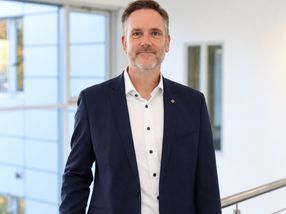
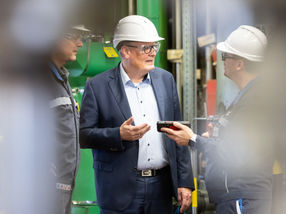
Dr Helge Oesinghaus, disinfection specialist at Lutz-Jesco
Lutz-Jesco
Chlorine gas is regarded as a highly effective disinfectant, yet it is also classified as a hazardous substance. There are frequent media reports of chlorine gas leaks in swimming pools, as well as evacuations or injuries following technical faults or operating errors. "As a result, use of the gas is discussed in highly critical terms. Nevertheless, it is set to remain indispensable for the drinking water supply of millions of people worldwide,” says Dr Helge Oesinghaus, disinfection specialist at Lutz-Jesco.
Numerous alternative processes do exist today, including UV disinfection, ozonation and membrane technologies. However, Dr Oesinghaus believes that many places have no equivalent alternative to chlorine gas for the economical disinfection of large quantities of water. It is therefore not a matter of whether chlorine gas is used, but how safely it is handled. “Lutz-Jesco intends to further expand its investments in research and development in future, in order to continuously enhance the safety of chlorinators and support the responsible use of this technology worldwide.”
Everything from a single source: system solutions make chlorine gas systems safer
At Lutz-Jesco, research and development work focuses on system solutions that minimise safety risks right from the plant planning stage.
As one of the few manufacturers worldwide, Lutz-Jesco develops fully compatible complete systems in which all components come from a single source, are matched with one another and whose interaction has been comprehensively tested. If necessary, Lutz-Jesco even integrates the chlorine gas systems into ready-to-ship sea containers that can be deployed in crisis regions, for example. The chlorine gas dosing systems also operate under total vacuum. Even in the event of mechanical damage to the lines, the system helps to prevent an uncontrolled release of chlorine gas. With proper system design and correct installation of the overall system, a chlorine gas leak appears highly unlikely. The safety concept also includes functions such as gas filters, blow-off valves, gas warning devices, chlorine scrubbers and sprinkler systems.
Know-how gained from standardisation work is also incorporated into the development of new safety solutions. Thomas Beutel, an expert in dosing plant engineering at Lutz-Jesco, has been actively involved in standardisation work for many years. He is chairman of the DIN working group DIN 19606 “chlorine gas systems in water treatment”. In addition, he collaborates in specialist committees in DIN, DVGW, DGfdB, BSW and figawa. His insights are incorporated into the further development of technical standards and new safety solutions at Lutz-Jesco.
Civil protection in a developing country: 72 million litres of drinking water per day
A current project in a developing country demonstrates how modern chlorine gas technology can help improve drinking water quality. The existing drinking water infrastructure was no longer able to adequately treat the raw water. This created a risk of health hazards due to microbiological impurities.
As part of a modernisation programme, an existing drinking water plant was equipped with a state-of-the-art chlorine gas dosing system. The core of the system is a total vacuum chlorinator which, with the help of measuring and control technology, precisely regulates the chlorine gas quantity and introduces it into the water treatment process via an ejector.
The new system can dose up to 35 kilograms of chlorine per hour. This increased the daily treatment capacity of the waterworks from around 39 to up to 72 million litres of drinking water. This improves supply security and makes a significant contribution to the hygienic quality of the drinking water.
The available supply of drinking water may fluctuate as a result of climatic changes. However, what is crucial is not only the available quantity, but above all the microbiological quality of the water. According to the principles of the World Health Organization (WHO), clean and safe drinking water is a fundamental human right.

Other news from the department research and development