Startup Finches Secures New Funding for AI in Agricultural Procurement
HTGF and Vanagon Ventures are leading the financing round, with Bayern Kapital joining as a new investor
Advertisement


The Bavarian startup Finches GmbH has closed a pre-seed funding round totaling 2 million euros.
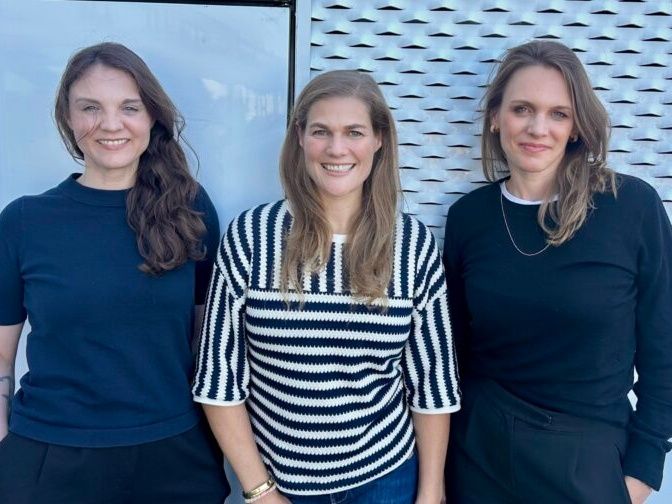
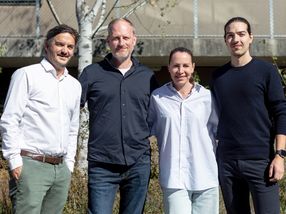
The Founders of Finches
Finches
The round is led by High-Tech Gründerfonds (HTGF) and co-led by Vanagon Ventures. Bayern Kapital is a new investor; existing investor UnternehmerTUM Funding for Innovators, along with a group of strategic business angels from the industrial and tech sectors, are reinvesting.
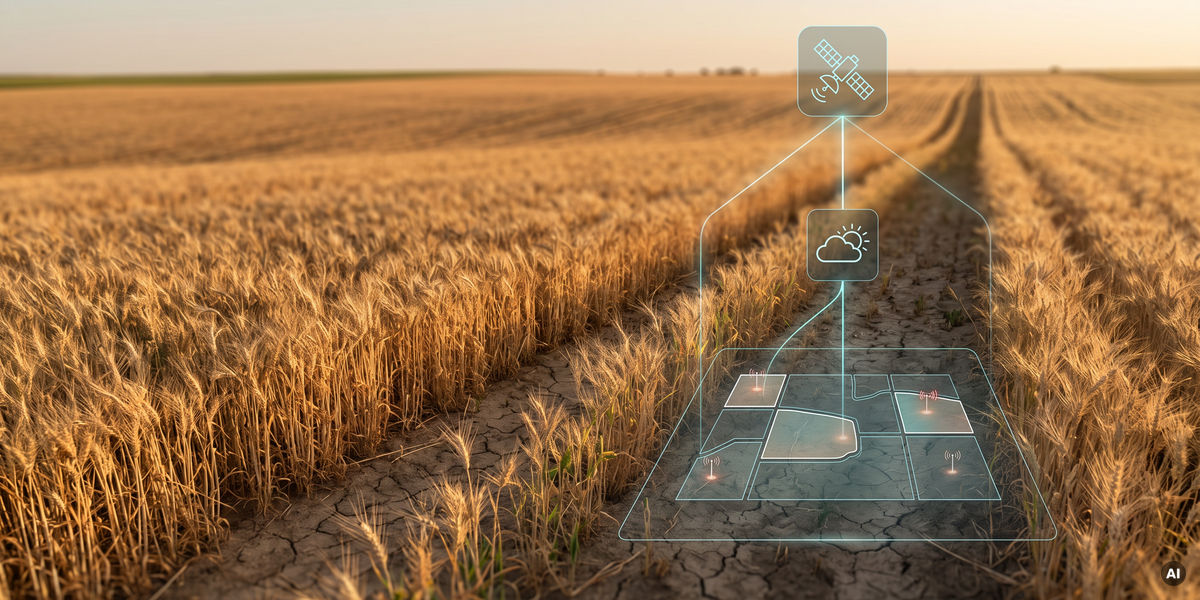
Finches makes sourcing risks visible right where they begin: directly in the field. Procurement teams receive a reliable early warning and concrete alternatives for action weeks before a supply shortage occurs.
The need is great: Companies that source agricultural raw materials are exposed to growing volatility due to climate, pests, and geopolitical disruptions and are actively seeking exactly this kind of early warning.
The startup Finches has closed a pre-seed funding round totaling 2 million euros. The round is led by High-Tech Gründerfonds (HTGF), with Vanagon Ventures participating as co-lead. Bayern Kapital has also joined as a new investor; UnternehmerTUM Funding for Innovators and other business angels from industry and the tech sector are reinvesting as part of a follow-on round. Finches combines internal company data on suppliers, farmland, and contracts with external information sources—ranging from weather and satellite analyses to local news, scientific findings, and reports from its own on-site agronomists. Based on this data, the platform generates precise early warnings. It identifies affected regions and supply chains and provides procurement teams with direct recommendations for action. This enables procurement teams to proactively ensure the quantity, quality, and cost-effectiveness of their raw materials long before crop failures or quality issues jeopardize production.
While global agriculture has relied on stable and reliable climatic cycles for millennia, rapid climate change, extreme weather, and geopolitical crises have effectively destroyed this fundamental predictability today. Companies that source agricultural raw materials are exposed to a level of volatility that traditional supply chain processes are not designed to handle. Shortages arise in the field, months before the raw material even reaches the factory gate. Today, however, they usually only become apparent when it’s too late. This is exactly where Finches comes in: The platform aggregates field observations into a unified database across growing regions and supplier networks. It links this data with external signals such as weather, pest, satellite, and market data, as well as hyperlocal news. This results in reliable early warnings for companies and their procurement teams, providing them with additional lead time. Finches Intelligence has been live since September 2026. Among its first customers and partners are a leading manufacturer of organic baby food and a North American Fortune 500 food company.
The founders are using the capital to expand the product and sales operations. Catharina van Delden (CEO) previously built innosabi, a software company, into the European market leader in innovation management and sold it to Questel in 2021. Dr. Stefanie Glenn (CTO) earned her Ph.D. in genetics at Cambridge and subsequently held engineering and leadership roles in the field of enterprise AI at companies including Google and BMW. Alexandra Vázquez Bea (CFO/COO) comes from the food industry: She served as CFO/COO at Oetker Digital and oversaw the initial public offering of Veganz Group AG.
Catharina van Delden, CEO & Co-founder, Finches:
“The drought of summer 2026 showed that Europe’s food manufacturers can no longer rely on obtaining their raw materials every year in the quantity and quality they need. This makes raw material procurement a matter of supply security. Warning signs usually appear weeks in advance, but they reach the procurement department too late. With this funding, we’re bringing Finches to more companies so they can secure alternative sources in time, purchase earlier, or reschedule their production.”
Dr. Stefanie Glenn, CTO & Co-founder, Finches:
“The factors influencing agriculture form a highly complex web. The problem: Until now, the relevant data has only been available in a fragmented form. Finches brings these isolated data streams together. We link local field data in real time with geopolitical developments, market analyses, global climate models, and internal company data such as lab reports. In this way, we translate confusing influencing factors into clear courses of action and make the complexity of the supply chain manageable.”
Alexandra Vázquez Bea, CFO/COO & Co-founder, Finches:
“The days of predictable revenues and costs in the food industry are long gone. When companies only react to bottlenecks in raw material procurement once a shipment has failed, this immediately has a massive impact on their bottom line. With Finches, we’re turning this principle on its head: We translate climate, pest, and risk signals into concrete decisions long before goods fail to arrive at the factory gate. In doing so, we help ensure operational resilience, which has become a critical financial necessity in our volatile world.”
Anna Stetter, Investment Manager, HTGF:
“Finches addresses a central challenge of our time: building resilient global agricultural supply chains in an environment shaped by climate change and geopolitical shifts. We were particularly impressed by how deeply the founding team understood the industry’s challenges and how quickly they developed a technologically compelling solution based on that understanding.”
Susanne Fromm, General Partner, Vanagon Ventures:
“Finches addresses a massive problem that, despite its far-reaching implications, usually simmers just beneath the surface. The food industry is seeing predictability in the supply chain dwindle, but has had no answer to this until now. Yet the warning signs of a bottleneck are often there months in advance—they’re just scattered across weather data, field reports, lab results, and market data. Finches brings all this information together, giving procurement teams valuable time to take action.”
Note: This article has been translated using a computer system without human intervention. LUMITOS offers these automatic translations to present a wider range of current news. Since this article has been translated with automatic translation, it is possible that it contains errors in vocabulary, syntax or grammar. The original article in German can be found here.



Other news from the department business & finance













Most read news







More news from our other portals
























Something is happening in the food & beverage industry ...
This is what true pioneering spirit looks like: Plenty of innovative start-ups are bringing fresh ideas, lifeblood and entrepreneurial spirit to change tomorrow's world for the better. Immerse yourself in the world of these young companies and take the opportunity to get in touch with the founders.
See the theme worlds for related content
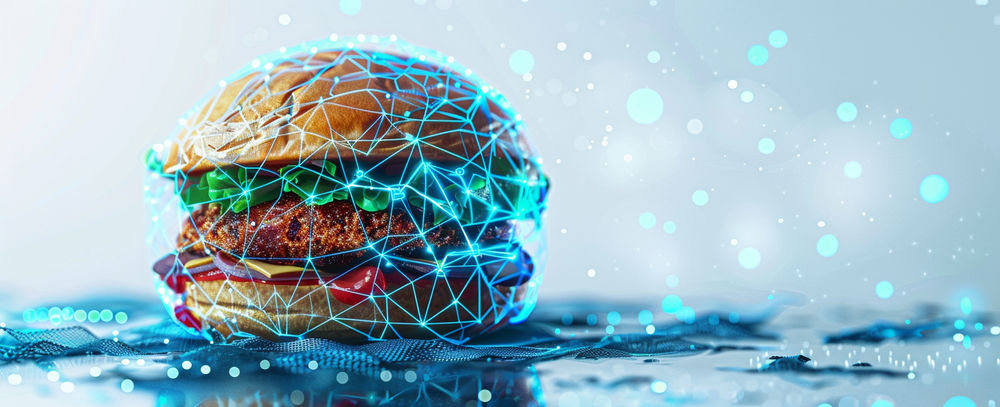
Artificial intelligence (AI) for food and beverages
Artificial intelligence (AI) is optimizing the food and beverage industry through automated quality control and more accurate demand forecasting. AI plays a particularly important role in product development by analyzing taste preferences and market trends. This allows new products to be developed that are better tailored to consumer needs, increasing efficiency and customer satisfaction.
Artificial intelligence (AI) for food and beverages
Artificial intelligence (AI) is optimizing the food and beverage industry through automated quality control and more accurate demand forecasting. AI plays a particularly important role in product development by analyzing taste preferences and market trends. This allows new products to be developed that are better tailored to consumer needs, increasing efficiency and customer satisfaction.