Veganuary 2026 results: millions of people eat differently
Demand for vegan products ensures empty shelves - and record sales

Millions of people worldwide tried out a plant-based diet during Veganuary. Initial reports from companies indicate increased demand in the retail and food service sectors. vegan January ends with a strong conclusion - and its impact continues: for years, the campaign has been triggering long-term and broad-based change, as voices from the business world confirm.
When Joko Winterscheidt launches vegan chocolate on the market, soccer fans order vegan hot dogs in Munich's Allianz Arena, the media report a nationwide tofu shortage and the Federal Environment Agency calls for plant milk test weeks - that's Veganuary.
Vegan New Year's resolution takes millions of people around the world with it
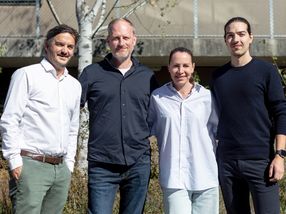
With the support of celebrities such as mega-influencer Bianca Heinicke and Hollywood star Matthew Modine, Vegan January once again created social momentum this year: "Whether in the supermarket, in the canteen, in the stadium, in your own kitchen or on social media: Veganuary 2026 was part of the everyday lives of millions of people," summarizes Christopher Hollmann, who heads Veganuary Germany. "In all areas of society, it invited people to try vegan - for the animals, the climate and their own health. And made it even easier to get started."
Many have taken up the invitation: More than 30 million people worldwide tried out a plant-based diet in Veganuary 2026.* In Germany alone, over 1,000 companies took part in the campaign with new products, dishes and promotions.
Demand for vegan products ensures empty shelves - and record sales
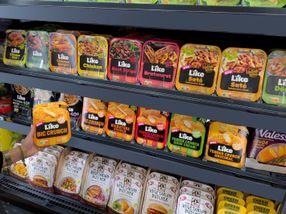
Initial balance sheets from participating brands report records: Billie Green recorded a double-digit increase in sales in Veganuary 2026 compared to the previous month - and recorded the first half of the campaign period as the two strongest sales weeks in the company's history to date. Veganuary sponsor Nutrition-Plus achieved its best monthly sales to date with discount campaigns in the online store.
The increased interest in vegan products was also reflected in empty supermarket shelves: Media reported a nationwide tofu shortage in January, which Rewe, Lidl and Edeka unanimously explained with the increased demand in Veganuary.
Gastronomy and to-go: vegan options more and more in demand
The extent to which consumption has already changed can be seen not only in shopping, but also in mainstream gastronomy. For example, one in five Whoppers served at Burger King is now vegan, as the fast food giant reported to the Hamburger Morgenpost newspaper. Demand is also growing in the to-go sector. In an interim report on Veganuary 2026, the bakery chain Le Crobag reported a more than 80 percent increase in sales of the promotional product compared to January 2025.
Veganuary anchors plant-based nutrition in everyday life
Reaching people where they spend their everyday lives is key to changing eating habits in the long term. In Veganuary 2026, the demand for and supply of plant-based options in canteens, university canteens and company restaurants continued to grow.
At catering company L&D, the proportion of vegan dishes rose from 23% to 40% during the 2026 campaign period. As a result, more than twice as many plant-based dishes were sold compared to the annual average - every fifth dish ordered in January was vegan.
For the food service industry, Veganuary has been an important driving force for years in the long-term expansion of climate- and animal-friendly offerings: For example, since its first participation in January 2022, the SV Group has developed more than 150 vegan recipes as part of Veganuary - many of which are now a permanent fixture on the menus in the company restaurants.
André Jenczewski, Veganuary Project Manager and Food Product Manager at Klüh Catering, on Vegan January: "It has helped to break down inhibitions, reach new target groups and anchor plant-based nutrition more firmly in everyday life."
"Nutrition is a question of shaping society"
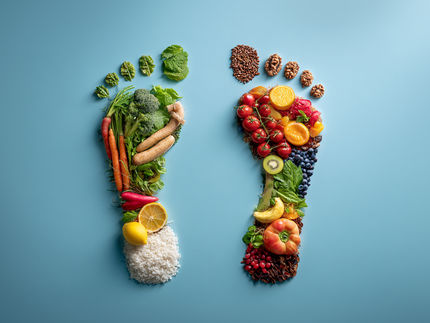
There are good reasons for the non-profit organization's goal of promoting plant-based nutrition on a broad scale. For example, a recent EU-wide study by the Potsdam Institute for Climate Impact Research shows just how big an impact our diet has on our individual ecological footprint: food is responsible for 23% of greenhouse gas emissions from private households. In terms of environmental damage caused by nitrogen and phosphorus compounds, water and land consumption and endangered biodiversity, the proportion rises to as much as 56 to 71 percent.**
For Christopher Hollmann, these figures show: "Nutrition is a question of social organization. And vegan nutrition has been proven to play a key role in climate and resource protection. Veganuary 2026 has once again successfully shown how many people are willing to try new things - and that change is possible. At the same time, one thing is clear: for a sustainable future, we now need more speed and reliable framework conditions for the plant-based food transition."
Note: This article has been translated using a computer system without human intervention. LUMITOS offers these automatic translations to present a wider range of current news. Since this article has been translated with automatic translation, it is possible that it contains errors in vocabulary, syntax or grammar. The original article in German can be found here.

Other news from the department business & finance